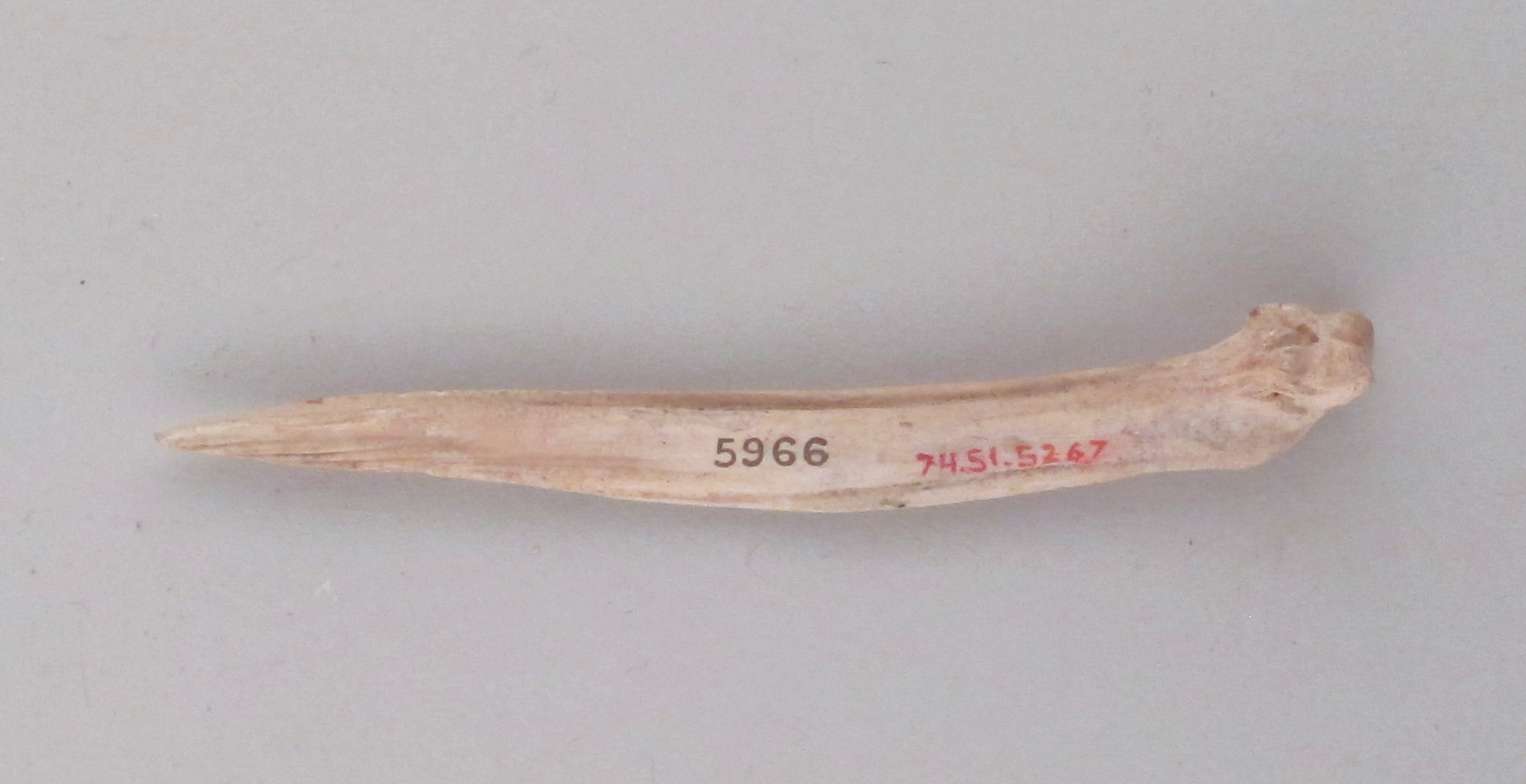
The Awl as Anvil: Cypriot Fish-Bone Heritage and the Architecture of Modern Luxury
In the stratified lexicon of archaeological materials, the awl—a simple, pointed tool—rarely commands the reverence afforded to gold funerary masks or intricately carved ivory. Yet, for Katherine Fashion Lab, the Cypriot fish-bone awl presents a singular opportunity to recalibrate the narrative of heritage luxury. This is not merely an artifact of utility; it is a profound document of human ingenuity, a symbol of transformative power, and a spiritual conduit between the terrestrial and the maritime. To integrate this object into a 2026 high-end strategy is to move beyond ornamentation and into the realm of philosophical adornment, where the act of creation itself becomes the ultimate luxury commodity.
Historical Adornment and the Semiotics of the Stylus
The Cypriot awl, typically fashioned from the dense, compact bone of a large fish—often tuna or sea bream—dates to the Chalcolithic and Early Bronze Age periods. In the context of historical adornment, we must resist the temptation to view this object solely as a precursor to the needle or the drill. Instead, the awl functioned as a primary agent of aesthetic production. It was the instrument that perforated leather, pierced soft stone, and scored pottery, thereby enabling the creation of garments, belts, and ceremonial regalia. In this sense, the awl is not the ornament; it is the origin of the ornament. Its presence in female burial contexts on the island, often placed near the pelvis or hands, suggests a deep association with the generative, life-giving forces of textile production and domestic craftsmanship. For Katherine Fashion Lab, this positions the awl as a matriarchal archetype—a tool of quiet, relentless power that shaped the visual identity of an entire civilization. Its sleek, organic form, polished by human hands over decades, offers a tactile counterpoint to the sterile precision of modern manufacturing.
The Material Poetics of Fish Bone
The choice of fish bone as a medium is not incidental but deeply symbolic. In ancient Cypriot cosmology, the sea was a liminal space—a source of sustenance, mystery, and divine unpredictability. By repurposing the skeletal remains of a marine creature into a tool for terrestrial creation, the artisan enacted a transubstantiation of elements. The bone carries the memory of the ocean’s pressure, the fluid dynamics of the deep, and the silent, predatory grace of the fish. When held, the awl transmits this aquatic memory to the user. It is a fragment of a life that was sacrificed to enable other lives to be adorned and protected. In a 2026 luxury context, this material narrative is invaluable. Consumers are no longer satisfied with provenance alone; they demand purpose. The fish-bone awl offers a story of cyclical renewal—death enabling creation, the ocean feeding the loom—which aligns perfectly with the circular economy and regenerative luxury trends that will dominate the high-end market in the coming years.
Spiritual Meaning and the Power of the Puncture
The spiritual significance of the awl in Cypriot culture extends far beyond its functional role. The act of piercing—whether through hide, wood, or shell—was a metaphysical act. It was a controlled violation of a surface, a deliberate opening that allowed for binding, connection, and closure. In shamanistic and early religious practices of the Eastern Mediterranean, the puncture was symbolic of the breach between the mortal and the divine. The awl served as the physical agent of this breach, creating the holes through which sinew, thread, or leather thongs would pass, physically binding communities to their tools, their clothing, and their gods. Furthermore, the fish bone itself carries an inherent apotropaic quality. In many ancient cultures, the remains of sea creatures were believed to ward off the Evil Eye, due to their origin in the purifying, salt-laden depths. The awl, therefore, was not just a tool but a portable talisman. It protected the wearer and the maker during the vulnerable process of creation. For Katherine Fashion Lab, this spiritual layer offers a profound differentiation strategy. A luxury item that incorporates the visual or conceptual DNA of the awl is not merely an accessory; it is a guardian object, a piece of wearable armor against the chaos of the modern world.
Symbolic Power in the Feminine Domain
We must also analyze the awl’s symbolic power through a gendered lens. In the Cypriot archaeological record, the awl is frequently recovered from contexts associated with women’s work—weaving, netting, and leatherworking. However, to dismiss this as “domestic” is a colonial misreading. In the ancient world, textile production was a form of economic and social currency. The woman who controlled the awl controlled the creation of value. She determined the fit, the form, and the durability of the garments that clothed her family and, by extension, her community’s status. The awl, therefore, symbolizes autonomous creative power. It is the instrument of the female maker who, through her skill, could transform raw, undifferentiated animal skin into a structured, socially meaningful object. In the context of 2026 luxury, this resonates with the growing demand for female-led narratives and the celebration of the atelier over the factory. The awl represents the hand of the maker—imperfect, human, and authoritative.
2026 High-End Luxury Strategy: The “Genesis Point” Collection
To translate this heritage asset into a 2026 luxury strategy, Katherine Fashion Lab must move beyond literal replication. The fish-bone awl should not be reproduced as a trinket; rather, its design DNA—the tapered point, the organic curve, the polished patina—must inform a new design language. We propose the “Genesis Point” strategy, built on three pillars:
1. The Sculptural Closure
High-end ready-to-wear and leather goods will feature awl-inspired hardware. Instead of conventional metal zippers or buttons, outerwear and handbags will utilize a signature “pierce-and-tie” closure system, where a polished, bone-finish metal pin—reminiscent of the awl—is used to secure hand-stitched leather straps. This is not merely functional; it is a ritual. The act of closing a Katherine Fashion Lab coat becomes a deliberate, ceremonial gesture, echoing the ancient act of binding. The hardware will be offered in a “Bone White” finish, a unique alloy that mimics the chalky, aged patina of the Cypriot artifact, providing a subtle, intellectual nod to the origin.
2. The “Aphrodite’s Tool” Capsule
Recognizing the awl’s feminine spiritual power, we will launch an exclusive capsule collection of wearable tools. This includes a series of necklaces and belt pendants that are functional awls, crafted from responsibly sourced bone (certified by-product) and capped with 18-karat gold. These are not decorative pendants; they are functional heirlooms, designed to be used for adjusting garments, opening packages, or simply as a tactile fidget object for the modern power woman. This strategy leverages the “tool-as-jewelry” trend, but grounds it in authentic heritage, offering a piece that is both a status symbol and a subtle nod to the wearer’s own creative agency. The marketing narrative will focus on the awl as the “original stylus,” the tool that wrote the first lines of fashion.
3. The “Ocean’s Memory” Material Program
To honor the fish-bone medium, Katherine Fashion Lab will introduce a new proprietary material: “Ichthyo-Cuir.” This is a bio-composite leather alternative, developed in collaboration with Mediterranean fisheries, which incorporates crushed fish bone and scales into a supple, high-performance textile. The surface will have a subtle, irregular texture, mimicking the natural grain of the ancient awl. This material will be used for the interior linings of bags and the under-collars of jackets. It is a silent, luxurious secret—a material that tells the story of the sea and the tool, without shouting. This program addresses the 2026 sustainability mandates with absolute integrity, positioning the house as a leader in ocean-positive luxury.
Strategic Conclusion: The Luxury of the Puncture
The Cypriot fish-bone awl is a masterclass in quiet power. It is an object that does not display wealth through surface gilding, but through the authority of its function. In an era of digital noise and ephemeral trends, Katherine Fashion Lab’s 2026 strategy will pivot toward the tactile and the eternal. By elevating the awl from a buried artifact to a living design principle, we are not selling a product; we are selling the permission to create. The luxury client of 2026 is not a passive consumer but an active co-creator of their identity. By offering them tools—both literal and metaphorical—that are imbued with the spiritual resilience of ancient Cyprus, Katherine Fashion Lab positions itself not merely as a fashion house, but as a custodian of creative genesis. The awl, in its humble, bone-white elegance, becomes the ultimate symbol of the brand’s new ethos: that true luxury is not in the object itself, but in the power to transform the world around us.