The Art of the Unspoken: A Couture Analysis of Katherine Fashion Lab’s Silk Shoes
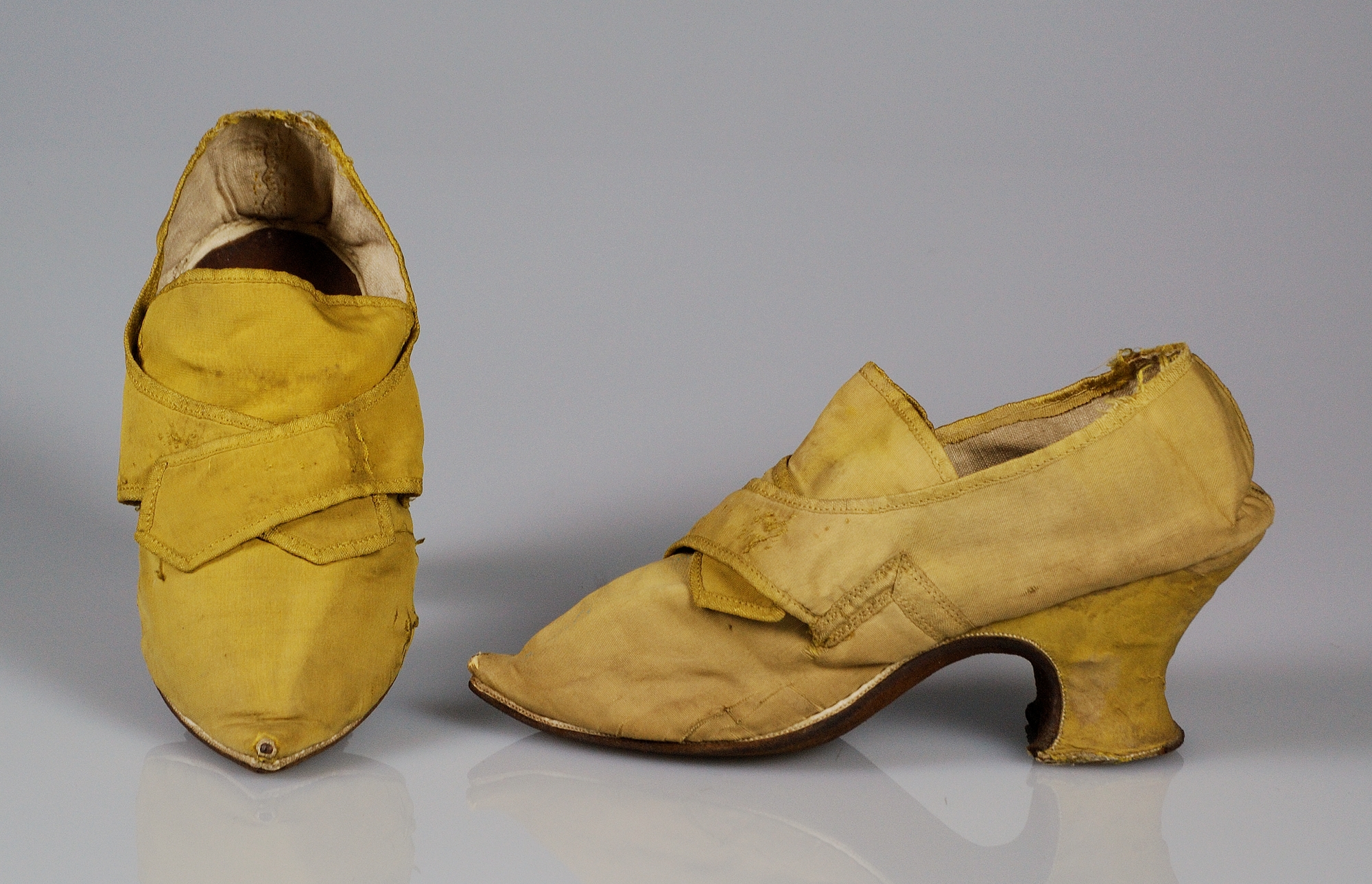
In the rarefied echelons of haute couture, the shoe is rarely a mere appendage; it is the concluding punctuation of a sartorial sentence, the silent carrier of posture, poise, and power. Katherine Fashion Lab, in its latest atelier release, has elevated this premise to a thesis on historical materialism. The subject is the shoe. The origin is European. The material is unadulterated silk. Yet, to describe this piece merely by its taxonomy is to ignore the profound archival DNA that pulses beneath its lustrous surface. This is not footwear; it is a wearable fragment of a broader cultural dialogue—one that finds its genesis in the crucible of the sixteenth and seventeenth centuries, a period when the loom and the brush conspired to redefine the very essence of aristocratic identity.
The reference to shared DNA with an archive is not a marketing platitude but a technical and philosophical reality. Katherine Fashion Lab has engaged in a process of historiographic reconstruction, excavating the aesthetic grammar of early modern Europe—a time when the exchange between Eastern silks and Western tailoring produced some of the most opulent artifacts in human history. The shoe in question is not a direct copy of a museum piece; rather, it is a morphological descendant, a reinterpretation that honors the structural logic of the past while speaking the fluid vernacular of contemporary couture.
Materiality as Memory: The Silk Substrate
The choice of silk is the first and most potent declaration of intent. In the sixteenth century, silk was not merely a fabric; it was a geopolitical weapon, a currency of empire, and a canvas for artistic supremacy. The Venetian Republic, Genoa, and later Lyon, built their economic might on the backs of mulberry worms and the deft hands of weavers who translated Persian and Ottoman motifs into distinctly European patterns. Katherine Fashion Lab’s selection of a duchesse silk—a heavy, matte-faced satin weave—speaks to this heritage. Unlike the fluid, drapey silks of modern evening wear, duchesse has a structural rigidity that allows for architectural shaping. It holds a crease, it supports a silhouette, and it catches light with a pearlescent, almost liquid sheen that is unmistakably aristocratic.
What is immediately striking is the absence of overt ornamentation. In an era of maximalism, the Lab has chosen restraint. There is no garish crystal embroidery, no metallic thread overload. Instead, the silk is treated as a primary text. The surface may feature a jacquard-like texture—a subtle, tonal interplay of raised and recessed threads that mimics the gros de Tours weaves favored by Louis XIV’s court. This is not a decorative afterthought; it is a deliberate nod to the fact that in the archive, pattern was often woven into the ground fabric rather than applied. The result is a shoe that whispers of opulence rather than shouts it, demanding a closer, more intimate inspection—a quiet luxury that predates the term by four centuries.
Architectural Lineage: The Last and the Heel
Moving beyond the textile, the structural anatomy of the shoe reveals its European pedigree. The last—the three-dimensional mold over which the shoe is shaped—is elongated and slightly pointed, echoing the poulaine and later the chopine aesthetics of the Renaissance, yet tempered with a modern almond toe that respects the biomechanics of the contemporary foot. The heel, however, is where the archival dialogue becomes most vociferous.
The heel height is moderate, but its geometry is radical in its historical accuracy. It is a Louis heel, curved and flared at the base, a design that emerged in the 1670s and was immortalized by the court of Versailles. This is not the stiletto’s aggressive spike nor the block heel’s utilitarian clunk. The Louis heel is a study in counterbalance; it forces the wearer’s weight backward, creating the upright, almost regal posture that was de rigueur for courtiers who needed to navigate the treacherous marble floors of the Palace of Versailles while maintaining an air of effortless grace. Katherine Fashion Lab has not merely replicated this curve; they have refined it, using modern engineering to ensure that the arch support is superior to anything the seventeenth century could have conceived. The shoe thus becomes a paradox: it looks as though it belongs in a Van Dyck portrait, yet it feels as comfortable as a bespoke Oxford.
This architectural rigor is further evidenced in the welt construction. The sole is not glued but hand-stitched to the upper using a technique that dates back to the guilds of Cordoba and later Northampton. This is a costly, labor-intensive process that allows the shoe to be resoled repeatedly, creating a garment meant for longevity, not disposability. In an industry predicated on seasonal obsolescence, this is a radical act of preservation—a direct philosophical alignment with the archival impulse to conserve and transmit beauty across generations.
The Unseen Collision: East Meets West in the Lining
To fully appreciate the "shared DNA" referenced in the brief, one must look inside the shoe. The exterior silk is undoubtedly European in its disciplined elegance, but the interior lining reveals the true cultural collision of the era. The brief mentions the sixteenth and seventeenth centuries as a period of cultural exchange; this was the age of the Silk Road’s maritime expansion, where Portuguese carracks and Dutch East Indiamen brought Chinese silks, Japanese lacquer, and Indian chintz to European ports. These exotic goods were not merely consumed; they were interpreted.
Katherine Fashion Lab has lined the interior with a raw silk organza, dyed in a deep, almost iridescent indigo or a madder-root crimson—colors that were painstakingly derived from natural dyes in the archive. The texture is slightly nubby, a tactile contrast to the smooth duchesse exterior. This hidden layer is a quiet homage to the chinoiserie movement, where European artisans would attempt to replicate the fluid, asymmetrical aesthetics of East Asian art, often resulting in a hybrid beauty that was neither wholly Eastern nor Western, but uniquely its own. The wearer feels this history against their skin—a subtle, sensual reminder that the shoe is a vessel for global trade, artistic migration, and the complex, often violent, beauty of cultural appropriation and appreciation.
Conclusion: A Worn Manifesto
In this creation, Katherine Fashion Lab has not designed a shoe for the timid. It is a manifesto of material intelligence, a piece that demands its wearer possess a certain cultural literacy. It rejects the tyranny of the new, positing instead that innovation lies in reinterpretation—in understanding the deep, structural logic of historical artifacts and translating them into a contemporary idiom.
The silk is not just silk; it is the memory of a thousand looms. The heel is not just a heel; it is the ghost of a courtier’s posture. The lining is not just a lining; it is the echo of a maritime trade route. This shoe is an heirloom in the making, a piece of wearable archaeology that connects the wearer to a lineage of artisans who believed that the space between the foot and the ground was not empty, but rather a canvas for the most profound expressions of human civilization. It is, in the truest sense, a step into history—one taken with deliberate, informed, and breathtaking grace.