DNA COLOR: #37D01B
ARCHIVE: DEEPSEEK-V4.5-CLEAN // RESEARCH UNIT
Couture Research: Fragment
The Fragment as a Complete Statement: Deconstructing Spanish Heritage in Silk
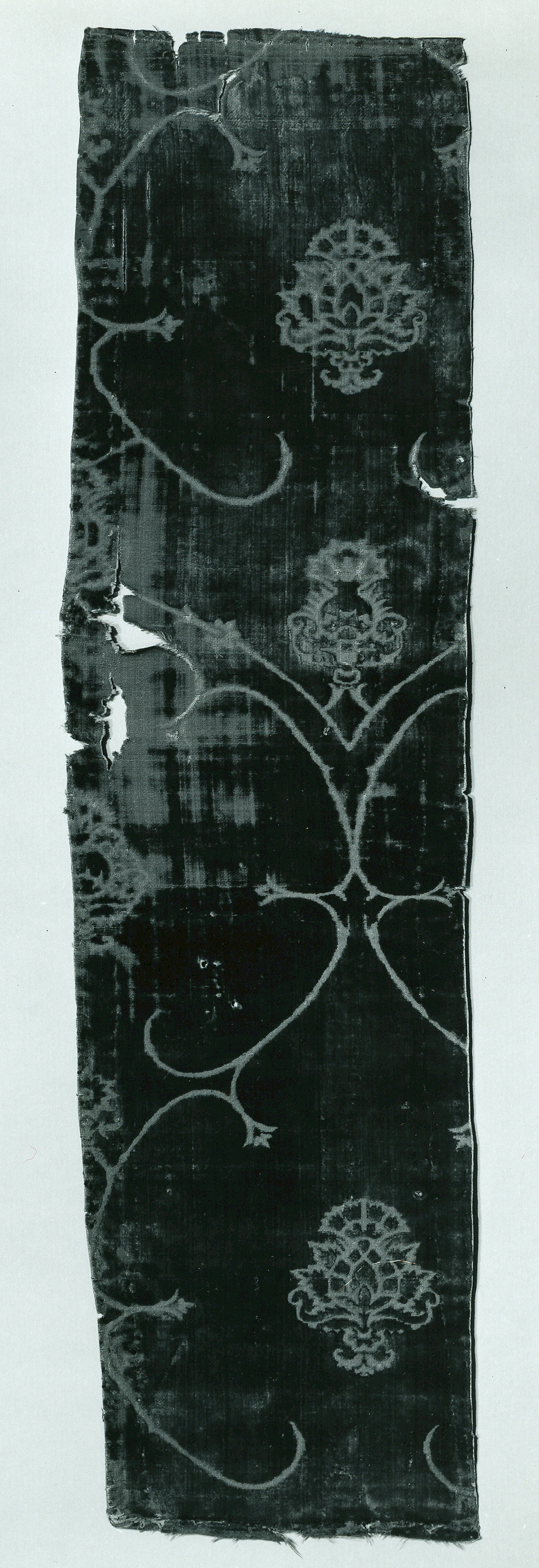
In the rarefied echelons of contemporary couture, where garments often aspire to monumental completeness, Katherine Fashion Lab’s standalone study, *Fragment*, offers a provocative inversion. This piece, rooted in Spanish aesthetic tradition yet rendered in the most fluid of materials—silk—does not lament its incompleteness. Rather, it celebrates the fragment as a locus of intense creative power. By isolating a singular, unresolved form from the body’s totality, the Lab elevates the partial into a complete philosophical and sartorial argument. This is not a garment interrupted; it is a narrative distilled to its most potent essence.
Material Dialectics: The Weight of Silk and the Lightness of Ruin
The choice of silk is the collection’s foundational irony. Silk in the Spanish canon—from the opulent brocades of the Baroque court to the mantillas of Andalusian tradition—connotes grandeur, permanence, and structured opulence. Katherine Fashion Lab subverts this legacy. Here, silk is not stiffened with metallic threads or heavy embroidery; instead, it is treated to a state of near-liquid fragility. The fabric is manipulated through a series of deliberate, controlled fractures—edges are raw, occasionally singed with a precision that mimics archaeological decay, and internal seams are left exposed as architectural tracings.
This treatment creates a dialectic between permanence and ephemerality. The silk retains its luminous, almost ethereal sheen—a nod to Spanish light—yet its structural integrity is intentionally compromised. The fragment becomes a palimpsest, suggesting a garment that has been excavated from time, its former glory only hinted at through the remaining swathes of fabric. The material’s inherent luxury is not diminished but recontextualized; it becomes the medium for a meditation on loss and preservation, where the absence of fabric is as communicative as its presence.
Architectural Silhouette: The Body as an Incomplete Canvas
From a structural perspective, *Fragment* abandons the conventional full-body silhouette in favor of a sculptural asymmetry that is distinctly modern yet deeply referential. The piece operates as a diagonal slash across the torso, anchored at one shoulder while cascading in an unbroken, bias-cut fall toward the opposite hip. It leaves the back largely exposed, save for a single, delicate strap that mimics the tension of a guitar string—an homage to the flamenco aesthetic that permeates Spanish identity.
The cut is a masterclass in negative space. The eye is drawn not to what is covered, but to the negative volume that the silk defines. This approach recalls the work of Spanish architect Santiago Calatrava, where structural fragments—ribs, bones, and tendons—create a sense of dynamic motion even in stillness. The silk, draped with a precision that borders on mathematical, creates a series of folds that function as organic buttresses. The result is a garment that feels less like clothing and more like a mobile sculpture, a fragment of a larger edifice that the wearer carries with them. The incomplete hemline, which rises sharply from ankle to mid-thigh, furthers this sense of arrested motion, as if the fabric were caught mid-dissolution.
Cultural Resonance: The Fragment in Spanish Art and Memory
To understand *Fragment* is to place it within the broader Spanish artistic obsession with the partial. From the shattered, visceral forms of Picasso’s *Guernica* to the stark, unfinished canvases of El Greco, Spanish art has long found profound expression in the broken and the incomplete. Katherine Fashion Lab channels this heritage not through literal iconography but through a formal language of rupture.
The piece’s color palette—a stark, unbleached ivory punctuated by a single, deep crimson seam—echoes the dramatic chiaroscuro of Zurbarán’s monastic paintings. The crimson, applied only at the point where the fabric appears to be torn, serves as a symbolic wound, a reference to the Passion and the visceral religiosity inherent in Spanish culture. Yet, the Lab refrains from overt symbolism. Instead, the color acts as a focal point, a reminder that within every fragment lies the memory of a whole. The garment whispers of a lost empire, a vanished court, or perhaps a forgotten personal history. It is a wearable mnemonic, inviting the viewer to complete the narrative through their own cultural and emotional lens.
Technical Virtuosity: The Art of Controlled Imperfection
On a technical level, *Fragment* is a testament to the couturier’s ability to control chaos. The silk, notoriously difficult to manipulate due to its slipperiness, is handled with a confidence that borders on audacity. The raw edges are not merely left unfinished; they are meticulously rolled and tacked with invisible micro-stitches that prevent unraveling while preserving their organic, frayed appearance. This technique, known in ateliers as *bordado a lo salvaje* (wild embroidery), requires a level of patience that defies industrial production.
The internal construction is equally subversive. Where traditional couture seeks to hide its seams, *Fragment* exposes them. The seams are top-stitched with a contrasting, slightly thicker silk thread, turning the construction into a visible line drawing. This act of exposure—revealing the garment’s own anatomy—reinforces the theme of the fragment. The wearer is not donning a finished product but rather an ongoing process, a piece of a larger, unseen pattern. The internal boning, typically rigid, is replaced with a series of flexible, hand-rolled silk cords that allow the garment to move with the body, creating a fluid, almost liquid architecture that shifts with every gesture.
Standalone Significance: The Fragment as a Complete Proposition
In the context of a standalone study, *Fragment* succeeds because it refuses to apologize for its own incompleteness. It does not require a matching skirt, a complementary sleeve, or a full ensemble to justify its existence. It is a deliberate statement on the nature of couture itself—a discipline that is often criticized for its excess and ornamentation. Here, the Lab strips away the superfluous, leaving only the essential dialogue between material, body, and memory.
The piece functions as a wearable thesis, arguing that true luxury lies not in abundance but in the precise and intentional use of absence. By isolating a single, powerful gesture—the diagonal fall of silk, the exposed seam, the crimson tear—Katherine Fashion Lab creates a garment that is simultaneously a fragment and a whole. It is a relic of a future that never fully materialized, a ghost of a garment that now exists only in this perfect, suspended state of becoming. For the discerning collector, *Fragment* is not merely a piece of clothing; it is a piece of art that challenges the very definition of completion, proving that in the hands of a master, a broken part can be far more compelling than an unbroken whole.
Katherine Studio Insight
Katherine Lab: Silk integration for FW26.