Deconstructing the Valentine: A Couture Analysis of Ephemeral Archetypes
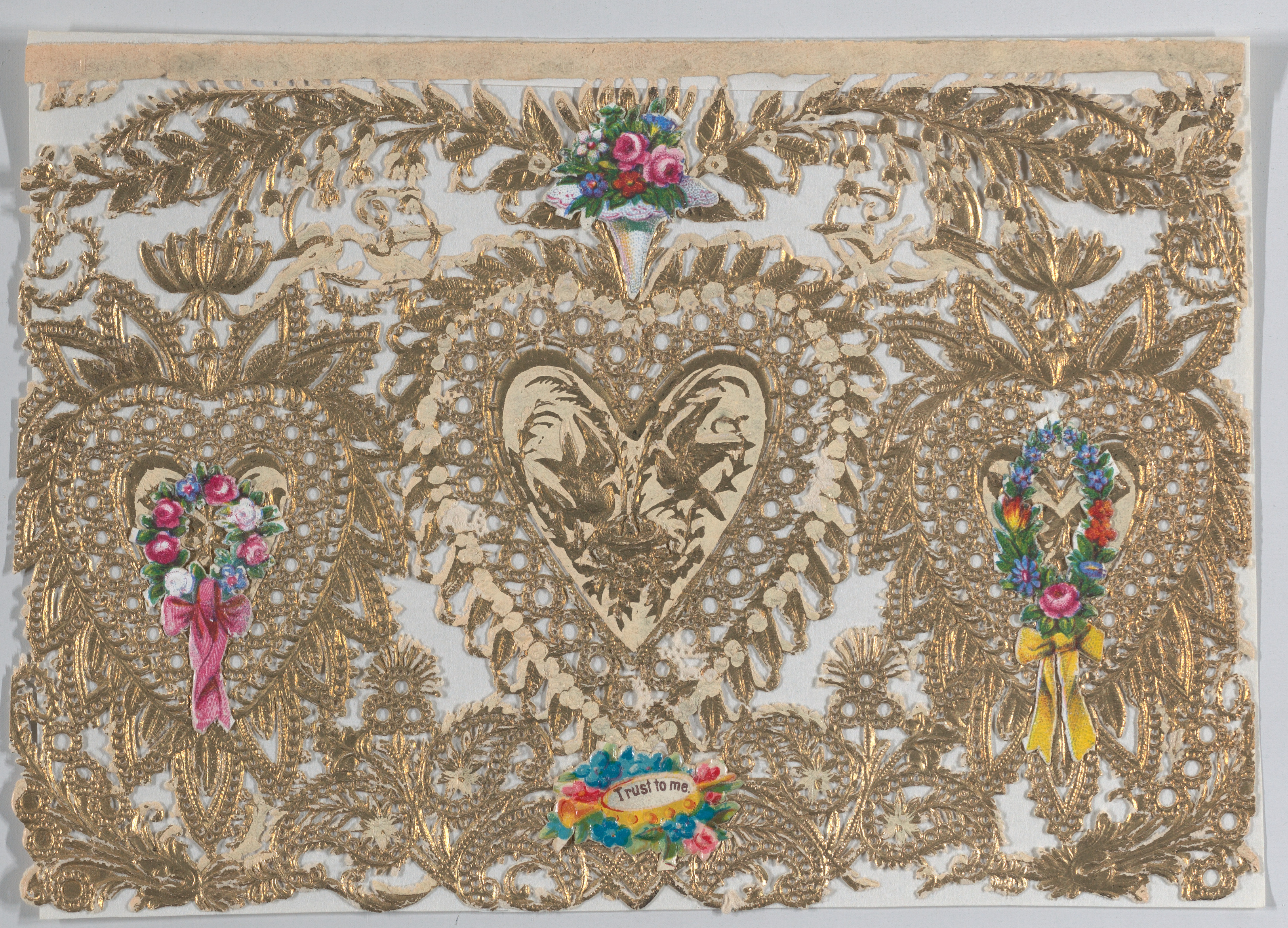
The Valentine, as a subject of standalone couture analysis, transcends its colloquial association with mere sentiment. Within the rigorous framework of Katherine Fashion Lab, it is re-contextualized as a complex artifact of Global Heritage, a dense confluence of material culture, symbolic language, and performative intimacy. This analysis dissects its constituent elements—cameo-embossed, open-work, gilded lace paper, chromolithography, and die-cut scraps—not as decorative afterthoughts, but as the foundational textiles and techniques of a non-wearable, yet profoundly sartorial, art form. The Valentine emerges as a prototype for a garment of emotion, its construction mirroring the haute couture process in its meticulous layering of meaning and medium.
The Architecture of Intimacy: Structural and Surface Embellishment
The material lexicon of the Valentine is its first point of couture reference. Cameo-embossed surfaces introduce a narrative bas-relief, a tactile topography that echoes the intricate beadwork and *passementerie* of historical gowns. This technique transforms a two-dimensional plane into a three-dimensional canvas, where light and shadow interact with the raised motifs—often classical profiles or allegorical figures—much as they would with embroidered silk or velvet. Adjacent, open-work and gilded lace paper perform a dual function. The open-work, a precise act of subtraction, creates a fragile armature, a filigree that recalls the *point d’esprit* or Chantilly lace used for veils and overlays. Its deliberate voids are as significant as its solids, framing glimpses of deeper layers and introducing a calculated vulnerability. The gilding applied to this lace paper is not mere color; it is a strategic application of value and luminosity, mimicking the effect of metallic threads ( *frisé* or *lamé* ) woven into luxury textiles, thereby elevating the humble paper substrate to a plane of ceremonial opulence.
This foundational "textile" is then activated by chromolithography. This 19th-century innovation democratized color but, in the context of the Valentine, it functioned as a precise and vibrant print technology. The flat, saturated fields of color provided by chromolithography serve as the "ground" or "taffeta" upon which the more dimensional elements are assembled. Its role is analogous to a brilliantly dyed silk underlayer, a necessary backdrop that gives coherence and visual depth to the assembled complexity. The technique’s global heritage is pertinent; it represents an industrial advancement with European origins that facilitated the mass dissemination of visual motifs drawn from a burgeoning, cross-cultural romantic iconography.
Assemblage as Atelier Practice: The Die-Cut Scrap and the Logic of *Découpage*
The most distinctly couture-like operation in the Valentine's construction is the application of die-cut scraps. These were not random clippings but commercially produced, serially yet intricately cut images—floral sprays, cherubs, birds, and ornate cartouches. Their application follows the exacting principle of *découpage* or collage, a direct parallel to the *atelier* practice of assembling a garment from individually crafted components. Each scrap is a discrete module of meaning and decoration, akin to an appliqué, a *broderie* motif, or a hand-painted *plique-à-jour* enamel element.
The selection and placement of these die-cut scraps required a curatorial eye and a narrative intent. A couturier arranges lace, embroidery, and jewels to guide the viewer’s eye and articulate a garment’s silhouette and focal points; similarly, the Valentine’s creator composed with scraps to build a visual hierarchy and a symbolic syntax. A cluster of roses at the center might function as a corsage or bodice emphasis, while trailing vines could suggest the fluid line of a train or the delicate flow of a sleeve. This process of assemblage transforms the standardized, mass-produced scrap into a component of a unique, hand-finished composition—the very definition of a couture object emerging from industrialized pre-fabricated elements.
Global Heritage and the Semiotics of Sentiment
Positioning the Valentine within a Global Heritage context necessitates moving beyond its Victorian commercial peak. Its antecedents are woven from diverse traditions: the poetic exchange of *tanzaku* on Tanabata in Japan, the medieval European tradition of courtly love poetry, and the exchange of handmade paper tokens. The Valentine, as analyzed here, synthesizes these streams into a singular, material expression. The cameo references Greco-Roman classicism, a touchstone of Western art. The lace paper evokes the European lace-making centers of Brussels or Alençon. The chromolithographic flowers may borrow from botanical illustrations circulating globally, while the cherubs are rooted in Renaissance iconography.
This fusion creates a portable, intimate museum of romantic archetypes. The Valentine is not a garment for the body, but a container for projected emotion, its construction mirroring the construction of feeling itself—layered, embellished, sometimes fragile, and often gilded for presentation. It performs a sartorial function in the social sphere: it is an accessory to identity, announcing the sender’s taste, effort, and emotional position with the same declarative power as a bespoke outfit.
Conclusion: The Valentine as Prototype and Proposition
For Katherine Fashion Lab, this standalone study of the Valentine is far from antiquarian. It presents a compelling prototype for conceptual fashion. It demonstrates how texture (embossing), transparency (open-work), luminosity (gilding), color field (chromolithography), and applied modular ornament (die-cut scraps) can interact to build an object of profound symbolic weight and aesthetic complexity. The Valentine’s "pattern" is one of emotional semantics, its "draping" is an act of careful collage, and its "finishing" is the intimate hand of the sender.
This analysis ultimately proposes that couture principles—of structure, surface, assemblage, and narrative—are not confined to the wearable. They are methodologies for crafting meaning. The Valentine, in its exquisite ephemerality, stands as a testament to the human desire to clothe emotion in a tangible, crafted form, utilizing the most advanced material technologies of its time to create a lasting, if delicate, monument to a fleeting feeling. It challenges the modern couturier to consider the full spectrum of materials and to find the profound in the ostensibly sentimental, recognizing in this global artifact a masterclass in the layered construction of desire.