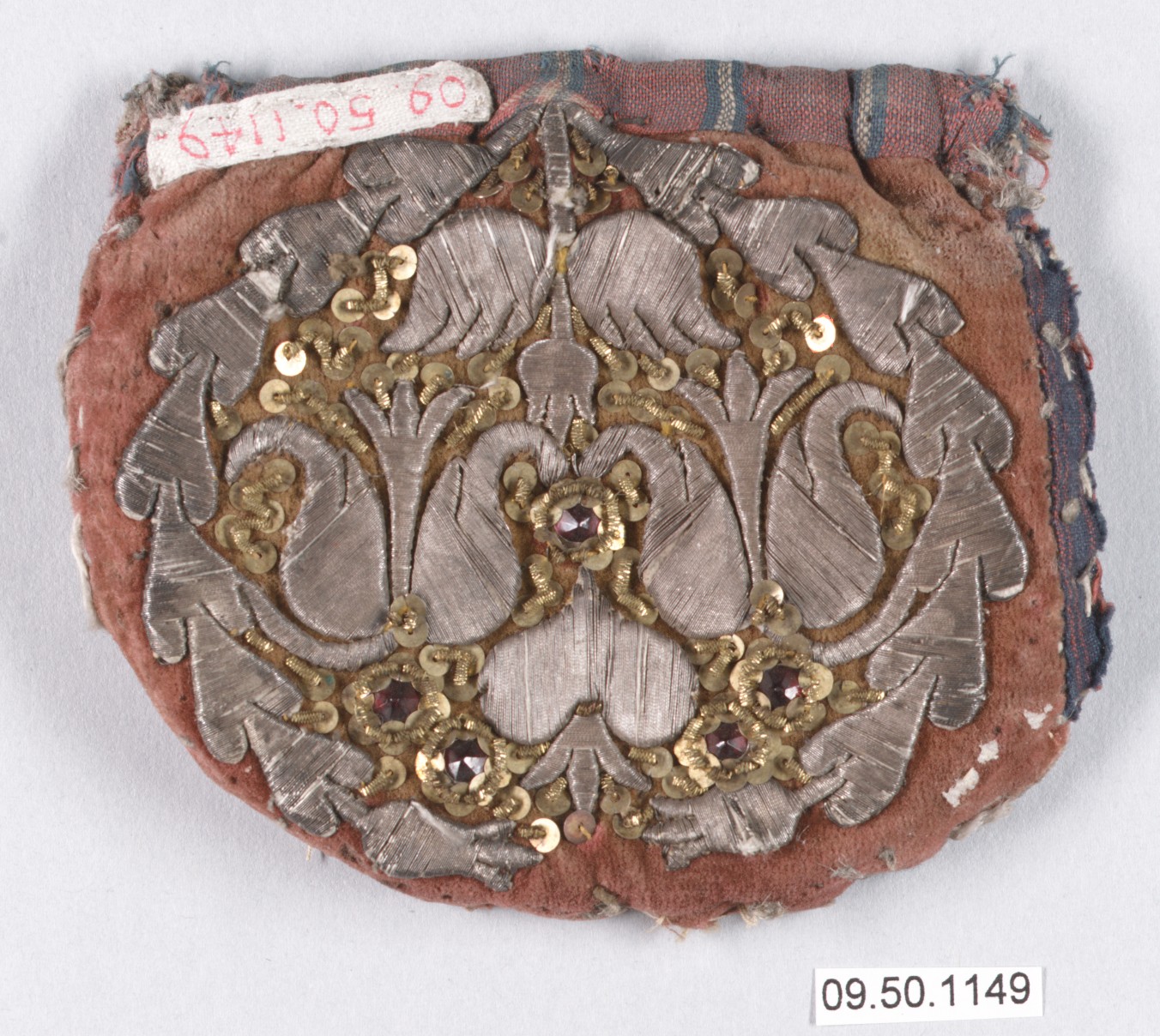
The Cap Crown Reimagined: A Study in Velvet and Metallic Lineage
Within the rarefied echelons of contemporary couture, the cap crown stands as a paradox—simultaneously a relic of utilitarian headwear and a canvas for supreme ornamental expression. At Katherine Fashion Lab, this foundational silhouette is not merely revisited; it is dissected, elevated, and re-stitched into a thesis on global heritage. The subject of this standalone study—a cap crown rendered in sumptuous velvet and structured by metallic thread—transcends its functional origins to become a meditation on cultural memory, material hierarchy, and the architectural possibilities of the human form.
To analyze this piece is to engage with a dialogue between the mundane and the majestic. The cap crown, historically a component of workers’ caps, military regalia, and regional folk dress, is here liberated from its subservient role. Under the Lab’s direction, it is no longer a covering but a sculptural statement, a micro-architecture that commands the vertical axis of the wearer’s presence. The choice of velvet—a fabric historically reserved for royalty and ecclesiastical power—immediately repositions the crown from the street to the salon. Yet, it is the metallic thread that provides the intellectual tension, introducing a language of industrial precision and celestial luminosity that cuts through the velvet’s plush opacity.
Material Dialectics: Velvet’s Depth and Metal’s Line
The intrinsic value of this study lies in the antagonistic yet harmonious relationship between its two primary materials. Velvet, with its dense pile and light-absorbing properties, offers a sense of tactile gravity. It does not reflect; it drinks light, creating pools of shadow that lend the crown a brooding, volumetric presence. In contrast, the metallic thread—likely a blend of fine copper, silver, or gilt-wrapped silk—acts as a linear counterpoint. It does not sit upon the surface but is woven into the structure, creating a raised, almost bas-relief topography. The thread is not mere embellishment; it is the skeleton that gives the velvet its form, a tensile strength that prevents the soft material from collapsing into mere drapery.
This dialectic is crucial for the couture analysis. The velvet speaks to a heritage of sensorial luxury, evoking the velvets of 16th-century Italian ducal courts or the deep-toned silks of Ottoman imperial workshops. The metallic thread, however, introduces a narrative of connectivity—trade routes, the Silk Road, and the exchange of precious metals across continents. When the thread is used to delineate geometric or floral motifs, it references the intricate zardozi work of South Asia, the passementerie of French haute couture, and the filigree traditions of the Iberian Peninsula. In a single crown, we witness a cartography of global artistry, where the velvet provides the foundational earth and the metal traces the rivers of cultural confluence.
Structural Integrity and the Art of Negative Space
A standalone study demands an interrogation of form, and here, the cap crown’s structure is a masterclass in controlled volume. Unlike a beret’s slouch or a fedora’s brim, the cap crown’s defining characteristic is its fitted, hemispherical dome. Katherine Fashion Lab exploits this geometry by manipulating the crown’s panels. The metallic thread is not randomly applied; it is strategically placed along the seams and radiating outward, functioning as both decorative passementerie and structural ribbing. This technique creates a series of subtle, rigid arcs that lift the velvet away from the skull, introducing a micro-climate of air between fabric and skin—a hallmark of high-end millinery that prioritizes both comfort and silhouette.
The negative space between the metallic threads is equally deliberate. The velvet’s nap is left undisturbed in these voids, allowing for a play of matte and sheen that shifts with the wearer’s movement. This is not a static object; it is a kinetic light show. As the head turns, the metallic threads catch the light in brief, staccato bursts, while the velvet remains a dark, silent backdrop. This oscillation between the literal and the ethereal is the crown’s primary intellectual contribution. It challenges the viewer to reconsider the cap crown not as a closed form, but as an open framework of light and shadow, where the material itself becomes the subject of the gaze.
Global Heritage: A Silenced Vocabulary of Power
The provenance of this cap crown is not singular; it is a palimpsest of global influences. To call it “Global Heritage” is to acknowledge that the cap crown form appears across disparate cultures—from the Mongolian maolao to the Scottish bonnet, from the Uzbek tubeteika to the medieval European coif. In this study, Katherine Fashion Lab synthesizes these references into a cohesive, modern artifact. The velvet’s deep, undyed black or aubergine tone suggests a grounding in the earth, while the metallic thread’s intricate patterning—perhaps a stylized pomegranate or a geometric star—draws from Persian miniature painting and Andalusian tilework.
This is not cultural appropriation but cultural curation. The Lab treats each motif as a loaned letter from a shared alphabet of human adornment. The metal thread, for instance, may mimic the suzani embroidery of Central Asia, but it is executed with a European precision that speaks to the ateliers of Paris or Milan. The result is a piece that is neither East nor West, but a third entity—a cosmopolitan object that acknowledges its roots while refusing to be confined by them. The crown becomes a diplomatic emissary, wearing the history of trade and conquest, yet speaking a modern language of individual expression.
The Standalone Context: An Object of Contemplation
Removed from the runway’s frantic pace and the distraction of a full ensemble, this standalone study forces a focused, almost museological gaze. Without a garment to contextualize it, the cap crown must justify its existence through pure material and form. This isolation is a bold curatorial decision. It elevates the crown from accessory to autonomous sculpture. The viewer is invited to circle the piece, examining the interior seam work where the velvet is hand-stitched to a horsehair canvas, and the exterior where the metallic thread is couched in place with invisible silk. This forensic level of detail is the essence of couture—a commitment to perfection that is unseen but deeply felt.
In this standalone context, the crown also invites a phenomenological reading. It is a vessel for absence—a head that is not there. This void is powerful. It evokes the ceremonial headdresses of vanished dynasties, the crowns of martyrs, and the simple caps of laborers whose names are lost to history. By leaving the interior empty, Katherine Fashion Lab allows the viewer to project their own narrative onto the object. Is it a relic of a lost empire? A futuristic interface for a post-human consciousness? Or simply a beautiful object that asks to be worn? The ambiguity is its strength. It resists a single interpretation, offering instead a plurality of meanings that shift with the viewer’s own cultural lens.
Conclusion: The Crown as a Cartography of the Self
Ultimately, this cap crown is not about headwear. It is about the negotiation of identity in a globalized world. The velvet represents the personal, the intimate, the body’s desire for softness and protection. The metallic thread represents the public, the structural, the societal frameworks that shape and sometimes constrain us. The crown’s genius is in its synthesis—a demonstration that heritage is not a static inheritance but a dynamic, malleable resource. Katherine Fashion Lab has taken a humble form and, through the alchemy of velvet and metal, transformed it into a portable monument. It is a testament to the idea that couture is not merely clothing, but a philosophical inquiry into what we carry on our heads and, by extension, in our minds. This standalone study will endure not because it is fashionable, but because it is profound—a quiet, metallic whisper in a world that often shouts.