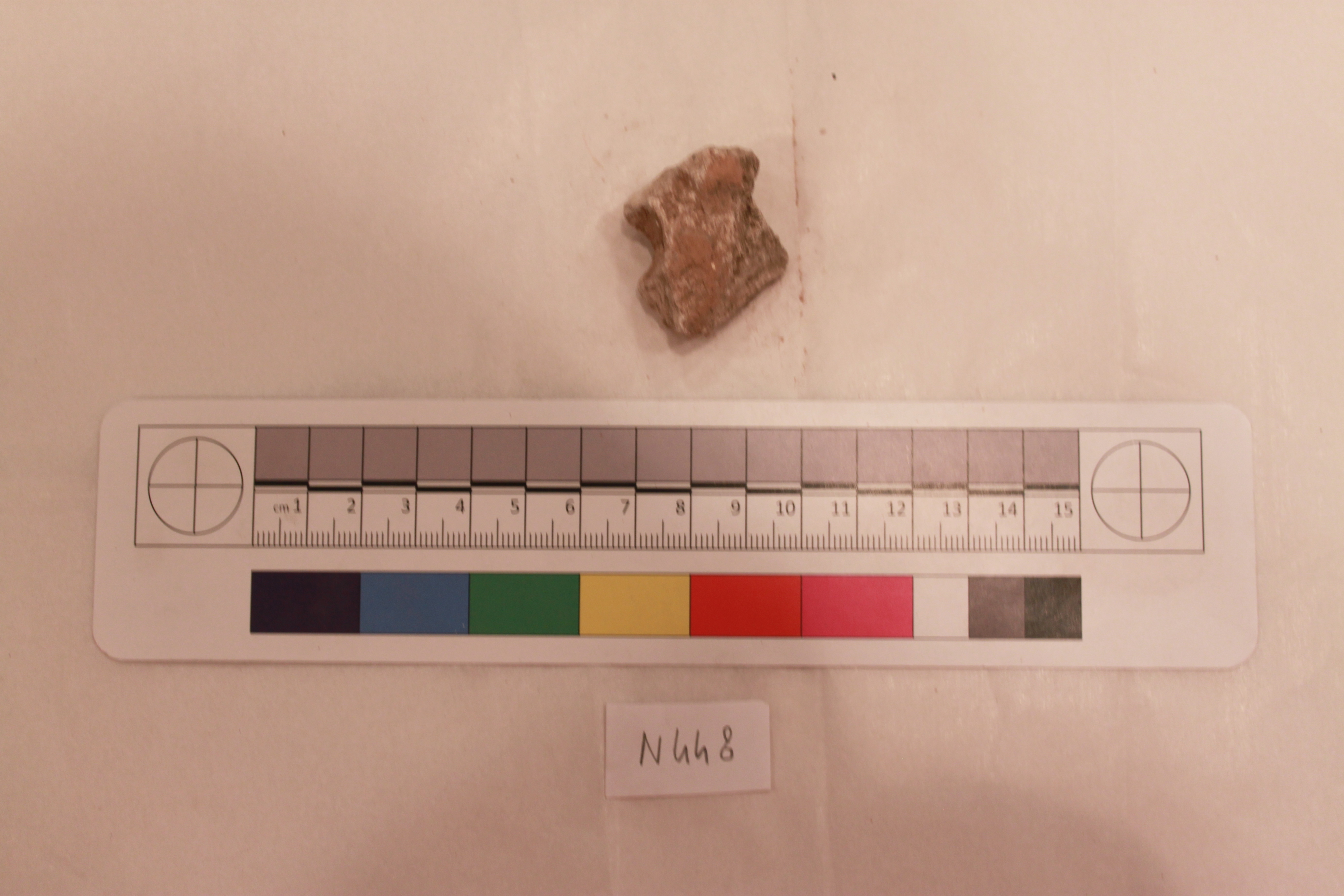
Executive Heritage Assessment: The Stucco Fragment as a Blueprint for 2026 Luxury
In the rarefied echelons of high-end fashion, the pursuit of novelty often paradoxically anchors itself in antiquity. For Katherine Fashion Lab, the strategic analysis of a painted, carved stucco fragment from an ancient civilization offers more than an archaeological curiosity; it presents a foundational lexicon for a 2026 luxury strategy predicated on authentic narrative depth, material integrity, and transcendent symbolism. This paper deconstructs the fragment’s symbolic power, historical adornment practices, and spiritual meaning, translating these elements into a concrete, market-ready creative and commercial directive.
Symbolic Power: The Architecture of Authority
The stucco fragment, though physically partial, is semantically whole. In ancient contexts—particularly within Mesoamerican, Greco-Roman, or Near Eastern palatial complexes—stucco was not a mere construction material but a privileged medium for encoding statecraft and divine mandate. The carved reliefs, whether depicting a profile of a ruler, a mythological tableau, or a geometric emblem of cosmic order, functioned as permanent propaganda. The symbolic power inherent in this fragment lies in its exclusivity; it was a visual language accessible only to the elite and the initiated.
For Katherine Fashion Lab, this translates into a strategic pivot away from overt logo-centric branding toward iconographic storytelling. The 2026 collection should not simply print motifs; it must sculpt identity. The fragment’s carved nature suggests depth, shadow, and dimensionality—qualities that should be mirrored in garment construction. High-relief embroidery, structural boning that mimics architectural cornices, and laser-cut leathers that create chiaroscuro effects will position the brand as a purveyor of worn authority. The consumer is not buying a dress; they are acquiring a fragment of a forgotten empire’s power structure, re-contextualized for the modern boardroom or gala.
Historical Adornment: The Grammar of Ornament
The specific application of paint on the stucco—often polychrome in its original state, with traces of vermilion, azurite, or cinnabar—reveals the ancient grammar of adornment. Color was not arbitrary; it was a coded system of status and cosmology. The layering of gesso, pigment, and protective finishes demonstrates a sophisticated understanding of surface treatment that modern fast-fashion has rendered obsolete. Historically, adornment was an act of ritual completion; a bare architectural surface or a bare human form was considered unfinished, vulnerable, or profane.
This heritage insight dictates a 2026 haute couture and prêt-à-porter strategy centered on surface alchemy. Katherine Fashion Lab should invest in artisanal ateliers skilled in hand-painting, devoré, and metallic leaf application that replicate the fragment’s aged patina. The strategic luxury angle here is the imperfect finish. In a market saturated with sterile, machine-perfect textiles, the deliberate simulation of ancient wear—crazing, micro-fissures, and pigment settling—signals a level of craft that cannot be replicated by automation. This approach validates premium pricing by offering a tangible connection to historical processes, aligning with the 2026 consumer’s demand for traceable, tactile authenticity.
Spiritual Meaning: The Materialization of the Divine
Beyond aesthetics, the stucco fragment served a profound spiritual function. In many ancient civilizations, stucco was believed to be the flesh of the gods; carving it was an act of theurgy, summoning divine presence into the mortal realm. The fragment likely belonged to a frieze or an altar where it mediated between the human supplicant and the celestial sphere. Its spiritual meaning is rooted in the concept of transubstantiation—the idea that base material (lime, sand, pigment) could become holy through artistic intervention.
The 2026 luxury strategy must therefore elevate the collection from mere clothing to talismanic objects. This is not a superficial nod to "wellness" or "spirituality" trends; rather, it is a rigorous integration of ritual into the brand experience. Katherine Fashion Lab should consider limited-edition pieces that are "blessed" through a design narrative—perhaps a specific series where each garment’s interior lining carries a hand-embroidered hieroglyph or cuneiform invocation derived from the fragment’s original context. Furthermore, the strategic use of negative space in design should mimic the fragment’s broken edges, suggesting that the wearer is part of a larger, unfinished cosmic narrative. This psychological positioning fosters deep brand loyalty, as clients perceive the garments as guardians or amulets for their own aspirational journeys.
Strategic Synthesis: The 2026 Luxury Manifesto
Translating these heritage elements into a commercial roadmap requires a disciplined, MBA-driven approach to narrative control and product architecture. The stucco fragment is not merely inspiration; it is a strategic asset that differentiates Katherine Fashion Lab in a crowded ultra-luxury market.
Product Tiering and Materiality
The first strategic pillar is tiered materiality. The core collection should utilize high-density jacquards and sculptural wools that evoke the weight of stucco, offering structure and gravity. The top-tier "Fragment Archive" line, however, will feature actual crushed mineral pigments and custom-developed bio-resins that mimic the original medium’s texture. This tier is positioned as an investment piece, with a price point justified by the intellectual property derived from the archaeological research and the limited, numbered production run.
Communication and Experiential Retail
The second pillar is experiential archaeology. The 2026 campaign should not be a traditional lookbook; it must be a digital and physical excavation. Flagship stores will be redesigned to resemble archaeological sites, with garments displayed on plinths that replicate the fragment’s original architectural context. Augmented reality (AR) filters will allow clients to "restore" the fragment on their mobile devices, seeing the complete original pattern before viewing the contemporary garment—a powerful narrative of reconstruction that mirrors the consumer’s own desire for self-actualization. This interactive storytelling drives engagement and justifies a premium in a market where experience is the ultimate luxury.
Brand Legacy and Scarcity
Finally, the strategy must leverage curated scarcity. Just as the fragment is unique and irreplaceable, so too should be the primary silhouettes. The 2026 strategy will involve a "Fragmented Drop" model—releasing the collection in three phases, each corresponding to a different section of the original artifact (e.g., the Coronation Phase, the Procession Phase, the Celestial Phase). This builds anticipation and mirrors the act of archaeological discovery, ensuring that the brand remains the definitive interpreter of this ancient visual language.
Conclusion: From Ruin to Renaissance
The stucco fragment is a testament to the enduring human need to adorn, to signify, and to transcend. For Katherine Fashion Lab, it is a strategic Rosetta Stone. By decoding its symbolic power, respecting its historical grammar of adornment, and honoring its spiritual essence, the brand can execute a 2026 luxury strategy that is intellectually rigorous and commercially potent. In an era of digital saturation, the fragment’s physicality, its scars, and its silence speak louder than any transient trend. The future of high-end fashion lies not in the new, but in the profound reinterpretation of the eternal.