A Masterclass in Narrative Textiles: The Kosode Fragment at Katherine Fashion Lab
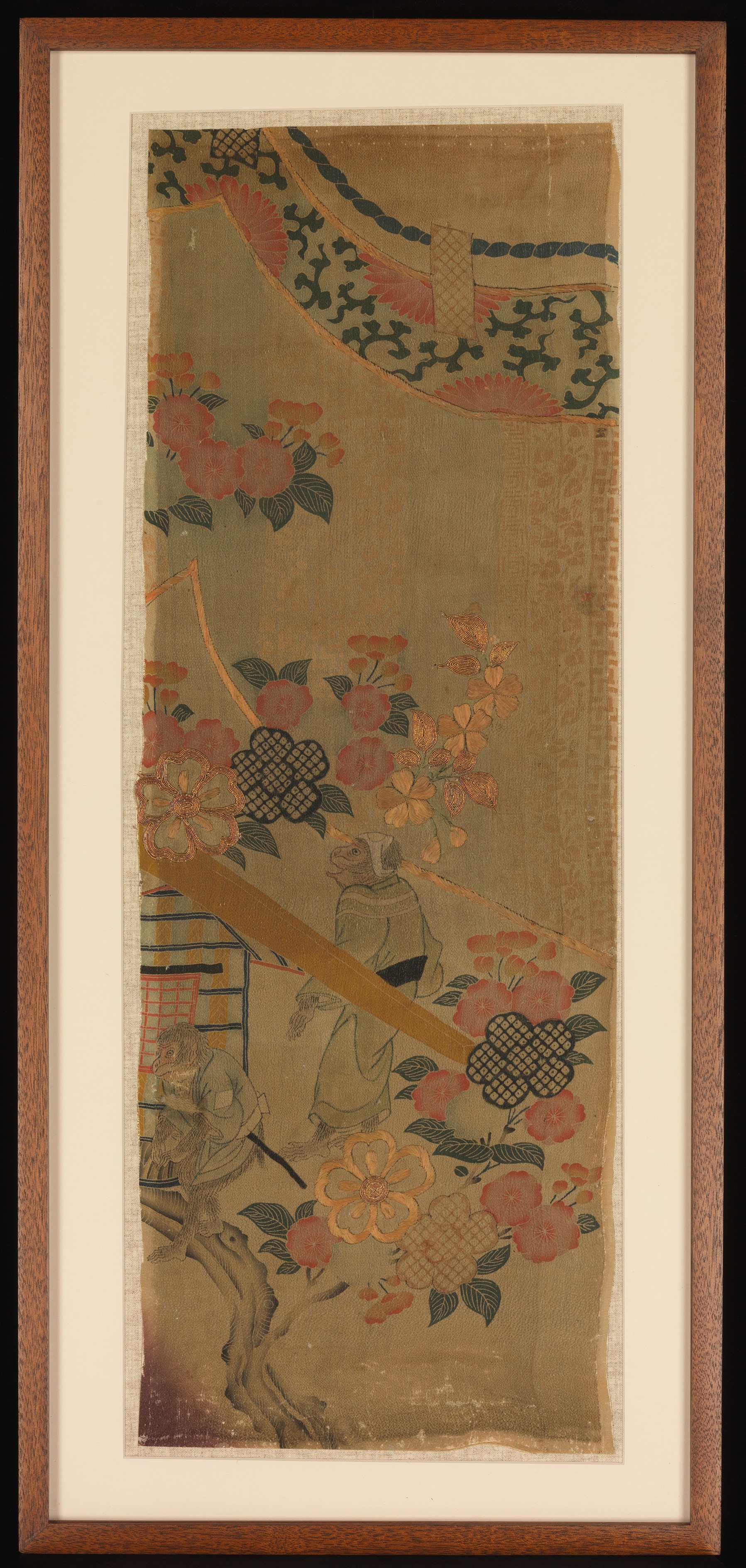
The Katherine Fashion Lab is privileged to present a standalone study of an exceptional fragment from a Japanese kosode (a precursor to the modern kimono), dating most likely from the late Edo period (circa 1780–1850). This piece, rendered on a ground of lustrous, resist-dyed silk crepe (chirimen), is not merely a textile remnant; it is a sophisticated visual document that encapsulates the pinnacle of Japanese dyeing, painting, and embroidery arts. The fragment’s subject—a riotous yet meticulously ordered scene of cherry blossoms (sakura) interwoven with monkeys (saru) and a palanquin (kago)—offers a rich lexicon of cultural symbolism, technical virtuosity, and socio-aesthetic commentary that merits deep couture-level analysis.
Deconstructing the Visual Narrative: Sakura, Saru, and the Palanquin
At first glance, the composition appears to be a celebration of spring, dominated by the ephemeral beauty of cherry blossoms. However, the inclusion of monkeys and a palanquin elevates this from mere seasonal decoration to a layered allegory. In Japanese visual culture, the cherry blossom is a multivalent symbol, representing both the fleeting nature of life (mono no aware) and the triumphant, transient glory of the warrior class. Here, the blossoms are not static; they are rendered in dynamic clusters, some fully open, others in bud, suggesting a temporal progression—the very essence of sakura’s poignant temporality.
The monkeys, depicted with anthropomorphic energy, are the true protagonists of this narrative. In Japanese folklore, monkeys are tricksters, mediators between the divine and the mundane, and often symbols of luck and protection (as seen in the “three wise monkeys” motif). Yet, their presence here, alongside a palanquin, suggests a specific literary or theatrical allusion. One compelling interpretation points to the popular Edo-period parodies of the Heike Monogatari or scenes from Noh and Kabuki plays, where monkeys often mimic human rituals. The palanquin—a vehicle reserved for nobility, warriors, or brides—being carried or attended by monkeys creates a deliberate visual irony. It is a playful subversion of social hierarchy, a common theme in ukiyo-e prints and kosode designs of the era, which delighted in depicting the animal kingdom aping the customs of the upper classes. This is not mere whimsy; it is a sophisticated commentary on the performative nature of status and the universal folly of vanity, rendered with a knowing wink.
Technical Virtuosity: The Alchemy of Resist-Dye and Embroidery
From a technical standpoint, this fragment is a testament to the collaborative genius of Edo-period artisans. The ground is a finely woven silk crepe, whose subtle, pebbled texture provides a matte canvas that absorbs and diffuses light, allowing the applied colors to glow with an inner luminosity. The primary decoration employs a combination of shibori (tie-dye) and yūzen (resist paste-dyeing). The cherry blossoms, for instance, are likely achieved through a meticulous process of itajime (board-clamping) or kanoko shibori (a technique producing tiny, white dot patterns that resemble the stippling of a fawn), which would create a delicate, textured gradation of pink and white within each petal. This is not a flat application of color; it is a sculptural manipulation of the fabric’s surface, creating a raised, tactile relief that catches the light differently at every angle.
The outlines of the monkeys and the palanquin are masterfully drawn in a dark, viscous resist paste, which prevented the dyes from bleeding. Within these outlines, the artisan has applied pigments with a brush, creating painterly gradations (bokashi) of grey, brown, and indigo to model the monkeys’ fur and the wooden structure of the palanquin. This is where the “couture” aspect becomes paramount: the design is not printed but painted, with each brushstroke demonstrating the artist’s control over the viscous dye medium. The final layer of embellishment is the embroidery, executed in lustrous silk and metallic thread. Here, the artisans have added three-dimensional details—perhaps the monkey’s expressive eyes, the intricate metal fittings on the palanquin, or the stamens of the cherry blossoms—using couching and satin stitches. The metallic thread, likely gold or silver gilt wrapped around a silk core, would have shimmered brilliantly against the matte crepe, drawing the eye to key focal points and simulating the opulence of a noble procession.
Contextualizing the Fragment: From Ritual Garment to Artistic Relic
To fully appreciate this piece, one must understand its original life as a kosode. During the Edo period, the kosode was the primary garment for all classes, but for the elite, it served as a canvas for artistic expression and social signaling. The design of this fragment, with its complex narrative and luxurious materials, strongly suggests it was commissioned for a woman of the daimyō (feudal lord) class or the wealthy merchant elite. It would have been worn during the spring season, perhaps for a formal visit or a festival. The placement of the design—likely flowing from the right shoulder across the back and down the left sleeve—was carefully considered to be visible when the wearer was in motion, turning, or seated. The monkeys and palanquin, placed lower on the garment, would have been revealed as the wearer walked, creating a dynamic, unfolding story for the observer.
Its current state as a “standalone study” is itself a narrative of preservation and recontextualization. The fragment has been severed from its original whole, likely due to damage or the practice of otoshi (passing down) where valuable textiles were cut and repurposed. In the modern museum or private collection context, this fragment is no longer a functional garment but a pure object of aesthetic and historical inquiry. It invites the viewer to extrapolate the missing whole, to imagine the full length of the sleeve and the flow of the skirt. This isolation paradoxically intensifies the focus on the artistry; every stitch, every dye pool, every brushstroke is magnified, transforming the piece from a utilitarian item into a masterwork of miniature painting on fabric.
Conclusion: The Enduring Legacy of Edo-Period Couture
In conclusion, this fragment of a kosode is far more than a pretty piece of silk. It is a confluence of advanced textile technology, sophisticated pictorial composition, and profound cultural allegory. The interplay between the ephemeral cherry blossoms and the mischievous, enduring monkeys encapsulates a distinctly Japanese philosophical outlook: the acceptance of impermanence coupled with a wry, humanistic observation of folly. The Katherine Fashion Lab’s study of this piece underscores that couture is not a Western invention. The Japanese kosode tradition, with its bespoke tailoring, complex surface design, and deep narrative resonance, represents a parallel and equally sophisticated form of high fashion. This fragment stands as a silent testament to the anonymous artisans who, with their brushes, dyes, and needles, created a wearable art form that continues to inspire and instruct contemporary designers on the profound relationship between fabric, body, and story.