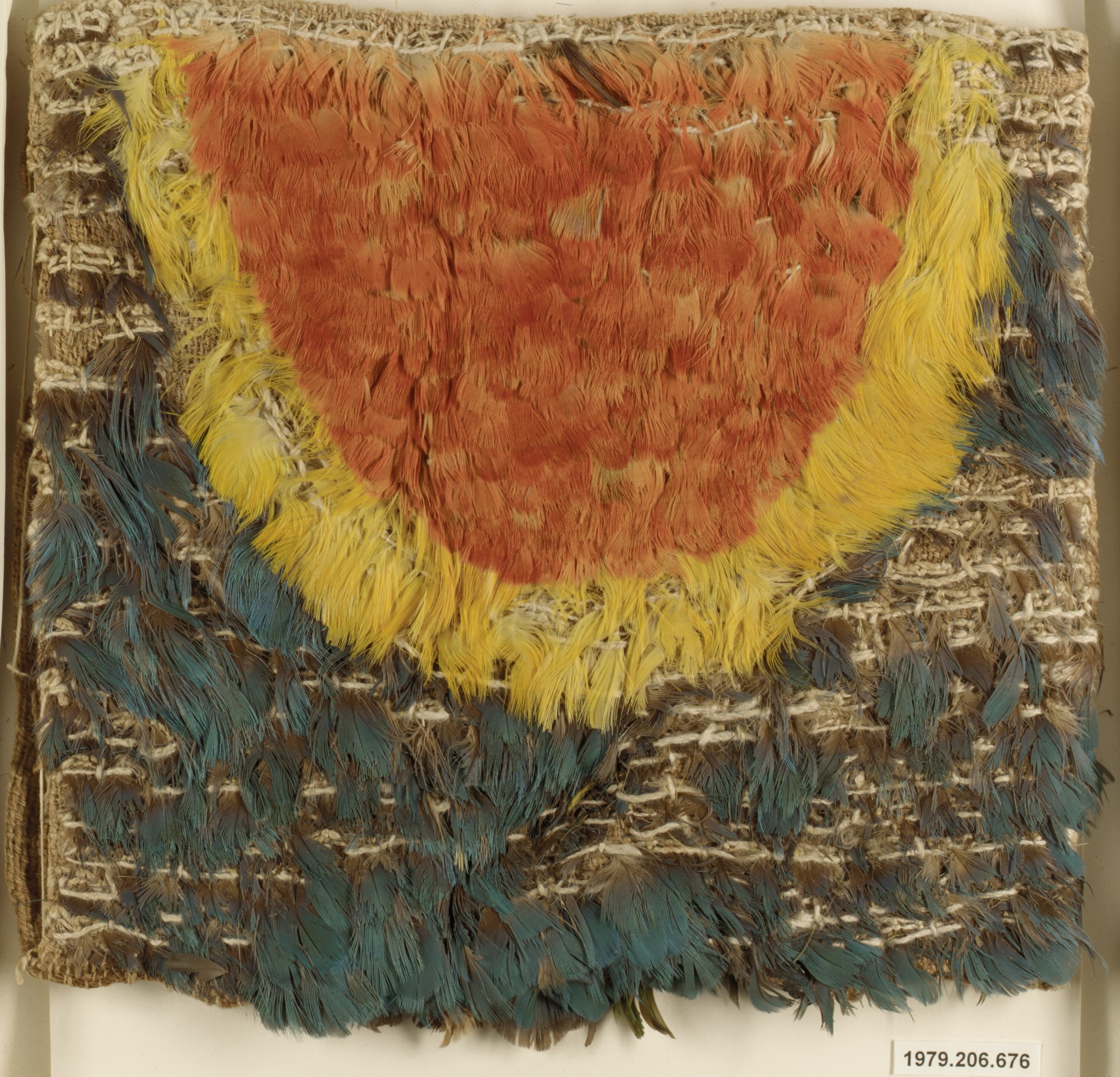
Heritage Analysis: The Miniature Tunic of Ica – A Blueprint for Spiritual Luxury
In the rarefied atmosphere of haute couture, where novelty often masquerades as innovation, the true connoisseur seeks a deeper resonance. For Katherine Fashion Lab, the study of heritage objects is not an exercise in antiquarianism but a strategic excavation of meaning. The Miniature Tunic from the Ica culture of pre-Columbian Peru, rendered in cotton and feathers, presents a profound case study. This diminutive garment, likely a votive offering or funerary accompaniment, is not merely a smaller version of adult attire; it is a concentrated capsule of cosmological power, social structure, and artistic mastery. By decoding its symbolic lexicon, we can construct a 2026 luxury strategy that transcends the ephemeral, anchoring the brand in narratives of protection, transformation, and transcendental craftsmanship.
Symbolic Power and Historical Adornment: The Microcosm as a Vessel
The Ica Valley, situated on the arid southern coast of Peru, flourished between 1000 and 1450 CE, inheriting and refining the textile traditions of the earlier Paracas and Nazca cultures. The creation of miniature garments carries immense symbolic weight across Andean cosmology. The object was not created for a living human body; rather, it was crafted for the deceased, for a deity, or as a ritual proxy. In the Andean worldview, the huaca—a sacred object or place—could hold spiritual agency. This tunic, therefore, functions as a materialized prayer, a physical conduit between the earthly realm and the supernatural.
The choice of materials reinforces this spiritual teleology. Cotton, cultivated in the coastal valleys, represents the terrestrial bounty and the human labor of irrigation and agriculture. It is the canvas of civilization. Feathers, conversely, are the ultimate signifier of the celestial sphere. Sourced from Amazonian parrots, macaws, and coastal birds, they are the iridescent plumage of the hanan pacha (the upper world). The juxtaposition of humble cotton with resplendent feathers creates a dialectical tension—a synthesis of the earthbound and the ethereal. In historical adornment, this garment was not meant to be worn but to be witnessed by the divine. Its small scale demands intimacy, suggesting that its power was activated not through public display but through private ritual, proximity, and the concentrated intent of its maker.
Weaving the Cosmos: Technical Mastery as Ritual
The technical construction of the miniature tunic is a testament to the weaver’s role as a shamanic architect. Using a backstrap loom, the artisan would have woven the cotton base with a precision that borders on obsessive. The warp and weft are not merely functional; they are a structural metaphor for the reciprocal obligations that held Ica society together. Each thread is a relational bond. The subsequent application of feathers, often tied in overlapping rows to mimic the natural layering of avian plumage, transforms the flat textile into a three-dimensional, tactile surface. This technique, known as plumaria, requires a delicate understanding of color gradation and light refraction.
The colors chosen—often vivid yellows, deep blues, and scarlet reds—are not accidental. They correspond to specific ecological niches and spiritual concepts. Red, associated with life force and blood, anchors the garment in vitality. Blue and green evoke water and vegetation, essential for agricultural fertility. Yellow, the color of the sun and gold, connects the wearer (or the offering) to divine kingship. In the context of historical adornment, the miniature tunic is a polychromatic prayer wheel, its visual complexity designed to capture the attention of ancestors and deities. It is a repository of knowledge, encoding ecological data, social hierarchy, and esoteric belief into a wearable (or offerable) form.
Spiritual Meaning and Cross-Cultural Resonance: The Silent Orchestra
Our research context introduces a compelling cross-cultural dialogue: the discovery of a worn ceramic mold fragment in the ruins of Angkor Wat, depicting musicians frozen in an eternal performance. This Khmer artifact, separated by oceans and centuries from the Ica tunic, shares a fundamental ontological premise: the creation of objects that serve as permanent conduits for transient ritual. The musicians on the mold play a silent song for eternity, just as the miniature tunic offers perpetual protection and status to a spirit in the afterlife. Both objects are paradoxes—they are static yet imbued with kinetic energy, silent yet resonant with spiritual frequency.
For Katherine Fashion Lab, this resonance is critical. It suggests that luxury is not found in the loud proclamation of status but in the quiet, deliberate encoding of meaning. The Angkor mold and the Ica tunic are not 'costumes' but 'instruments.' They are tools for negotiating the metaphysical realm. This spiritual meaning—of clothing as a protective skin, a second layer of identity that interfaces with the unseen—is the precise narrative that modern high-end consumers crave. In a world of digital noise and fast fashion, the desire for objects that carry a 'soul,' that are imbued with intention and ritualistic value, is not a niche interest; it is a primary market driver.
2026 High-End Luxury Strategy: The Katherine Fashion Lab Proposition
To translate this heritage into a viable 2026 luxury strategy, Katherine Fashion Lab must move beyond mere aesthetic appropriation. We must engage in conceptual re-contextualization. The strategy will be built on three pillars: The Artifact, The Ritual, and The Archive.
Pillar One: The 'Votive' Collection – Scarcity as Sanctity
We propose a limited-edition capsule collection titled “The Votive Series.” Like the Ica tunic, these garments will be produced in extremely limited quantities—perhaps only 50 pieces globally. They will not be mass-produced accessories but are conceived as wearable talismans. The design language will borrow the silhouette of the tunic—its geometric, rectangular construction—but modernize it for the contemporary silhouette. Crucially, the 2026 iteration will not use authentic feathers (to comply with CITES and ethical standards) but will utilize bio-fabricated iridescent materials or hand-painted silk organza that mimics the refractive quality of plumage. The "cotton" base will be a proprietary blend of Pima cotton and traceable, regenerative fibers, nodding to the terrestrial origins of the Ica textile.
The marketing narrative will pivot on the concept of the ritual proxy. Clients will not simply purchase a garment; they will commission a talismanic investment piece. Each garment will be accompanied by a 'codex'—a hand-bound booklet explaining the Ica cosmology, the specific color symbolism used in their piece, and the name of the artisan who wove the base cloth. This transforms the purchase into a ceremony, aligning with the spiritual meaning of the original object.
Pillar Two: The 'Plumaria' Craftsmanship Standard
High-end luxury in 2026 will be defined by a return to hyper-artisanship. We will establish a dedicated atelier within Katherine Fashion Lab dedicated solely to feather-work techniques, reimagined for modern materials. This atelier will not be a factory; it will be a studio of master artisans who undergo a 10,000-hour apprenticeship. The application of each 'feather' (bio-fabricated or silk) must be done by hand, following the ancient Andean method of overlaying and tying. This process is intentionally slow. A single tunic jacket may take 600 hours to complete. This slowness is a luxury statement against the velocity of the digital age. The cost of labor, the time investment, and the sheer impossibility of scaling this process create an inherent barrier to entry, ensuring that the clientele is limited to those who value the process as much as the product.
Pillar Three: The 'Silent Resonance' Campaign and Digital Heritage
Drawing from the Angkor Wat connection, the 2026 campaign will be titled “Silent Resonance.” We will utilize immersive digital experiences to bridge the gap between the Ica tunic and the Khmer musicians. Through augmented reality, clients will be able to 'unlock' a 3D scan of the original miniature tunic, viewing it from every angle while an AI-generated soundscape plays a simulated 'ancient wind' or 'ceramic hum'—connecting the visual artifact to the auditory void of the silent orchestra. This is not about gamification; it is about deepening the narrative immersion. The digital layer serves to enhance the physical garment's aura, not replace it.
Furthermore, we will establish a Heritage Trust Fund. A percentage of every sale from the Votive Series will be directed toward the conservation of Ica Valley textile fragments and the documentation of surviving backstrap loom traditions in the Andes. This is not corporate social responsibility as an afterthought; it is an integral part of the product's DNA. The client is not just buying a jacket; they are becoming a patron of cultural preservation. This aligns the brand with a higher purpose, fulfilling the spiritual meaning of the original object as a giver of life and continuity.
Conclusion: Wearing the Invisible
The Miniature Tunic of Ica is a masterclass in condensed power. It teaches us that luxury is a function of intentionality and symbolic density. As we move toward 2026, the market is saturated with objects that are large in size but small in meaning. Katherine Fashion Lab will invert this paradigm. By embracing the micro-narrative of the Ica tunic—its feathers, its cotton, its ritualistic purpose—we will create macro-luxury. We will offer garments that are not merely worn but are inhabited; objects that carry the silent music of the past into the future. The strategy is clear: to be a leader in the next era of luxury, one must not chase the future but curate the echoes of the eternal. This is the heritage of Katherine Fashion Lab.