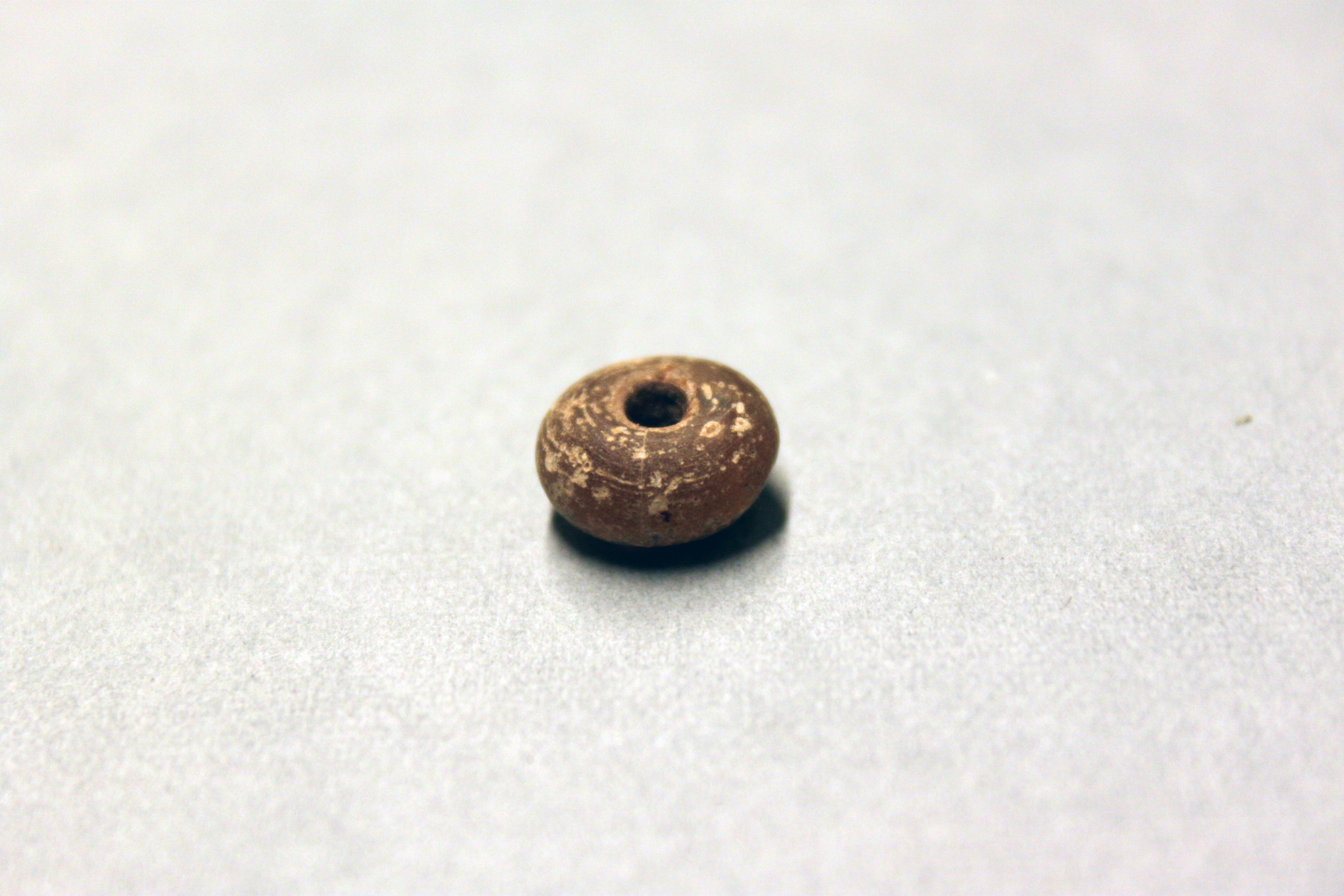
The Enduring Allure of the Bead: A Heritage Analysis for Katherine Fashion Lab
In the lexicon of human adornment, few artifacts possess the quiet yet profound authority of the bead. Far from being a mere decorative afterthought, the bead represents one of humanity’s earliest and most sophisticated technologies of meaning. For Katherine Fashion Lab, a house that operates at the intersection of archival rigor and future-facing luxury, the bead is not a trinket—it is a strategic artifact. This analysis examines the ancient bead through the lenses of symbolic power, historical adornment, and spiritual resonance, culminating in a proposed 2026 high-end luxury strategy that positions the bead as a talisman of heritage-driven exclusivity.
Symbolic Power: The Micro-Cosmos of Status and Identity
Within ancient civilizations—from the Nile Valley to Mesopotamia and the Indus basin—the bead functioned as a compressed system of social semiotics. Its symbolic power was not incidental but engineered. The material from which a bead was fashioned, the color it carried, and the labor required to produce it all constituted a non-verbal language of rank, affiliation, and personal narrative. In dynastic Egypt, for instance, faience beads were mass-produced yet their brilliant blue-green glaze imitated turquoise and lapis lazuli, materials reserved for the elite. This deliberate mimicry allowed a broader population to participate in a visual grammar of divine protection, while the physical possession of true stone beads remained a marker of the priestly and royal classes.
Critically, the bead’s symbolic power derives from its scale. Unlike monumental architecture or large-scale sculpture, the bead is intimate. It is worn against the skin, counted, and transferred across generations. This intimacy transforms the bead from a passive ornament into an active agent of identity negotiation. For Katherine Fashion Lab, this suggests that luxury is not merely about volume or visibility but about the density of meaning per square millimeter. A single, meticulously crafted ancient-style glass bead can carry more cultural authority than an entire garment of contemporary, mass-produced sequins. The strategic implication is clear: curation over quantity, resonance over spectacle.
Historical Adornment: The Bead as a Portable Archive
The history of adornment is, in large part, a history of the bead’s mobility. Archaeological evidence from the late Bronze Age reveals that glass beads traveled thousands of miles along trade routes, serving as a form of pre-monetary currency and diplomatic gift. The perforation—the drilled hole—is the technological innovation that enables this portability. The drilled bead is a node in a network; it is designed to be strung, attached, and layered. This physical attribute created a unique form of historical adornment: the body as a wearable archive. Each strand could chronicle a pilgrimage, a marriage alliance, or a victory in battle.
In ancient Rome, glass beads imported from Egypt and Syria were incorporated into funerary attire, signifying not only the wealth of the deceased but also their successful navigation of complex trade networks in life. In West African kingdoms, Venetian glass beads—technically imported but deeply re-contextualized—became markers of royal lineage and spiritual office. The historical lesson for a luxury house is profound: adornment is not static decoration but a dynamic record of human connection. When Katherine Fashion Lab designs with ancient glass beads, it is not engaging in pastiche; it is invoking a lineage of global exchange. The drilled hole is the historical signature, a trace of the artisan’s hand and the wearer’s intent.
Spiritual Meaning: The Bead as a Vessel of Protection and Prayer
Beyond social status, the ancient bead was fundamentally a spiritual technology. Its circular form—often with a central void—mirrored cosmological concepts of eternity, the sun, and the cyclical nature of existence. In many cultures, the bead was believed to possess apotropaic properties, warding off evil spirits and the evil eye. The material of glass itself was considered magical; its creation from sand and fire was perceived as an alchemical act, a miniature transmutation that echoed the divine act of creation. Drilled glass beads were often placed in tombs to guide the deceased through the afterlife, serving as luminous points of reference in the darkness.
This spiritual dimension is not a relic but a persistent human need. The contemporary luxury consumer, saturated with digital noise and ephemeral trends, increasingly seeks objects that offer a sense of grounding and metaphysical continuity. The bead, with its deep history as a prayer counter (as in the rosary or the misbaha) and a protective charm, answers this need. For Katherine Fashion Lab, the spiritual meaning of the bead must be handled with respect and sophistication. It is not about appropriating specific religious rites but about accessing the universal human impulse toward talismanic protection. A 2026 strategy that frames the bead as a "wearable intention" or a "vessel of calm" aligns with broader wellness-driven luxury trends while remaining historically authentic.
2026 High-End Luxury Strategy: The Bead as Heritage Asset
As the luxury market pivots toward what industry analysts term "quiet luxury" and "investment pieces," the ancient bead offers a unique strategic opportunity for Katherine Fashion Lab. The following framework synthesizes the heritage analysis into a actionable 2026 roadmap.
Curatorial Authenticity and Provenance Storytelling
The 2026 consumer is not merely buying a product; they are buying a verifiable story. Katherine Fashion Lab should develop a "Heritage Glass Series" where each bead is produced using ancient techniques—winding glass around a mandrel, followed by hand-drilling. This process is slow, imperfect, and therefore exclusive. The marketing narrative must emphasize the provenance of technique, not just the origin of material. Each piece should be accompanied by a digital "passport" that details the specific civilization that inspired its color palette and the artisan who executed the drilling. This transforms the bead from a generic component into a limited-edition artifact with a unique serial identity.
Material Alchemy and Modern Color Theory
Ancient glass beads are celebrated for their unpredictable, earthy tones—the result of uncontrolled kiln temperatures and trace metal impurities. For 2026, Katherine Fashion Lab should juxtapose this historical unpredictability with a modern, architectural setting. Consider a high jewelry necklace that combines matte, hand-drilled glass beads in deep cobalt and verdigris with cold-forged, recycled 18-karat gold. The visual tension between the ancient, slightly irregular bead and the precise, contemporary metalwork creates a dialogue between epochs. This is not a revival; it is a dialectic. The strategy is to position the bead not as a costume element but as a primary gemstone alternative, worthy of the same design consideration as a diamond or a sapphire.
Ritualistic Product Architecture and Sensory Retail
The spiritual meaning of the bead suggests a departure from traditional retail display. For 2026, Katherine Fashion Lab should pioneer a "Ritual Room" concept within its flagship boutiques. This space, designed with low ambient lighting and natural materials, would present the Heritage Glass Series not on velvet busts but within individual, sand-blasted glass vessels. The client is invited to hold the bead, to feel its weight and the precision of its drill hole. This haptic engagement is a deliberate strategy to slow down the purchase process, creating a moment of contemplation that mirrors the bead’s historical use in meditation and prayer. The sales associate acts not as a seller but as a "curator of intention," guiding the client to select a bead based on its color symbolism (e.g., cobalt for clarity, amber for vitality).
Pricing Architecture and Scarcity Economics
The economic model must reflect the bead’s heritage status. Rather than pricing by weight, the value should be anchored to artisanal labor hours and historical research depth. A single strand of fifty hand-drilled beads, produced over two weeks, should command a price point comparable to a fine Swiss timepiece. To reinforce scarcity, Katherine Fashion Lab should limit the Heritage Glass Series to a single annual "archaeological drop," with each collection inspired by a specific excavation or museum archive. This creates a collectible cycle, encouraging repeat patronage from clients who view these pieces as investments in cultural capital. The after-sales service should include a "re-stringing ritual," where the client returns annually to have the thread replaced by a specialist, thereby extending the product lifecycle and deepening the client-brand bond.
Conclusion: The Bead as a Strategic Imperative
The ancient bead, in its modest form, carries the weight of empires, the intimacy of prayer, and the precision of early industry. For Katherine Fashion Lab, it is not a nostalgic motif but a strategic imperative for 2026. By honoring its symbolic power, respecting its historical mobility, and channeling its spiritual depth, the brand can offer something increasingly rare in luxury: an object of genuine meaning. The drilled hole is not an absence; it is an aperture through which history flows. In a market crowded with the ephemeral, the bead offers permanence. In a culture obsessed with the new, it offers the eternal. Katherine Fashion Lab’s success will depend on its ability to treat the bead not as a material but as a philosophy—one that values the small, the significant, and the sacred.