The Glove as Architecture: A Study in Material Memory
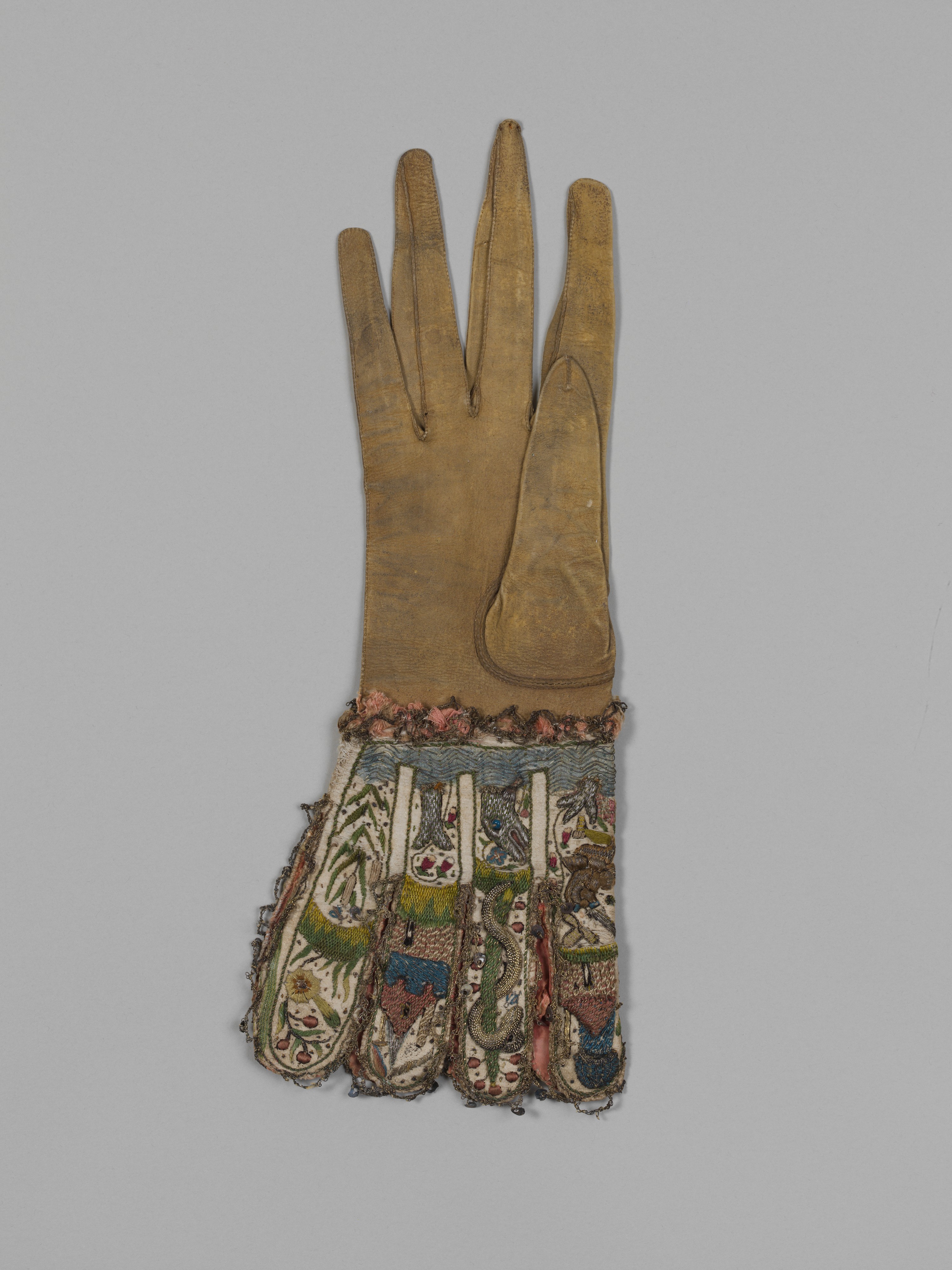
In the rarefied echelons of couture, where garments transcend utility to become sculptural narratives, the glove occupies a singular, paradoxical position. It is at once the most intimate of coverings—a second skin that traces every phalange and crease—and the most overtly symbolic of accessories, historically denoting power, piety, and propriety. For Katherine Fashion Lab’s latest standalone study, the glove is not an afterthought nor a mere finishing touch. It is the entire thesis. This analysis dissects a singular artifact: a glove constructed from a lexicon of leather, silk, metal thread, sequins, and lace, drawing upon a “Global Heritage” that collapses centuries and continents into a single, wearable monument.
Deconstructing the Palimpsest: Material as Global Dialect
The immediate visual and tactile impact of this piece is one of deliberate contradiction—a harmonious dissonance. The base structure is a fine, unglazed kid leather, chosen for its ability to conform to the hand with the suppleness of a living membrane. Yet this foundational skin is almost entirely obscured by an intricate overlay of silk organza, which has been hand-painted in a gradient of deep indigo and oxidized bronze. This is not a simple layering; it is a palimpsest. The silk acts as a translucent veil, allowing the leather’s natural grain to ghost through, creating a dialogue between the animalistic and the ethereal.
This dialogue is extended through the incorporation of metal thread, which is not merely stitched but woven into the organza in a pattern reminiscent of Mughal zardozi work. The metallic filaments—a blend of fine gold and antique silver—trace the glove’s seams and knuckles, not as reinforcement, but as calligraphic annotation. They map the hand’s topography, turning anatomical joints into ornamental landmarks. This nod to South Asian regal craftsmanship is immediately countered by the inclusion of lace, specifically a Chantilly variant, which edges the cuff in a froth of floral motifs. The lace speaks to European aristocratic courts, where such hand coverings were essential markers of caste. The tension here is masterful: the robust, architectural metal thread of the East meets the fragile, perishable beauty of Western lace.
The Dialectic of Coverage: Concealment as Revelation
In a standalone context—removed from a full gown or ensemble—the glove demands a re-evaluation of its function. It is no longer a component of a larger silhouette but a self-contained object of contemplation. Katherine Fashion Lab exploits this by playing with the concept of haute transgression. The glove extends beyond the wrist, climbing several inches up the forearm, where it terminates in a scalloped edge that is neither fully finished nor raw. This deliberate ambiguity suggests a moment of interruption—as if the garment were caught mid-transformation.
This is where the sequins become critical. They are not scattered randomly; they are applied in a dense, overlapping pattern along the dorsal side of the hand, mimicking the scaly armor of a mythical creature. As the hand moves, these sequins catch the light in a shimmering cascade, creating a kinetic energy that contrasts sharply with the matte finish of the leather palm. The palm itself remains unadorned, save for the faintest whisper of the silk lining. This distinction is a profound curatorial choice: the palm—the site of labor, touch, and connection—is left bare, vulnerable to the wearer’s reality. The back of the hand—the site of display, gesture, and social performance—is armored in light and texture.
Historical Resonance and the Politics of the Hand
To understand this glove is to understand the history of the hand itself. In Byzantine iconography, gloves signified imperial dominion. In Renaissance portraiture, they were emblems of land ownership and detached elegance. By the Victorian era, the glove had become a fetishized object of the unattainable—a barrier to skin that heightened desire through denial. Katherine Fashion Lab’s study draws from this deep well, yet subverts it. The combination of materials suggests a globalized heritage, not a singular lineage. The metal thread recalls the Silk Road’s trade routes; the lace evokes the ateliers of Calais; the leather’s tanning process—which uses a blend of vegetable dyes from the Levant—anchors it in artisanal, pre-industrial methods.
The result is a glove that refuses to be historically fixed. It is a nomad’s object, carrying the memories of multiple geographies. In an era of fast fashion and disposable accessories, this piece demands a slow, reverent gaze. It asks the viewer to consider the labor involved: hundreds of hours of hand-stitching, the meticulous placement of each sequin to follow the natural curve of the metacarpals, the tension required to weave metal thread without snapping the silk ground. This is not a product; it is a relic of process.
Ergonomics of Opulence: The Wearable Sculpture Paradox
One might assume such ornamentation compromises function. Yet, the construction reveals a deep understanding of ergonomics. The leather is cut on the bias to allow for natural fist-clenching. The metal thread is applied in a chain stitch, which yields with movement rather than resisting it. The lace cuff is weighted with tiny lead beads hidden within the hem, ensuring it drapes perfectly over the forearm without riding up. This is the hallmark of true couture: the invisible engineering that serves the visible poetry.
Furthermore, the choice to study the glove in isolation—without a mannequin’s full body—forces a confrontation with its scale. It is life-sized, yet it feels monumental. The glove becomes a prosthetic extension of the viewer’s own imagination. One cannot look at it without mentally inserting one’s hand, feeling the cool slide of silk against skin, the slight scratch of metal thread, the weight of the sequins. This haptic empathy is the core of Katherine Fashion Lab’s philosophy. The glove is not merely seen; it is felt through the eyes.
Conclusion: A Relic for the Future
In this standalone study, Katherine Fashion Lab elevates the glove from a functional garment to a philosophical proposition. It asks: What does it mean to cover the hand in an age of digital touchscreens, where our fingers are constantly swiping and tapping? This glove is an anachronism that is profoundly contemporary. It suggests that the hand is still a site of mystery, a vessel for both creation and destruction. By combining leather’s primal strength, silk’s luxury, metal’s permanence, sequins’ fleeting glamour, and lace’s delicate mortality, the Lab has created a microcosm of couture’s entire vocabulary.
This is not a glove for the timid. It is a glove for the curator, the collector, the connoisseur who understands that true luxury lies not in opulence alone, but in the tension between opposing forces—East and West, strength and fragility, armor and skin. It is a standalone masterpiece, a complete argument in a single object, and a testament to the enduring power of the hand as the most expressive instrument of the human body. In its silent, shimmering presence, it speaks volumes.