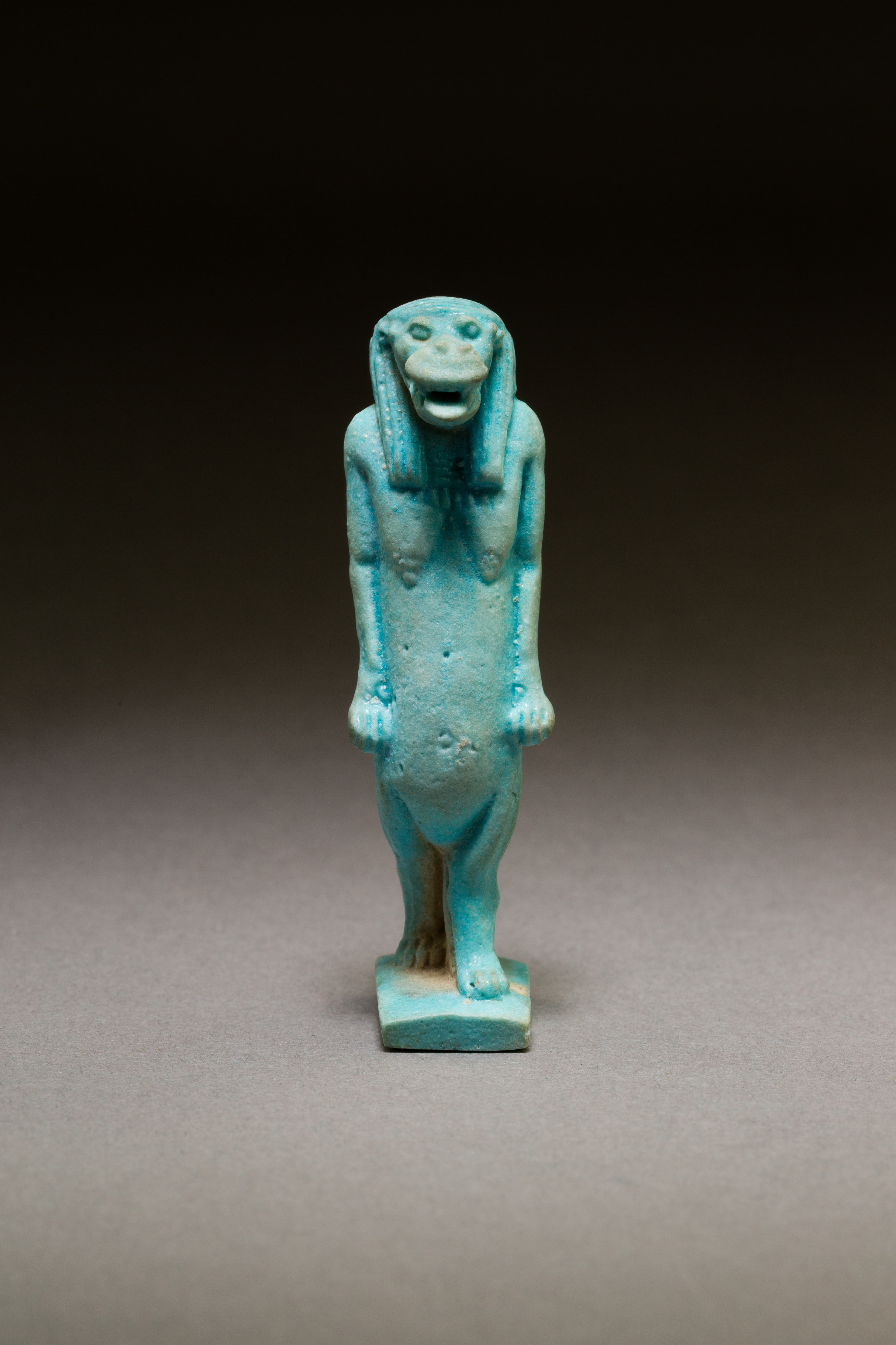
The Taweret Amulet: A Heritage Analysis for Katherine Fashion Lab
In the pursuit of distinct luxury narratives, Katherine Fashion Lab recognizes that true differentiation lies not in novelty, but in the reclamation of profound cultural archetypes. The Taweret amulet, a diminutive yet potent artifact from Ancient Egypt, offers a strategic wellspring of symbolic capital. Crafted in faience—a self-glazing composite of quartz and alkali—this object transcends its materiality to embody a sophisticated fusion of apotropaic power, domestic sanctity, and aesthetic intentionality. For the 2026 high-end market, this amulet presents a compelling blueprint for a collection that speaks to protection, resilience, and the sacred feminine, moving beyond mere ornamentation to a form of wearable philosophy.
Symbolic Power and Iconographic Complexity
At its core, the Taweret figure is a masterclass in symbolic synthesis. Depicted as a composite creature—the head of a hippopotamus, the limbs of a lion, and the back and tail of a crocodile—she represents a deliberate amalgamation of the most dangerous fauna of the Nile. Yet, paradoxically, this fearsome visage was not a symbol of chaos, but of absolute prophylactic order. The iconography functioned as an apotropaic device; the very ferocity that defined her form was intended to intimidate malevolent spirits, effectively weaponizing visual aggression for the purpose of domestic protection.
For Katherine Fashion Lab, this presents a powerful strategic metaphor. The 2026 luxury consumer is not seeking fragility; they are seeking armor. Taweret’s symbolic power lies in her role as a guardian of thresholds—specifically, the threshold between life and death, and between the mundane and the divine. She was invoked during childbirth, a liminal moment of extreme vulnerability, and was equally present in funerary contexts to ensure safe passage. This duality—of nurturing protector and fierce defender—is a nuanced narrative that aligns with the contemporary woman who embodies both strength and care. By integrating this iconography, the Lab can articulate a brand ethos that is not merely about aesthetic appeal, but about psychological fortification.
Historical Adornment and Material Semiotics
The medium of faience is integral to the amulet’s meaning. Its luminous, blue-green hue was not incidental; it was a deliberate simulacrum of lapis lazuli and turquoise, materials associated with rebirth, fertility, and the celestial Nile. This "faience effect" was a technological marvel of its time, a form of early material science that allowed for the democratization of sacred color. The amulet was not worn solely for display; it was a functional talisman, often placed directly on the body or wrapped within mummy linens. This proximity to the skin underscores a critical principle of historical adornment: the object’s power was activated through contact and intentional placement.
From a heritage perspective, the amulet’s small scale belies its immense communicative capacity. It was a personal, intimate object, often worn by women and children, serving as a constant, silent companion. This contrasts sharply with the monumental scale of Egyptian temples, suggesting a sophisticated understanding of private versus public devotion. For Katherine Fashion Lab, this informs a design philosophy of intimate luxury—pieces that are not overtly loud but carry a resonant, internal frequency. The historical precedence of using a "faux" precious material to achieve a sacred aesthetic is also a prescient lesson for modern sustainability. It challenges the notion that value is intrinsic to rarity; instead, value is created through the potency of the symbol and the mastery of the craft.
Spiritual Meaning and the Domestic Divine
Taweret’s spiritual domain was uniquely accessible. Unlike the state-sponsored cults of Amun or Ra, her worship was intensely personal and domestic. She was a household deity, a protector of the hearth, and a guardian of pregnant women and infants. This localized spirituality is significant; it represents a form of "practical magic" that was integrated into the daily rhythm of life. Her presence in the home was believed to ward off illness, snake bites, and general misfortune. In a world where the divine was often distant and hierarchical, Taweret offered a direct, tangible line of communication with the sacred.
This spiritual intimacy offers a profound strategic opportunity for the 2026 luxury landscape. As the market shifts from ostentatious display to meaningful intentionality, consumers are seeking objects that serve a psychological or spiritual function. The Taweret amulet is a precursor to the modern concept of "wellness jewelry," but with far greater depth. It is not about a generic nod to "good vibes," but about a specific, culturally coded invocation of protection. The Lab can leverage this by positioning the amulet not as a trinket, but as a tool for centering—a physical anchor for the wearer’s own resilience. The spiritual meaning is not passive; it is an active contract between the wearer and the symbol, a daily affirmation of safeguarding one’s personal universe.
2026 High-End Luxury Strategy: The "Guardian" Collection
For the 2026 fiscal year, Katherine Fashion Lab proposes the "Guardian" Collection, a strategic line that reinterprets the Taweret amulet for the contemporary connoisseur. The strategy is threefold:
1. Design Language: Abstracted Ferocity
The collection will not be a literal reproduction, but an architectural abstraction. The hippopotamus form will be reduced to its essential volumes—the rounded belly, the sturdy stance—rendered in high-polish, matte-finished precious metals. The lion and crocodile attributes will be translated into subtle textural contrasts, such as a "scaled" pavé effect or a sharp, feline claw clasp. The iconic faience blue will be reimagined through the use of lapis lazuli inlays or a signature enamel developed exclusively for the Lab. This ensures the heritage is acknowledged through a lens of modernist minimalism, avoiding the trap of costume-like pastiche.
2. Narrative Positioning: The New Apotropaic
The marketing and brand storytelling will pivot on the concept of "The New Protection." In 2026, the threats are not crocodiles, but burnout, digital fatigue, and societal volatility. The collection will be positioned as a talisman for the modern professional—a piece of "strategic armor" for boardroom negotiations, public appearances, and personal transitions. The narrative will move beyond the purely aesthetic to emphasize the amulet’s original function: to provide agency and confidence to the wearer in vulnerable moments. This is a high-end luxury strategy that sells psychological empowerment, not just a physical product.
3. Material Integrity and Ritual Consumption
To honor the faience legacy, the collection will be produced in a limited, numbered series. Each piece will be accompanied by a "Ritual Card" detailing the history of Taweret and the specific intention of the design, transforming the purchase into a ceremonial act. This taps into the luxury trend of "ritualized consumption," where the unboxing and understanding of the object’s provenance become part of its value. The Lab will also collaborate with contemporary Egyptologists to authenticate the design narrative, ensuring cultural respect and intellectual rigor. This not only protects the brand from accusations of cultural appropriation but elevates it to a patron of heritage preservation.
Conclusion
The Taweret amulet is far more than an ancient curiosity; it is a strategic artifact that encodes timeless human needs—protection, resilience, and the sanctity of the domestic sphere. For Katherine Fashion Lab, it provides a robust foundation for a 2026 luxury strategy that is intellectually sound, emotionally resonant, and commercially distinct. By abstracting her form and re-contextualizing her power, the Lab can create a collection that is not merely worn, but activated—a modern talisman for a discerning clientele seeking meaning in an age of noise. The amulet’s journey from the banks of the Nile to the ateliers of high fashion is not a leap, but a natural progression of its inherent purpose: to safeguard and empower the wearer through the enduring power of symbol.