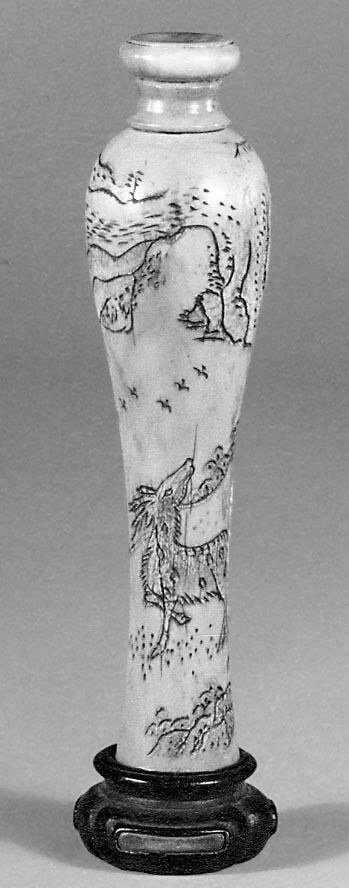
Executive Heritage Analysis: The Gallipot as a Strategic Luxury Archetype
Within the canon of Chinese material culture, the gallipot—a small, lidded vessel traditionally rendered in ivory—represents a convergence of apothecary utility, imperial aesthetics, and metaphysical protection. For Katherine Fashion Lab, this object transcends its antiquarian classification to serve as a potent strategic archetype for 2026 high-end luxury positioning. This analysis decodes the gallipot’s symbolic power, its role in historical adornment, its spiritual resonance, and translates these findings into actionable brand architecture.
Symbolic Power: The Vessel as Microcosm of Authority
The gallipot’s symbolic potency derives from its dual function as container and guardian. In Chinese court culture, particularly during the Ming and Qing dynasties, small ivory containers were not merely storage for precious salves or incense; they were instruments of ritualized self-care that signified access to restricted knowledge. The material itself—ivory—was reserved for the scholar-gentry and imperial household, its creamy patina denoting purity, age, and inherited wisdom. The gallipot’s miniature scale was deliberate: it demanded proximity, intimacy, and a discerning eye. To possess one was to signal control over one’s physical and spiritual environment—a form of quiet sovereignty.
Strategically, this translates to a luxury principle of curated containment. In 2026, when the market is saturated with loud logos and ephemeral trends, the gallipot offers a counter-narrative: power through discretion. The object’s power is not announced but discovered. For Katherine Fashion Lab, this suggests a design language of sealed, jewel-like compartments—whether in accessories, fragrance, or jewelry—that reward the owner with a private, ritualistic experience. The brand must position itself not as a producer of commodities, but as a custodian of restricted privilege.
Historical Adornment: From Apothecary to Ornament
Historically, the gallipot occupied a liminal space between medicine and ornament. By the Qing dynasty, these vessels were often fitted with gold or silver filigree chains, allowing them to be worn as belt pendants or suspended from the sash. This practice transformed a utilitarian object into a wearable talisman, blending the apothecary’s precision with the jeweler’s artistry. The ivory body was frequently carved with motifs of longevity—bats, peaches, or the *shou* character—while the lid might feature a finial shaped as a lotus bud or a coiled dragon. Thus, the gallipot was not merely carried; it was adorned and displayed as a statement of cultivated taste.
For high-end luxury strategy, this historical precedent validates the hybridization of categories. The 2026 consumer increasingly rejects siloed product definitions. Katherine Fashion Lab should leverage the gallipot’s legacy to introduce a “wearable ritual” line—miniature vessels that function as both pendants and discreet perfume diffusers or solid-scent carriers. The design must honor the original’s proportions: a tactile, palm-sized object that feels substantial yet delicate. The use of alternative materials, such as responsibly sourced bone or high-density ceramic with ivory-like finishes, preserves the aesthetic without ethical compromise. The adornment strategy should emphasize suspension and layering, echoing the historical sash-wearing tradition while modernizing it for contemporary silhouettes.
Spiritual Meaning: The Gallipot as a Protective Psyche
Beyond its material and functional roles, the gallipot held profound spiritual significance. In Daoist and folk practices, small containers were believed to trap negative energies or house protective essences. The airtight seal of a well-crafted gallipot was metaphorically aligned with the preservation of *qi*—life force. To open the vessel was to release a curated dose of healing or blessing; to keep it closed was to maintain a boundary against external chaos. This duality—of exposure and protection—is central to its spiritual meaning.
In the context of 2026 luxury, this translates to a brand narrative of emotional containment and resilience. The modern affluent consumer faces relentless digital intrusion and sensory overload. A gallipot-inspired object offers a tangible, haptic solution: a physical anchor for mindfulness. Katherine Fashion Lab can position its offerings as secular talismans—not for superstition, but for intentionality. Marketing language should evoke “sealing one’s essence” or “guarding one’s inner sanctuary.” This moves the product beyond mere aesthetics into the realm of psychological utility, a premium value proposition that justifies aggressive pricing.
2026 High-End Luxury Strategy: From Artifact to Architecture
To operationalize this heritage analysis, Katherine Fashion Lab must adopt a three-pillar strategic framework for 2026.
Pillar One: The “Open-Seal” Product Narrative
Launch a capsule collection titled “Gallipot: The Sovereign’s Cache.” Each piece—whether a pendant, a ring with a micro-compartment, or a desk object—must feature a deliberate opening mechanism. The tactile resistance of the lid, the soft click of closure, becomes a signature sensory experience. This design choice reinforces the theme of controlled access and transforms a simple action into a ritual. Product photography should emphasize the moment of unveiling, not the static object.
Pillar Two: Material Alchemy and Ethical Provenance
Given the ivory origin, the 2026 strategy must address material ethics with absolute transparency. Katherine Fashion Lab should pioneer a proprietary composite called “Porcelain-Ivory,” a bio-engineered material that mimics the translucency and warmth of historical ivory while being fully sustainable. The story of this material—an alchemical transformation from a problematic past to a responsible future—mirrors the gallipot’s own journey from apothecary to ornament. This narrative provides rich content for editorial storytelling and positions the brand as a leader in conscious heritage.
Pillar Three: The Ritual of Gifting and Legacy
Historically, gallipots were often passed down as heirlooms, their contents forgotten but their presence revered. Katherine Fashion Lab should capitalize on this by introducing a “Legacy Engraving” service, where the interior of the vessel’s lid can be inscribed with a personal sigil, date, or mantra. This transforms the purchase into an intergenerational artifact. The brand should also curate a “Gallipot Guild”—an invitation-only client circle that receives annual limited-edition refills or miniature charms designed to fit within the vessel. This creates a recurring revenue model while reinforcing the community of collectors.
Conclusion: The Gallipot as a Strategic North Star
The gallipot is not a nostalgic relic; it is a strategic blueprint for luxury that values intimacy over spectacle, preservation over disposability, and symbolism over surface. For Katherine Fashion Lab, this heritage analysis provides a clear directive for 2026: design objects that demand a pause, that reward a closer look, and that carry the weight of a thousand-year-old philosophy of power through containment. By integrating the gallipot’s symbolic power, historical adornment, and spiritual meaning into a coherent brand strategy, the Lab can differentiate itself in a crowded market—not by shouting louder, but by offering a sealed, silent, and sovereign alternative. The future of high-end luxury is not in the visible; it is in the precious, protected interior. The gallipot shows the way.