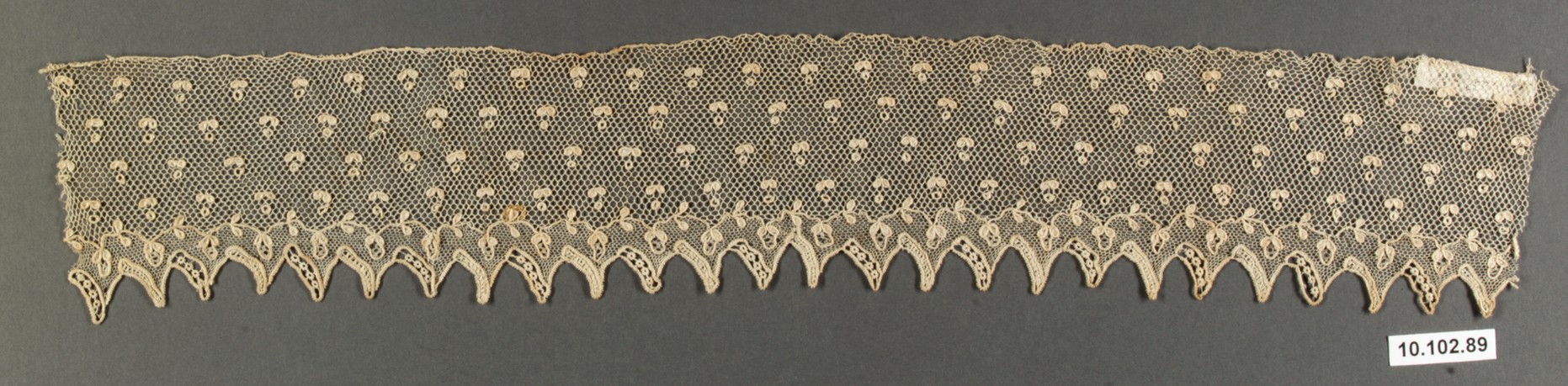
Fragment as a Complete Statement: Deconstructing Heritage in Katherine Fashion Lab’s Needle Lace Study
In the rarefied lexicon of haute couture, the term “fragment” typically connotes an incomplete artifact, a vestige of a larger whole awaiting reconstruction. Yet in Katherine Fashion Lab’s latest standalone study, Fragment, this semantic assumption is subverted with intellectual rigor and technical bravura. The piece does not mourn a lost totality; rather, it posits that the fragment itself is the definitive, autonomous object of desire. Drawing from a deliberately global heritage—a confluence of European convent lace, Ottoman courtly embellishment, and East Asian principles of negative space—the study is a masterclass in how a single material, needle lace of the point d’Alençon tradition, can articulate a philosophy of absence and presence.
The decision to isolate this study from a seasonal collection is a curatorial act of profound significance. Without the narrative scaffolding of a runway show or the commercial pragmatism of a ready-to-wear line, Fragment demands to be read as a pure text. The garment—if one can call a meticulously engineered lattice of air and thread a garment—is presented as an archaeological relic of a future civilization, unearthed from a stratum where skill, patience, and cultural memory have sedimented into a single, breathtaking surface. This is not fashion as apparel; it is fashion as epistemology.
The Alchemy of Point d’Alençon: From Rigidity to Breath
To understand the gravity of this study, one must first appreciate the technical liturgy of its chosen material. Point d’Alençon, the queen of French needle laces, is notoriously unyielding. Its construction—a painstaking process of outlining a parchment pattern with a thread, filling the interior with buttonhole stitches, and then outlining the motif with a heavy cordonnet—results in a fabric of architectural firmness. Historically, it was used to sculpt rigid collars and imposing cuffs, a symbol of aristocratic power that stood apart from the body.
Katherine Fashion Lab, however, performs a radical intervention upon this rigidity. In Fragment, the point d’Alençon is not employed to create a shell but to construct a membrane. The lab’s signature technique involves a selective dissolution of the ground netting, leaving only the raised motifs—the floral sprigs, the picots, the delicate brides—to float as autonomous islands of thread. The result is a textile that oscillates between solidity and vapor. When the light catches the cordonnet, the lace appears as a topographic map of ivory; when the wearer moves, the voids between the motifs become the dominant visual language, swallowing the form and redefining the silhouette as a series of interrupted gestures.
This manipulation of negative space is where the “fragment” metaphor crystallizes. The lab does not present a continuous, narrative fabric. Instead, it offers a sequence of interrupted sentences—a shoulder here, a hip hinted at there—allowing the naked skin and the ambient environment to complete the composition. The garment becomes a collaborative canvas, where the absence of material is as eloquent as its presence. This is a deliberate departure from the maximalist, all-over lace of the 18th century, embracing instead a modernist ethic of reduction that feels profoundly contemporary.
Global Heritage, Localized Memory
The title “Global Heritage” is not a superficial nod to multiculturalism but a rigorous investigation into the migratory life of a technique. While point d’Alençon is French by patent, its DNA is cosmopolitan. The lab’s research dossier reveals that the lace’s geometric underlays borrow from the geometric precision of Coptic textiles, while its floral exuberance echoes the stylized arabesques found in Mughal architecture. In Fragment, these influences are not pastiched but distilled into a unified chromatic and structural language.
Observe the edge of the primary bodice piece. The scalloped border, typically a hallmark of Alençon, is here re-cut into a jagged, asymmetrical line that recalls the torn edges of a medieval manuscript. Yet the internal filling of that border—a repeating hexagonal mesh—references the intricate kōshi lattice of Japanese bamboo screens. The lab’s genius lies in its ability to find the connective tissue between these disparate traditions: a shared reverence for the grid as a tool of both order and ornament. By layering these references without hierarchy, the study argues that heritage is not a static possession but a living, mutable conversation across time and geography.
Furthermore, the color palette—or rather, the disciplined absence of it—amplifies this global dialogue. The lace is rendered in a single, undyed ecru, a shade that exists between white and beige. This is not a neutral; it is a memory of raw silk from the Orient, of unbleached linen from the Flanders fields, of the ivory teeth of the combs used in the original Alençon ateliers. This monochromatic restraint forces the viewer to focus on texture and light, the true materials of the piece. In a fashion ecosystem obsessed with chromatic novelty, Fragment’s refusal of color is a radical act of intellectual purity.
Deconstruction as Construction: The Standalone Study
The context of a “standalone study” is crucial to interpreting the garment’s unconventional anatomy. There is no back to the piece, only a series of ribbon-like ties that suggest, but never fully delineate, closure. The sleeves are detached, held to the torso by internal snaps that are visible only upon intimate inspection, creating a deliberate rupture in the expected flow of a bodice. This is not deconstruction in the aggressive, ripping sense of the 1990s Belgian avant-garde. Rather, it is a surgical deconstruction, where each cut and seam is a deliberate act of authorship.
The lab’s intention is to challenge the wearer’s relationship with the body. In traditional couture, the garment is a second skin that corrects and enhances. In Fragment, the garment is a series of questions. Where does the lace end and the skin begin? Is the visible clavicle a part of the design or an intrusion upon it? By leaving these questions unanswered, Katherine Fashion Lab elevates the wearer from a passive mannequin to an active participant in the aesthetic act. The piece demands a posture of confidence, a willingness to inhabit incompleteness as a form of power.
This philosophical stance is reinforced by the structural engineering. The point d’Alençon, despite its apparent fragility, is supported by a hidden substructure of horsehair canvas and micro-silk organza, invisible to the eye but essential to the drape. This duality—the visible lace that suggests vulnerability and the hidden infrastructure that ensures resilience—mirrors the contemporary female experience of navigating public and private selves. The fragment is not broken; it is selectively edited, and what remains is deliberate, strong, and unapologetically articulate.
Conclusion: The Poetics of the Unfinished
In Fragment, Katherine Fashion Lab has not created a garment that is merely beautiful or technically impressive—though it is both in abundance. It has created a philosophical object that interrogates the very nature of completion in an age of digital saturation and endless feeds. By choosing a heritage technique of immense labor and isolating it into a study of partial forms, the lab reminds us that true luxury lies not in accumulation but in discernment. The fragment, in this context, is not a loss but a liberation—from narrative, from convention, and from the tyranny of the whole.
As the final stitch is set and the piece is released into the world, it does not ask to be worn so much as to be contemplated. It is a meditation on the fact that the most profound statements are often those left unsaid, and the most complete designs are those that trust the viewer to fill the voids. In a world clamoring for more, Fragment whispers the radical power of less—a whisper that, through the meticulous hands of its makers, resonates with the force of a heritage reimagined. It is, unequivocally, a masterpiece of intellectual couture.