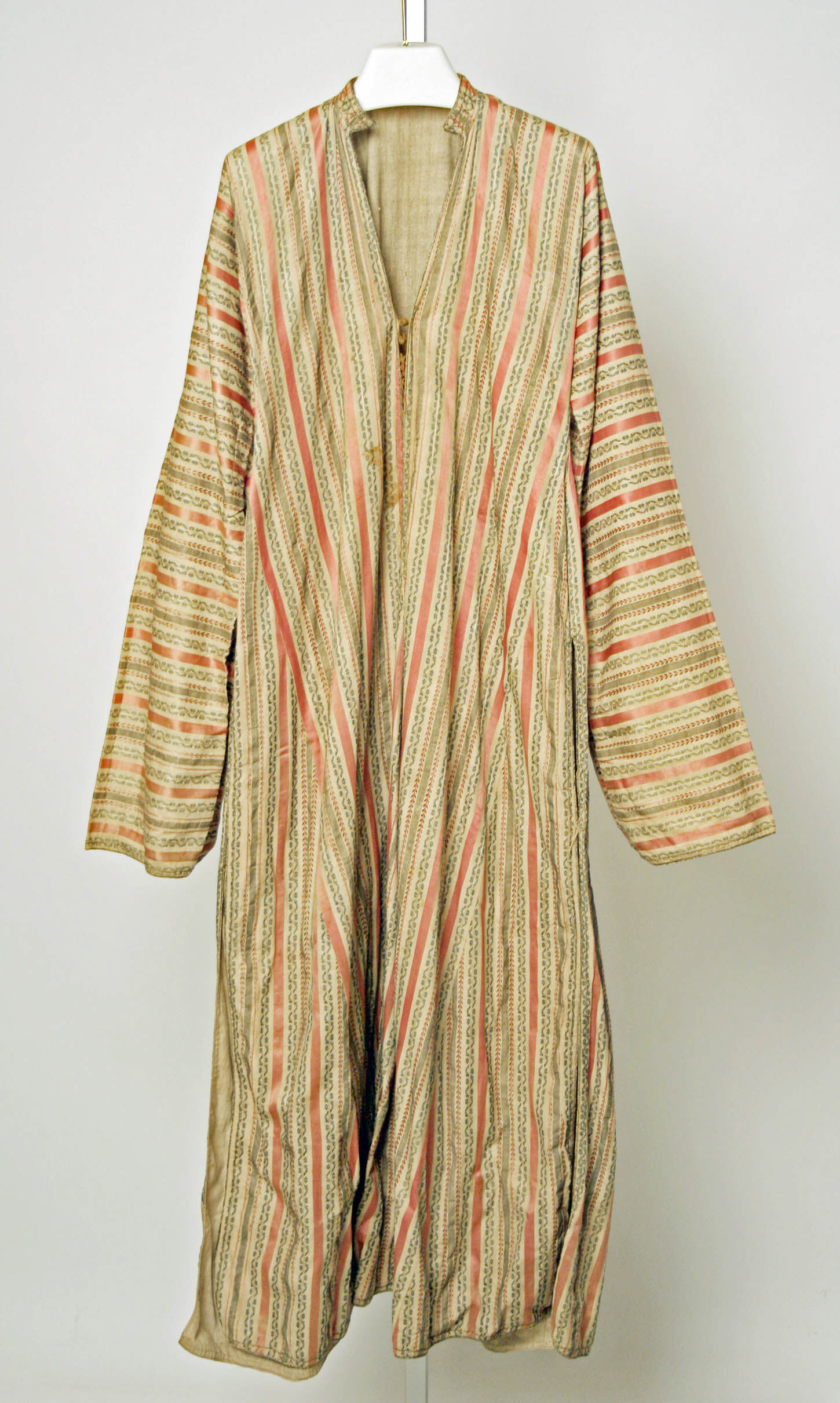
The Uçetek Entari: A Sartorial Palimpsest of Global Heritage
The Uçetek Entari, a garment of profound historical resonance, is far more than a relic of Ottoman courtly attire. In the discerning hands of Katherine Fashion Lab, this traditional form is elevated into a compelling case study of global heritage—a textile narrative that speaks to centuries of cross-continental trade, cultural synthesis, and artisanal mastery. This standalone analysis deconstructs the garment’s architectural ingenuity, its material lexicon, and its contemporary relevance as a vessel for intangible cultural memory.
Deconstructing the Silhouette: The Architecture of Movement
The term Uçetek, translating to “three skirts” or “three panels,” immediately signals the garment’s defining structural principle. Unlike Western tailoring’s reliance on darts and fitted curves, the Uçetek Entari is conceived through geometric flat-patterning. Its genius lies in the tripartite skirt construction, which flares dramatically from the waist without the addition of gores, relying instead on the calculated cutting of a single, continuous length of fabric. This is not a garment of restraint; it is a garment of kinetic elegance.
Katherine Fashion Lab’s reinterpretation honors this zero-waste philosophy while refining the proportions for a contemporary silhouette. The bodice, historically long-sleeved and often with a deep V-neckline, is cut high at the shoulder but allows for a generous underarm gusset—a hallmark of pre-industrial tailoring that permits unprecedented range of motion. The resulting drape is not static; it is a living architecture that responds to the wearer’s stride. Each of the three panels is engineered to overlap at the front, creating a visual rhythm of vertical lines that elongate the torso. When in motion, the panels part subtly, offering a glimpse of an under-layer or trousers, thus transforming modesty into a dynamic interplay of reveal and concealment.
Material Lexicon: Cotton, Silk, and the Alchemy of Metal
The material specification for this iteration—cotton, silk, and metal-wrapped thread—is not a random selection but a deliberate homage to the Ottoman caravan routes that connected Anatolia to Persia, India, and beyond. The base, a high-thread-count cotton, provides a breathable, structural foundation. It is not the stiff, industrial cotton of modern manufacturing but a supple, almost linen-like weave that softens with wear, conforming to the body’s topography.
Upon this canvas, the silk emerges as the protagonist of luminosity. Used both as a structural lining and as a supplementary weft in the fabric’s face, the silk imparts a subtle, pearlescent sheen that catches ambient light. This is not the garish gloss of synthetic satin; rather, it is a deep, internal glow that suggests the garment’s former life as a ceremonial robe worn in candlelit imperial halls. The silk’s low friction coefficient also enhances the garment’s fluid drape, allowing the heavy cotton to fall in soft, voluminous folds rather than stiff creases.
The most intellectually provocative element, however, is the metal-wrapped thread. Traditionally, this would have been klaptan—a fine strip of silver or gold gilt wound around a silk core. In this standalone study, the metal thread is used not merely as embroidery but as a structural accent along the panel seams and cuff edges. The thread’s rigidity creates a subtle counter-tension to the fabric’s fluidity, acting as a series of invisible bones that help the skirt panels hold their architectural flare. Moreover, the metal’s tarnishing potential is embraced as a feature of the garment’s aging process, a patina that records time and wear, transforming the entari from a static object into a biographical document.
Cultural Provenance: A Global Heritage Narrative
To label the Uçetek Entari as solely “Turkish” is to commit a historical fallacy. Its lineage is a testament to global heritage, a hybrid form that emerged from the crucible of the Silk Road. The tripartite skirt structure bears resemblance to the Persian qaba and the Central Asian chapan, while the V-neckline and long sleeves echo Byzantine and even late Roman dalmatic forms. The use of metal-wrapped thread is a technique perfected in the workshops of Bursa and later influenced by Venetian and Florentine textile artisans who exported their luxury brocades to the Sublime Porte.
Katherine Fashion Lab’s analysis positions the garment not as a national costume but as a sartorial palimpsest—a surface upon which multiple cultural layers have been inscribed and overwritten. The cotton may have originated in India or Egypt, the silk from China or the Caspian region, and the metal thread from European ateliers. The entari, therefore, is an early example of a globalized luxury product, a wearable map of economic and cultural exchange. This perspective challenges the Eurocentric canon of fashion history, which often locates the birth of global fashion in 19th-century Paris. Here, we see a sophisticated, pre-industrial system of design, production, and distribution that was genuinely international in scope.
Technical Mastery and Artisanal Ethics
In the context of Katherine Fashion Lab’s broader oeuvre, this Uçetek Entari serves as a manifesto for slow fashion and artisanal preservation. The garment’s construction would require approximately 40 hours of hand-finishing, particularly at the intersections where the metal thread meets the cotton ground. Each seam is felled and hand-stitched to prevent the metal from abrading the silk, a level of detail that is economically unfeasible in mass production but essential for the garment’s longevity. The lab’s commitment to sourcing cotton and silk from certified sustainable farms, and using recycled metal alloys for the thread, aligns the garment’s historical narrative with contemporary ecological ethics.
The choice to present this as a standalone study—without accompanying trousers or a chemise—is a curatorial decision of significance. It forces the viewer to confront the garment as an independent sculptural object, not merely a component of a historical ensemble. This isolation highlights the entari’s inherent versatility; worn alone, it functions as a minimalist, almost modern, long-line tunic. This duality—historical gravitas and contemporary minimalism—is the garment’s ultimate triumph.
Conclusion: The Entari as a Living Document
The Uçetek Entari, as analyzed by Katherine Fashion Lab, transcends its status as a museum artifact. It is a living document of human ingenuity, a testament to how cloth can encode political power, economic networks, and aesthetic ideals across millennia. In its cotton, we read the toil of agricultural workers; in its silk, the luxury of imperial patronage; in its metal thread, the alchemy of artisan metallurgy.
For the contemporary wearer, this garment offers more than aesthetic pleasure. It provides a tangible connection to a pre-industrial world where clothing was not disposable but heirloom-worthy, where cut and material were dictated by both function and profound cultural meaning. Katherine Fashion Lab’s intervention is not a mere reproduction but a critical recontextualization, proving that the most innovative path forward in fashion often lies in a deep, respectful, and intellectually rigorous look backward. The Uçetek Entari is not a costume; it is a philosophy, stitched in silk and grounded in cotton, that demands to be worn, studied, and ultimately, understood.