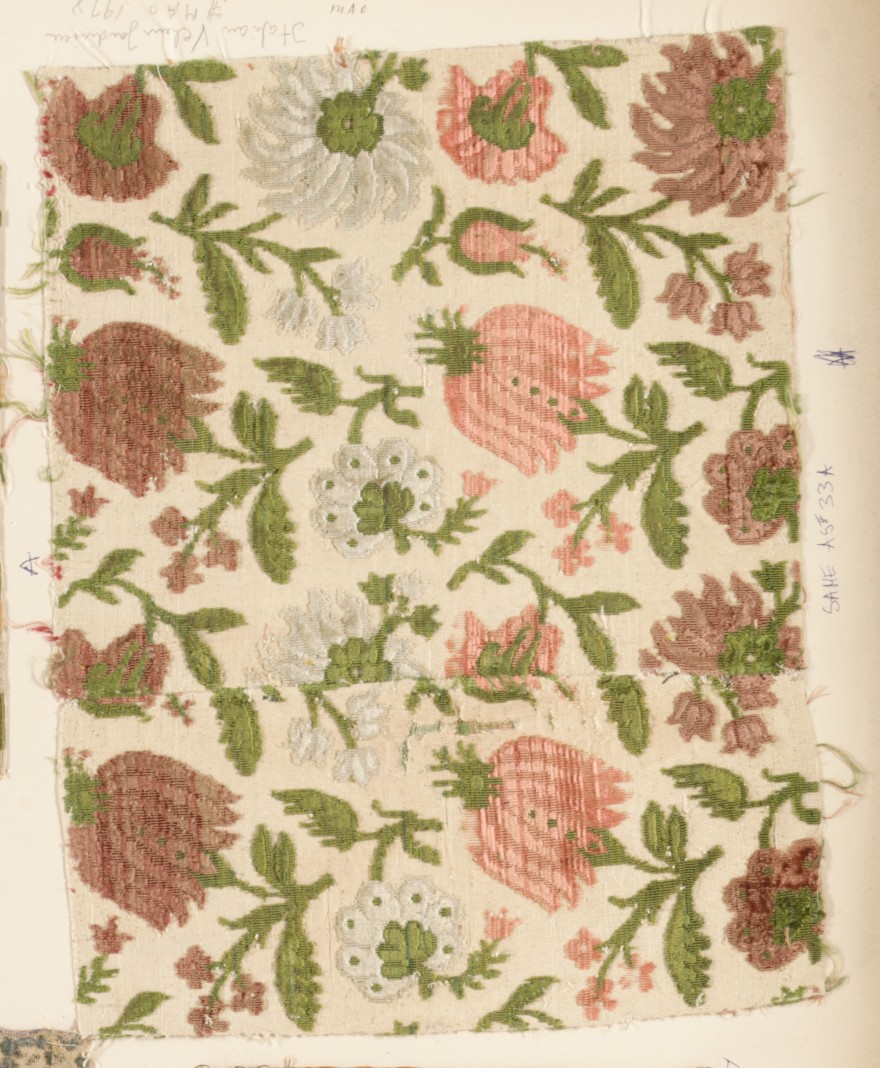
Deconstructing the Fragment: A Couture Analysis of Katherine Fashion Lab’s Silk Study
In the rarefied sphere of haute couture, where garments are often conceived as totalizing statements—complete, sculptural, and monolithic—Katherine Fashion Lab’s latest standalone study, titled Fragment, offers a radical counter-narrative. This is not a collection piece but a focused, almost academic investigation into the poetics of incompletion. By isolating a single material—silk—and situating it within a conceptual framework of Global Heritage, the Lab transforms a perceived flaw into a sophisticated language of beauty. The result is a garment that is less an object of dress and more a thesis on memory, loss, and the enduring power of the partial.
The Conceptual Architecture of Ruin
The title Fragment is deliberately polysemous. On one level, it references the physical state of the textile—a swath of silk that appears to have been excavated from time, its edges raw, its weave interrupted. Yet on a deeper, more resonant level, the fragment serves as a metaphor for how we experience cultural heritage in the contemporary era. We no longer possess the complete, uninterrupted tapestries of our ancestral past; instead, we inherit shards, remnants, and echoes. Katherine Fashion Lab’s genius lies in refusing to restore or conceal these breaks. Rather, the design elevates the fragment to a position of primacy, arguing that the missing portions of a narrative are as eloquent as those that remain. The garment does not mourn its own incompleteness; it celebrates the dialogic space between what is present and what is absent.
Constructed from a singular, continuous piece of hand-dyed silk charmeuse, the study unfolds asymmetrically across the body. The fabric is not cut to conform to a standard pattern but is instead draped and pinned in a manner that evokes an archaeological find suspended in glass. One shoulder is fully articulated, falling in a liquid cascade of pearl-grey silk, while the opposite side terminates abruptly mid-torso, leaving a raw, un-hemmed edge that has been meticulously hand-rolled into a delicate, almost fossilized curl. This deliberate asymmetry is not a stylistic flourish but a conceptual necessity, visually articulating the tension between wholeness and dissolution.
Silk as a Vessel of Global Memory
The choice of silk is far from arbitrary. Within the context of Global Heritage, silk functions as a historical protagonist—a material that has traversed continents, economies, and empires via the legendary Silk Roads. Katherine Fashion Lab draws upon this vast lineage, treating the fabric not merely as a luxury textile but as a living archive. The specific silk used in Fragment is a wild tussah silk, whose slightly irregular, slubbed texture deviates from the sterile perfection of cultivated mulberry silk. This natural inconsistency is crucial to the design’s ethos. The slubs appear as tiny, topographical disruptions in the fabric’s surface, suggesting a material that has absorbed the dust and friction of its own long journey through history.
The dyeing process further enriches this global narrative. The primary hue is an ethereal, oxidized patina green, reminiscent of aged bronze or the verdigris that forms on ancient artifacts. This is overlaid with a subtle, almost imperceptible gradient of indigo at the lower hem—a nod to the dyeing traditions of West Africa, Japan, and pre-Columbian South America, where indigo held profound spiritual and economic significance. The color is not applied uniformly; instead, it pools and recedes in organic patterns, creating the illusion that the silk has been stained by centuries of handling. This chromatic treatment transforms the fabric into a palimpsest, upon which multiple layers of cultural meaning have been inscribed and partially erased.
Technical Mastery and the Aesthetics of Decay
From a purely technical standpoint, Fragment demonstrates an extraordinary command of couture construction, albeit one that subverts traditional notions of finish. The internal structure is a marvel of invisible engineering. A corset-like foundation, crafted from horsehair braid and silk organza, is meticulously boned to support the heavy drape of the silk without distorting its natural fluidity. This internal architecture is then deliberately exposed at the fragment’s edge—a couture envers technique that reveals the garment’s skeleton, much like an anatomical drawing in a Renaissance manuscript.
This exposure of the interior is a bold critique of the conventional couture obsession with the fin, or flawless underside. Here, the interior is not a secret to be hidden but a narrative to be read. The seams are not invisible; they are top-stitched in a contrasting silk thread of deep crimson, a color historically associated with sacrifice and vitality. These stitches do not run the full length of the garment. They start with precision and then falter, becoming irregular and eventually dissolving into loose, floating threads that mimic the fraying of an ancient textile. This deliberate technical subversion forces the viewer to reconsider the value of perfection in an age of mass-produced, seamless uniformity.
The Body as an Incomplete Canvas
The design’s interaction with the human form is equally provocative. Rather than clothing the body in a comprehensive envelope, Fragment leaves significant portions of the wearer’s torso and back exposed. This is not a gesture of sensuality but of conceptual honesty. The body, in this context, becomes the missing piece of the garment—the living flesh that completes the incomplete textile. The negative space carved out by the silk is as integral to the composition as the material itself. It suggests that the human body is the ultimate repository of heritage, carrying forward the genetic and cultural fragments that textiles can only approximate.
The garment is worn with a severe, sculpted collar of oxidized silver, which encircles the neck like a piece of ancient jewelry excavated from a burial site. This metallic element provides a stark, cool contrast to the warmth of the silk and grounds the ethereal fabric in a sense of earthly permanence. The silver is intentionally unpolished, bearing the marks of its own fictional history—tiny pocks and scratches that echo the silk’s slubbed texture. This synchronicity between metal and textile creates a cohesive aesthetic of dignified decay.
A Provocation for the Future of Couture
As a standalone study, Fragment functions as a powerful manifesto for Katherine Fashion Lab’s forward-thinking philosophy. In a fashion landscape increasingly dominated by the ephemeral and the disposable, this work insists on the enduring value of material memory. It challenges the industry’s relentless pursuit of the new by suggesting that true innovation lies in the reinterpretation of the old—in finding beauty not in erasure but in preservation, not in completion but in the evocative power of the partial.
Ultimately, Fragment is not a garment for the timid. It demands an engaged viewer, one willing to read the nuances of its construction and the depth of its historical allusions. It is a meditation on the fact that all heritage, whether personal or global, is necessarily fragmented. We can never fully reconstruct the past, but as Katherine Fashion Lab demonstrates with breathtaking skill, we can wear its remnants with profound dignity. The study leaves us with a lingering question: in our own pursuit of wholeness, have we forgotten the exquisite eloquence of what has been broken? This silk, in its deliberate incompletion, answers with a resounding and beautiful negative.