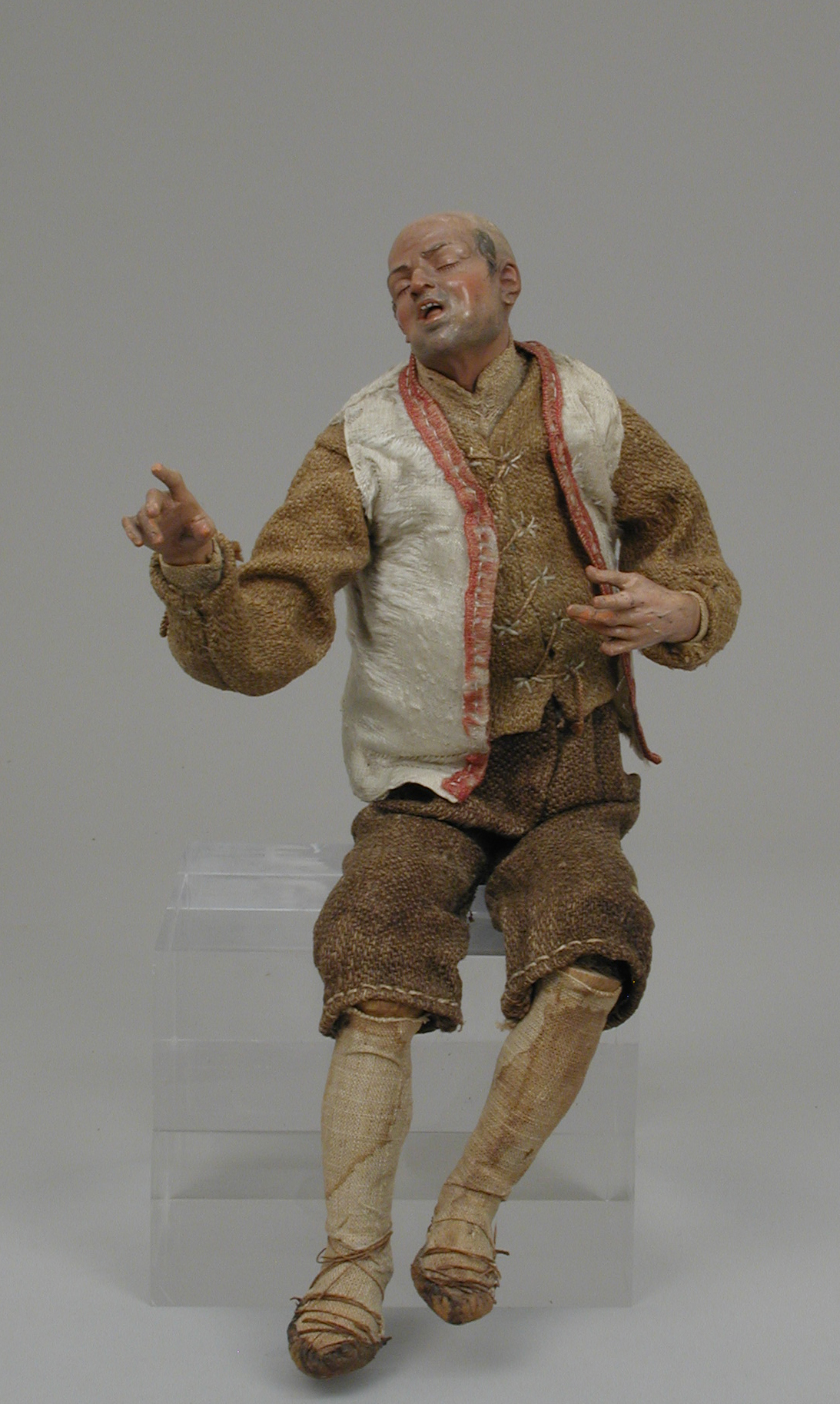
The Shepherd: A Study in Material Memory and Global Heritage
In the rarefied atmosphere of haute couture, where innovation is often mistaken for novelty, Katherine Fashion Lab’s “The Shepherd” emerges as a profound counter-narrative. This standalone study is not a garment in the conventional sense; it is a sculptural meditation on the intersection of labor, devotion, and the itinerant histories embedded in humble materials. By deconstructing the archetype of the pastoral guardian, the Lab presents a work that transcends mere dress to become a repository of global memory, articulated through a lexicon of texture, weight, and silent gesture.
Anatomy of a Composite: Deconstructing the Human Form
The piece’s initial impact is one of startling, almost unsettling, corporeality. The polychromed terracotta head is a masterstroke of historical quotation, evoking the votive sculptures of ancient Mediterranean and Mesoamerican cultures. The pigment is not applied with a contemporary hand but rather layered to suggest age, sun-fading, and the patina of countless seasons. This is not a portrait of a specific individual but a composite ancestral face—weather-worn, stoic, and imbued with a quiet, pre-linguistic wisdom. The terracotta’s cool, mineral permanence is deliberately juxtaposed against the wooden limbs, articulated with a folk-art simplicity. These joints are not mechanical; they are organic, suggesting a body that bends under the weight of duty but never breaks. The contrast between the fired earth of the head and the raw, unvarnished timber of the limbs creates a dialectical tension—one speaks of civilization’s kiln, the other of the forest’s untamed growth.
This tension is resolved, or rather held in suspension, by the body of wire wrapped in tow. Here, the Lab’s technical virtuosity becomes evident. The wire—a material of modern industry—is meticulously contorted to form a ribcage, a spine, and a pelvis. Yet it is entirely subsumed by the tow, a coarse, unspun flax fiber that historically served as the wadding for upholstery and the stuffing for cheap dolls. By elevating this utilitarian material to the status of primary structure, the designer performs a quiet act of alchemical reclamation. The tow’s fibrous, almost epidermal quality gives the figure a sense of internal vitality, a soft interiority that cushions the metallic skeleton. It is a poignant metaphor for the human condition itself: an industrial-age framework, softened and made humane by organic, unrefined matter.
Garments of Toil: Cotton, Burlap, and the Semiotics of the Pastoral
The garmenting of this composite figure is where the couture analysis deepens into a discourse on social class and material honesty. The cotton and burlap garments are cut with a deliberate roughness that belies their sophisticated construction. The burlap, a textile synonymous with agricultural sacks and the transport of grain, is not hidden or refined. Instead, its coarse, open weave is showcased, its jute fibers catching the light to create a texture that is simultaneously abrasive and visually rich. This is couture as a form of anti-fashion, a rejection of silks and satins in favor of the sartorial vernacular of the field worker.
The cotton, in contrast, provides a softer counterpoint, perhaps in the form of a simple, undyed tunic or draped swaths that mimic the folds of a shepherd’s cloak. The choice to leave these fabrics unbleached and unprinted is significant. It aligns the piece with a tradition of monastic simplicity and agrarian purity, stripping away the semiotic noise of pattern to focus on the purity of form and drape. The garments do not fit the body; they hang upon it, creating negative spaces that suggest wind, rain, and the constant movement of the flock. Every stitch, every seam, appears functional, born of necessity rather than ornament. Yet, in the context of the Lab, this functionality becomes the ultimate luxury—a return to a time when clothing was intimately tied to survival and purpose.
The Grounded Sole: Leather and the Pilgrim’s Path
The leather soles provide the piece’s philosophical and physical foundation. In a standalone study, the base is paramount, and here, the Lab grounds the entire narrative in the act of walking. These are not the delicate soles of a courtier’s slipper but thick, substantial cuts of hide, likely vegetable-tanned and left with a rugged edge. They speak of long treks over rocky terrain, of the pilgrimage from winter pastures to summer highlands, and of the ceaseless pursuit of sustenance. The leather is a material of memory; it records the imprint of the foot, the pressure of the gait, and the dust of the road. By grounding the figure on these soles, the artist anchors the entire metaphysical construct of the shepherd in the physical reality of the walk.
This grounding is crucial to the piece’s title. A shepherd is not a stationary figure; he is a wanderer, a nomad of the green edges. The leather soles transform the static sculpture into a potential energy, a body about to take its next step. They connect the global heritage of the piece—from the terracotta of China’s Tang dynasty to the wood carving of Alpine folk art, from the burlap of the American Dust Bowl to the tow of European workshops—into a single, unified trajectory of human movement. The figure becomes a universal traveler, carrying his home, his history, and his craft on his back.
Global Heritage as a Couture Language
What Katherine Fashion Lab achieves with “The Shepherd” is a radical redefinition of the term “global heritage.” It is not a superficial pastiche of ethnic motifs or a colonial appropriation of exotic textiles. Instead, it is a deep, material investigation into the shared human experiences that transcend borders: the need for shelter, the dignity of labor, the relationship between humans and animals, and the quiet endurance of the natural world. The terracotta head nods to the ancestral cults of West Africa and the terracotta armies of Xi’an; the wooden limbs recall the articulated mannequins of Renaissance workshops; the burlap evokes the jute mills of Bengal and the sackcloth of biblical parables.
This confluence of references is not chaotic but choreographed. The Lab’s curatorial eye selects materials that resonate with each other on a vibrational level, creating a cohesive object that feels both ancient and startlingly contemporary. In an era of fast fashion and digital disembodiment, “The Shepherd” demands a slow, contemplative viewing. It asks us to consider the weight of what we wear, the origins of our fibers, and the hands that shaped our tools. It is a standalone study, yes, but it stands as a monument—not to a single culture, but to the collective, wandering spirit of humanity itself. The piece does not merely depict a shepherd; it embodies the very essence of guardianship, reminding us that in our complex, globalized world, we are all, in some measure, keepers of a flock we did not create, walking on soles worn thin by the journeys of those who came before us.