Executive Heritage Assessment: The Pellet-Lock Pistol as an Artifact of Power and Precision
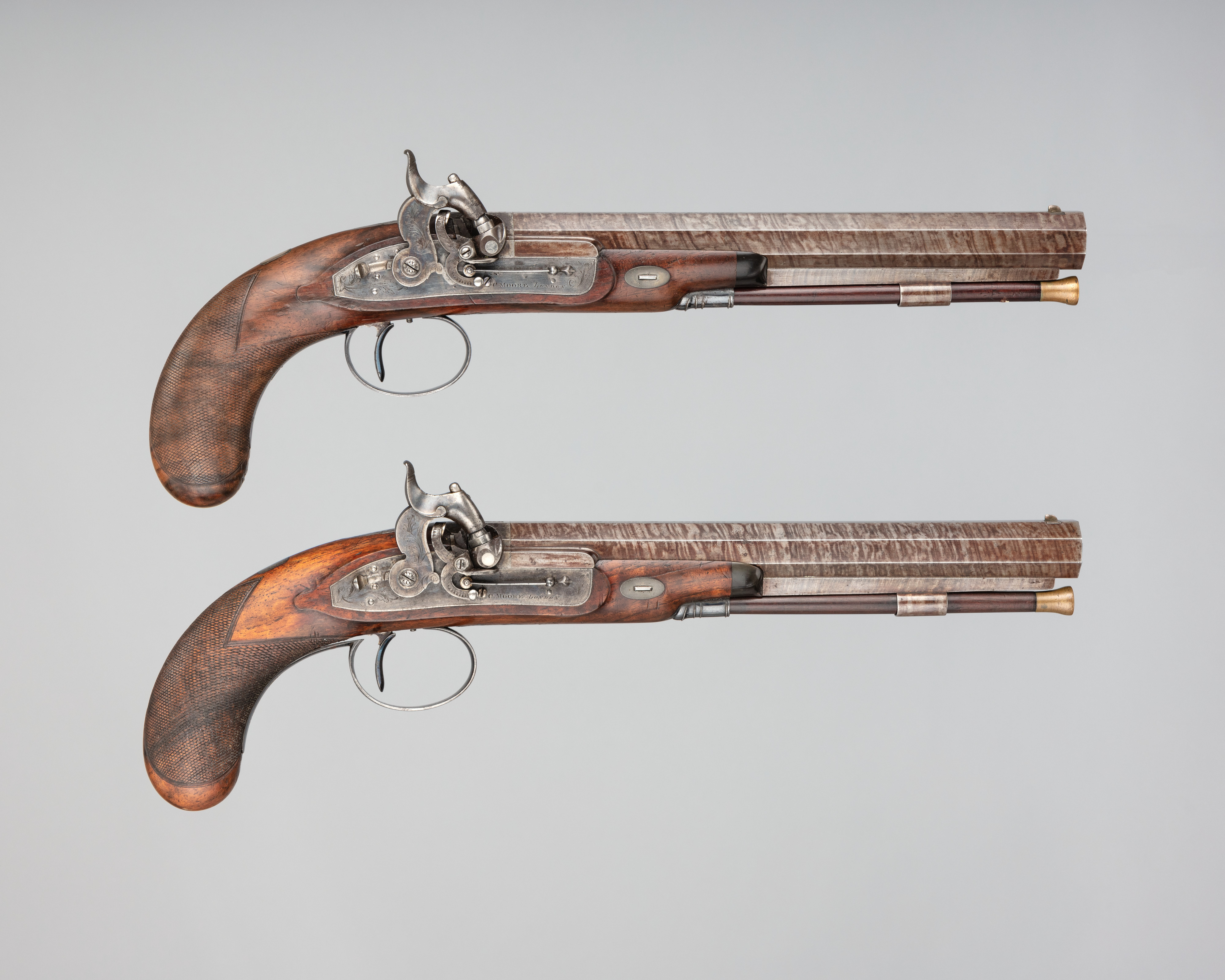
Katherine Fashion Lab presents this heritage analysis of a rare pair of British pellet-lock pistols, complete with their original fitted case and accessories. Dating from the early 19th century and originating in London—then the undisputed epicenter of fine gunmaking—these pistols transcend their functional purpose. They are not merely weapons; they are sculptural objects, status declarations, and repositories of symbolic meaning. For a luxury house crafting its 2026 strategy, this artifact offers a profound case study in how precision, ritual, and concealed power can be translated into contemporary high-end consumer experiences.
Symbolic Power: The Architecture of Controlled Force
The pellet-lock mechanism, a sophisticated evolution of the percussion system, represents a pivotal moment in technological history. Unlike earlier flintlocks that required loose powder and exposed priming, the pellet-lock used a self-contained mercury fulminate pellet. This innovation was not merely practical; it was a statement of intellectual superiority and refined control. The owner of such pistols possessed a device that was faster, more reliable, and more weather-resistant than anything available to the common soldier. In the dueling culture of Regency-era London, where honor was settled at twenty paces, the pellet-lock pistol was the ultimate arbiter of social standing. To commission such a pair from a master London gunsmith was to declare one’s membership in an elite class that could afford both the technology and the leisure to perfect its use.
From a luxury strategy perspective, the pistols embody a form of “quiet power.” They are not ostentatious in the manner of gold-mounted presentation swords. Instead, their power lies in the precision of their steel, the warmth of their walnut stocks, and the discreet brilliance of platinum inlay. This is a lesson for 2026: true luxury is not about loud logos but about the invisible mastery that only a discerning few can recognize. The pellet-lock pistol’s symbolism is one of potential energy—the ability to act decisively and elegantly when required, without prior announcement.
Historical Adornment: The Aesthetics of the Gunmaker’s Art
Adornment on these pistols is deliberate and hierarchical. The primary material, blued steel, offers a deep, lustrous black that catches light with a liquid quality. This is contrasted with the rich, dense grain of English walnut, chosen for its strength and its visual warmth. The platinum inlays are the most telling adornment. Platinum, in the early 1800s, was an exotic metal, difficult to work due to its high melting point. Its presence on these pistols indicates a patron of immense wealth and technical curiosity. The platinum is not used for florid decoration but for fine-line scrollwork and borders—an aesthetic of restraint that speaks to a Neoclassical sensibility favoring symmetry, clarity, and proportion over Baroque excess.
The fitted case amplifies this narrative of adornment. The mahogany exterior, with its rich, reddish-brown glow, is a piece of cabinetmaking in its own right. The interior, lined with velvet or fine wool, is precisely cut to house every tool: the brass powder flask, the steel bullet mold, the nipple wrench, the spare nipples, and the ramrod. This is adornment as systematized beauty. The case is not an afterthought; it is a theater of ownership. Every compartment is a stage for a specific ritual object. For Katherine Fashion Lab, this suggests a 2026 strategy centered on complete ecosystems of luxury—not just a hero product, but a curated collection of related objects that elevate the ownership experience to a ritualistic level.
Spiritual Meaning: The Ritual of Preparation and the Duality of Creation
While seemingly secular, these pistols carry profound spiritual undertones. The act of loading a pellet-lock pistol was a meditative ritual. Each step—selecting the pellet, placing it on the nipple, cocking the hammer, and seating the ball—required focus and calm. In a world before mass production, the gunmaker’s workshop was a place of almost alchemical transformation, turning raw iron ore and tree wood into an instrument of singular purpose. The owner’s relationship with the pistol was one of intimate trust; a misfire could be fatal. This created a quasi-sacred bond between human and object, where the pistol was both an extension of the will and a memento mori—a reminder of the thin line between life and death.
The case’s inclusion of spare firing pins and nipples is not merely practical; it acknowledges the impermanence of the material world. Even the finest mechanism will wear. This spiritual dimension—of preparation, respect for materials, and acceptance of mortality—offers a rich vein for luxury branding. In 2026, consumers increasingly seek products that provide meaning and grounding in a chaotic digital world. A luxury object that encourages ritualistic engagement—like the careful unpacking and maintenance of these pistols—can serve as a form of secular meditation. The brand can position its offerings as anchors of presence, encouraging clients to slow down and engage with craftsmanship on a tactile, almost spiritual level.
2026 High-End Luxury Strategy: Translating Heritage into Modern Desire
For Katherine Fashion Lab, this pellet-lock pistol pair is not a historical curiosity but a strategic blueprint. The following principles can be extracted and applied to a 2026 luxury collection:
1. The “Concealed Power” Capsule Collection
Develop a line that emphasizes understated precision. Materials should be chosen for their intrinsic quality and rarity—like platinum—rather than for overt branding. The silhouette of a handbag, a watch case, or a leather good should be clean and architectural, with the “adornment” reserved for hidden interiors or micro-engravings visible only to the owner. The marketing narrative should celebrate “the power of restraint”, positioning the wearer as someone who commands attention without demanding it.
2. The Ritual of Unboxing as a Spiritual Experience
Inspired by the fitted case, Katherine Fashion Lab should invest heavily in the unboxing ceremony. Packaging should be a multi-layered, tactile experience. A fragrance flacon could arrive in a mahogany-stained, velvet-lined box with separate compartments for a travel atomizer, a refill vial, and a polishing cloth. Each element should feel essential, not superfluous. This transforms the purchase into a ritual of ownership, echoing the spiritual preparation of the duelist. The brand can host private “loading ceremonies” where clients are guided through the history and care of their purchase, creating a community of initiates.
3. The “Mastery” Bespoke Service
Just as these pistols were commissioned from a specific London maker, Katherine Fashion Lab should offer a high-touch bespoke service for its top-tier clients. This service would involve a collaborative design process, selection of rare materials (e.g., vintage walnut, meteorite steel), and the creation of a single, numbered piece. The client would receive a “case” containing not just the product but a certificate of provenance, material samples, and a maintenance toolkit, all housed in a beautifully crafted presentation box. This creates a modern-day equivalent of the gunmaker’s relationship with his aristocratic patron.
4. The Duality Narrative in Campaigns
The pistols’ duality—as objects of beauty and instruments of finality—provides a powerful marketing metaphor. Campaigns for 2026 could explore themes of “creation through precision” and “the beauty of decisive action.” Imagery could juxtapose the softness of fabric with the hardness of steel, the warmth of wood with the coldness of platinum. This narrative appeals to a sophisticated consumer who sees luxury not as escapism but as a tool for navigating a complex world with confidence and grace.
5. Material Storytelling as a Key Differentiator
Finally, the medium list itself is a story. Walnut, mahogany, brass, steel, platinum, bone, and textile—each material has a role and a voice. Katherine Fashion Lab should adopt a “material-first” communication strategy, dedicating digital content to the sourcing, processing, and symbolic meaning of each component used in its products. This educates the consumer and builds a deep appreciation for the tangible heritage embedded in every item, moving beyond the ephemeral to the eternal.
Conclusion: From Artifact to Archetype
This pair of pellet-lock pistols is a masterclass in the fusion of form, function, and symbolism. They demonstrate that the most enduring luxury objects are those that balance technological innovation with aesthetic restraint, and that offer their owners a sense of ritualistic control over their environment. As Katherine Fashion Lab strategizes for 2026, this heritage analysis provides a clear directive: embrace the ethos of the London gunmaker. Prioritize material integrity, design for the discerning few, and create comprehensive ecosystems of ownership that transform a purchase into a lifelong ritual. In doing so, the brand will not merely sell products; it will bestow a legacy of quiet, yet absolute, authority.