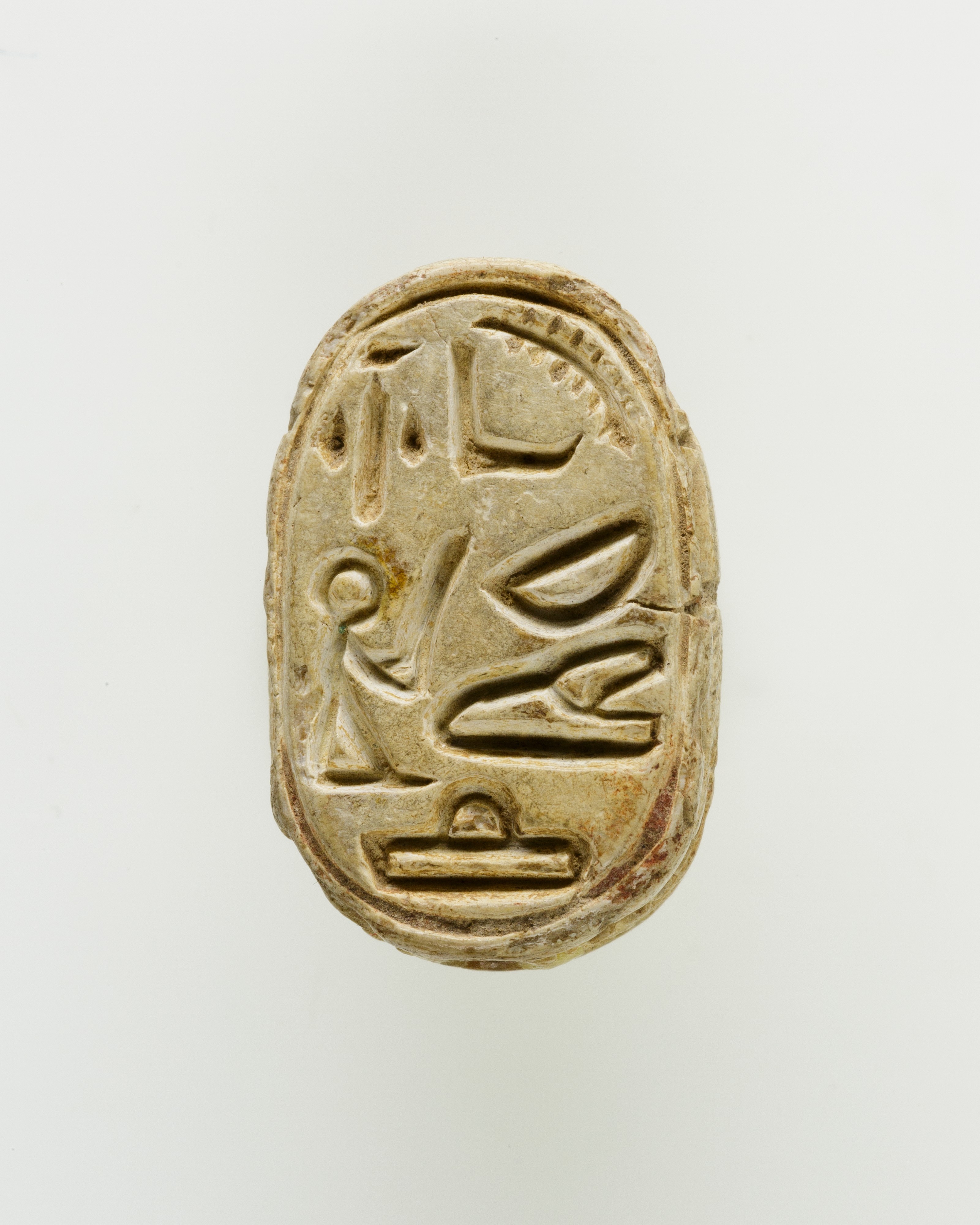
Executive Heritage Analysis: The Scarab of a Priest
This strategic research paper examines the Scarab of a Priest, an artifact of glazed steatite originating from an ancient civilization, as a foundational asset for Katherine Fashion Lab’s 2026 high-end luxury strategy. The analysis decodes the scarab’s symbolic power, historical adornment functions, and spiritual resonance, translating these into a coherent commercial and cultural framework. For a heritage-driven maison, the scarab is not merely a motif but a compressed narrative of authority, transformation, and divine mediation—qualities that align directly with the aspirations of ultra-high-net-worth clientele seeking meaning beyond materiality.
Symbolic Power: The Scarab as an Instrument of Will
Within the ancient Egyptian and broader Near Eastern lexicon, the scarab beetle (Scarabaeus sacer) was the living emblem of Khepri, the self-created sun god who rolled the solar disc across the sky each dawn. For a priest—an intermediary between the mortal and the divine—the scarab was not decorative but operational. It was a seal of authority, a talisman of resurrection, and a physical assertion of the wearer’s ability to command cosmic cycles. In priestly contexts, the scarab was often placed over the heart or woven into pectoral adornments, acting as a psychopomp that ensured the deceased’s soul would not be weighed and found wanting.
For Katherine Fashion Lab, this symbolic power translates into a design philosophy of quiet dominion. The scarab does not shout; it insinuates. Its oval form and engraved underside suggest a hidden message, a personal creed known only to the wearer. In luxury strategy, this is the antithesis of logo saturation. The scarab offers a coded language of status—one that speaks to initiates while remaining enigmatic to the uninitiated. This aligns with the 2026 market shift toward “discreet luxury” or “stealth wealth,” where provenance and narrative outweigh visible branding. The scarab’s power is not in its size but in its semantic density.
Historical Adornment: From Ritual Object to Wearable Sovereignty
Historically, the scarab was mounted in gold, silver, or electrum and strung on linen or leather cords. Priests wore them as pectorals, suspended over the sternum, or as finger rings with swivel bezels. The material—glazed steatite—was a deliberate choice. Steatite (soapstone) is soft enough to carve with precision, yet when glazed with a vitreous copper-based compound, it mimics the deep turquoise or lapis lazuli of royal minerals. This alchemical transformation—from common stone to celestial hue—mirrored the priest’s own ritual elevation from mortal to mediator.
The glazing process also had a protective function. It sealed the porous stone, preventing moisture absorption and preserving the incised hieroglyphs or divine names. Thus, the scarab was a micro-architectural wonder: a durable, portable shrine. In terms of historical adornment, the scarab was not worn for social display in the modern sense; it was worn for efficacy. Its placement on the body corresponded to energetic centers—the heart for judgment, the throat for utterance, the wrist for action.
For Katherine Fashion Lab’s 2026 collection, this suggests a return to intentional placement in garment and accessory design. Rather than scattering scarabs as generic embellishment, the Lab should position the motif at strategic anatomical points: a brooch at the clavicle (voice), a cuff at the radial pulse (action), or a pendant at the solar plexus (will). This creates a wearable cartography of power, echoing ancient priestly practice while satisfying contemporary consumers’ desire for functional symbolism—objects that do something psychological, not just look beautiful.
Spiritual Meaning: The Scarab as a Technology of Rebirth
The spiritual core of the scarab lies in its association with spontaneous generation. The ancient Egyptians observed scarab beetles emerging from dung balls, which they believed were self-created—a metaphor for the sun’s rebirth each morning and the soul’s resurrection after death. For a priest, the scarab was a mnemonic device for the afterlife: it reminded the wearer that death was not an end but a transformation. The glazed surface, often blue or green, further evoked the primordial waters of Nun and the regenerative power of the Nile’s silt.
This spiritual dimension offers a profound counterpoint to modern luxury’s often hollow hedonism. In 2026, high-end consumers are increasingly seeking “transcendent consumption”—products that offer a sense of continuity, legacy, and existential comfort. The Scarab of a Priest provides exactly this: a tangible link to a 4,000-year-old lineage of spiritual technology. Katherine Fashion Lab can leverage this by framing the scarab not as a “trend” but as a contemplative anchor. Each piece could be accompanied by a narrative card explaining the scarab’s role in the priest’s journey from temple to tomb, from earthly authority to celestial judgment. This elevates the product from accessory to ritual artifact, justifying premium pricing through experiential and educational value.
2026 High-End Luxury Strategy: Integration and Differentiation
To operationalize this heritage analysis, Katherine Fashion Lab must adopt a multi-pronged strategy that balances archaeological authenticity with avant-garde execution.
1. Material Alchemy: Reimagining Glazed Steatite
The Lab should commission a limited run of true glazed steatite pieces using historically accurate techniques, but set in contemporary, recycled 18-karat gold or titanium. This creates a dialogue between ancient craft and modern sustainability. The glaze could be redeveloped using bio-ceramic glazes that produce a luminescent, almost liquid finish—evoking the original turquoise without replicating it exactly. This satisfies both heritage purists and forward-looking collectors.
2. Narrative-Driven Packaging and Digital Twin
Each scarab piece should be delivered with a museum-grade provenance dossier, including macro-photography of the original artifact’s incised details, a map of its likely archaeological provenance, and a scholarly essay on its priestly function. Additionally, a blockchain-based digital twin could be created, linking the physical object to a virtual exhibition space where owners can “unlock” further layers of interpretation over time—a gamified heritage experience that deepens brand loyalty.
3. Curation over Collection: The “Priest’s Edit”
Instead of a broad scarab-themed collection, the Lab should launch a capsule of seven pieces, each corresponding to a different priestly role: the Sem priest (funerary rites), the Hem-Netjer (servant of the god), the Lekhirones (ritual purity). Each piece would carry a distinct symbolic charge—e.g., the Sem scarab for legacy planning, the Hem-Netjer scarab for spiritual counsel. This positions the scarab not as a single motif but as a system of meanings, allowing clients to select based on personal resonance. This bespoke approach aligns with the 2026 luxury trend toward hyper-personalization.
4. Strategic Partnerships with Cultural Institutions
Katherine Fashion Lab should partner with a major museum (e.g., The British Museum or The Met) to co-host a private exhibition titled “The Scarab’s Gaze: Priestly Power in Antiquity.” The Lab’s 2026 pieces would be displayed alongside the original artifact, with a portion of proceeds funding conservation efforts. This not only authenticates the brand’s heritage claims but also positions it as a cultural steward, not merely a commercial exploiter of ancient symbols.
5. Price Architecture and Client Segmentation
Given the artifact’s priestly association with exclusive knowledge, the Lab should adopt a by-appointment-only sales model for the highest-tier scarab pieces (priced above $150,000). Lower-tier, but still meticulously crafted, iterations (in silver with enamel) could be offered at $8,000–$15,000 to a broader but still affluent audience. This tiered approach mirrors the ancient hierarchy: the high priest’s scarab versus the lesser clergy’s—yet both share the same symbolic DNA.
Conclusion
The Scarab of a Priest is not a decorative relic; it is a compressed operating manual for power, transformation, and spiritual authority. For Katherine Fashion Lab, it offers a rare opportunity to transcend seasonal fashion cycles and anchor the brand in timeless, cross-cultural meaning. By honoring the artifact’s material, narrative, and spiritual integrity—while reinterpreting it through a 2026 lens of sustainability, personalization, and digital innovation—the Lab can create a luxury offering that is both historically literate and commercially disruptive. The scarab rolls the sun across the sky; Katherine Fashion Lab can roll its own renaissance from a single, glazed stone.