Miniature Dress of Ica: A Study in Symbolic Power and the 2026 Luxury Imperative
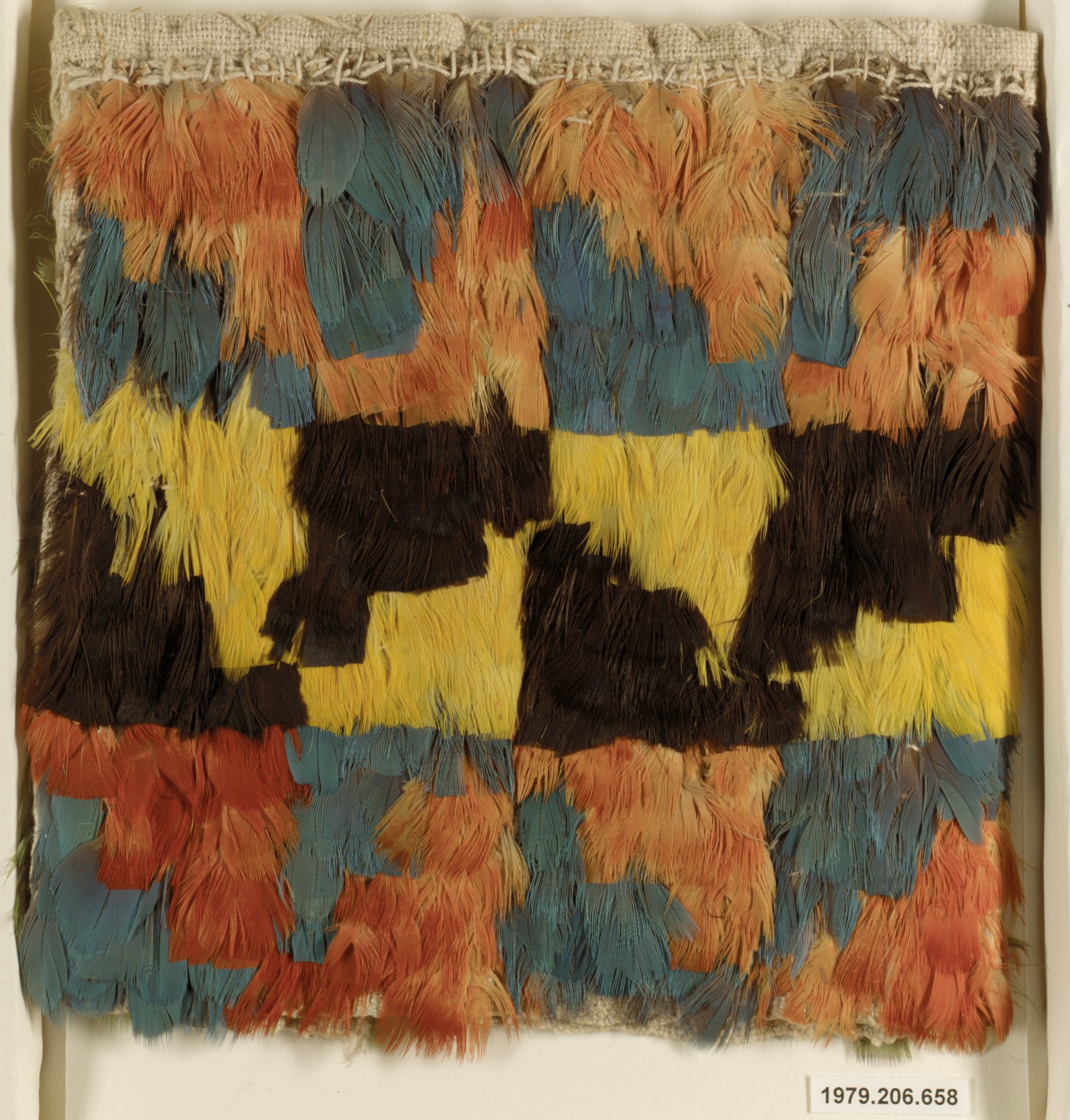
The miniature dress, rendered in cotton and feather, from the Ica culture of pre-Columbian Peru, is far more than a diminutive artifact of textile production. Within the context of Katherine Fashion Lab’s ongoing cross-cultural research—which juxtaposes the silent musicality of Angkor Wat’s ceramic fragments with the tactile memory of Andean weaving—this object emerges as a profound lexicon of power, devotion, and identity. For the 2026 high-end luxury strategy, the Ica miniature dress offers a critical blueprint for transcending ornamentation to achieve narrative resonance. It is not a relic of the past, but a directive for the future of heritage-driven couture.
Historical Adornment and the Microcosm of Status
To the uninitiated, the miniature dress might appear as a toy or a funerary offering of marginal importance. However, a rigorous historical analysis reveals its function as a concentrated vessel of social and cosmological significance. In Ica society, which flourished along the arid southern coast of Peru, textile production was a primary technology of civilization. The creation of a garment—even one scaled for a figurine or an offering—demanded the same intricate labor, resource allocation, and ritualized skill as a full-sized tunic. The choice of cotton, cultivated in hues ranging from white to natural brown, provided the foundational matrix, while the application of avian feathers transformed the object from a mere textile into a chromatic emblem of the celestial realm.
The miniature scale is not an indication of lesser value; rather, it is a deliberate strategy of intensification. By condensing the form of the human body into a palm-sized object, the Ica artisan created a powerful tool for sympathetic magic and spiritual communication. These garments were not simply worn; they were activated. They were placed within burial bundles to clothe the spirit in the afterlife, or suspended as votive offerings to petition for rain, fertility, or victory. In this context, the miniature dress functioned as a proxy for the human subject, a concentrated locus of identity that could be manipulated, adorned, and presented to the divine. This is the historical resonance that Katherine Fashion Lab must decode: the miniature is not a reduction, but an amplification of intent.
Feathers as Divine Syntax
The integration of feathers is the defining feature of this object’s symbolic power. In the Andean worldview, birds occupied a liminal space between the terrestrial realm of humans and the celestial realm of the gods, the Hanan Pacha. Feathers, therefore, were not merely decorative; they were materialized prayers. The vibrant iridescence of tropical feathers, traded over vast distances, signified not only wealth but also the wearer’s or the offering’s connection to the wider cosmos. To adorn a miniature dress with feathers was to imbue it with the capacity for spiritual flight, to allow the soul of the deceased or the intention of the living to ascend. The color palette—often featuring the blues of the sky, the reds of sacrificial blood, and the yellows of the sun—functioned as a chromatic liturgy, each hue encoding a specific supplication. For the luxury strategist, this historical use of featherwork demonstrates that materiality is message. The value of an object is not derived from its size or volume, but from the rarity and symbolic density of its components.
Spiritual Resonance and the Dialogue with Angkor
The research context provided—the discovery of a worn ceramic mold at Angkor Wat depicting musicians frozen in eternal performance—serves as a powerful comparative lens. Both the Ica miniature dress and the Khmer mold operate on the principle of eternal activation. The Angkorian musicians play a silent symphony for eternity, their posture preserved to ensure cosmic harmony. Similarly, the Ica miniature dress is dressed to exist in perpetuity, its feathers and cotton maintaining a protective presence for the spirit. Neither object is passive; both are engineered to perform a function beyond the moment of their creation. This cross-cultural parallel reveals a universal human desire to create objects that transcend mortality. The miniature dress is not a static representation of a person; it is a dynamic instrument designed to negotiate the journey of the soul. This spiritual dimension is the most potent, yet most delicate, asset for a modern luxury house.
The DNA correlation mentioned in the research brief suggests a literal, biological link between the people who made these objects and the contemporary inheritors of these traditions. This is not a distant, archaeological curiosity. It is a living lineage. For Katherine Fashion Lab, this implies that the 2026 collection must not merely reference the Ica aesthetic but must engage with the continuity of craft knowledge. The DNA is in the hands of the weavers, the dyers, and the feather-workers who still practice these arts. A superficial appropriation would sever this biological and cultural thread. A strategic collaboration, however, would weave the brand into a narrative of survival and adaptation that is thousands of years old.
2026 High-End Luxury Strategy: From Artifact to Ethos
As we move toward 2026, the global luxury market is saturated with products that offer aesthetic pleasure but lack anthropological depth. The discerning ultra-high-net-worth client is no longer satisfied with a logo; they seek a provenance of power. The Ica miniature dress provides a unique strategic vector for Katherine Fashion Lab to differentiate itself through a three-tiered approach:
First: The Philosophy of the Miniature. The brand should adopt the conceptual framework of the miniature as a design principle. In a world of maximalist noise, the miniature offers a paradox of power through restraint. Katherine Fashion Lab can introduce a capsule collection of "talismanic" pieces—brooches, pendants, or bespoke handbags—that are not scaled-down versions of larger items, but rather autonomous objects of concentration. These pieces would be designed to be held, to be felt, to be passed from hand to hand, functioning as modern amulets for the wearer. The marketing narrative must emphasize that these objects are not accessories but personal relics, designed to be activated by the wearer’s intent.
Second: Material Integrity as Spiritual Currency. The 2026 strategy must pivot away from generic "sustainability" claims toward a more rigorous doctrine of material provenance. Just as the Ica feather was a trade good of immense value, Katherine Fashion Lab must source materials that carry a story of human effort and ecological awareness. This involves partnering with ethical feather ateliers that repurpose naturally molted plumage, and supporting the revival of native cotton cultivation in Peru. The cost of these materials is irrelevant; their spiritual and historical density is the true luxury. The brand must publish a "Material Provenance Index" for each garment, detailing the origin of every fiber and feather, thereby transforming the supply chain into a narrative of cultural preservation.
Third: The Ritual of Acquisition. The sale of a luxury item must be reframed as a ceremonial act. Drawing from the Ica practice of activating objects through ritual, Katherine Fashion Lab should offer clients a "Commissioning Ceremony" for bespoke pieces. This would involve a consultation with a heritage curator to select materials based on the client's personal intentions—protection, creativity, love—mirroring the Ica supplication process. The garment is not merely delivered; it is consecrated through a documented process that connects the client to the Andean lineage. This elevates the transaction from commerce to a form of cultural patronage, creating an emotional bond that is impossible for competitors to replicate.
Conclusion: The Eternal Scale of Value
In conclusion, the miniature dress of Ica is a masterclass in the economy of meaning. It proves that power is not a function of size, but of symbolic concentration and material integrity. For Katherine Fashion Lab, this artifact is not an inspiration for a print or a silhouette; it is a philosophical foundation. By aligning the 2026 strategy with the principles of the miniature, the density of feather and cotton, and the ritual of activation, the brand can offer a luxury that is both historically grounded and spiritually resonant. In an era of digital ephemerality, the Ica dress reminds us that the most profound luxury is the ability to create an object that holds a soul, forever.