Heritage Asset Analysis: Textile Fragment from an Ancient Civilization
Object Overview and Material Composition
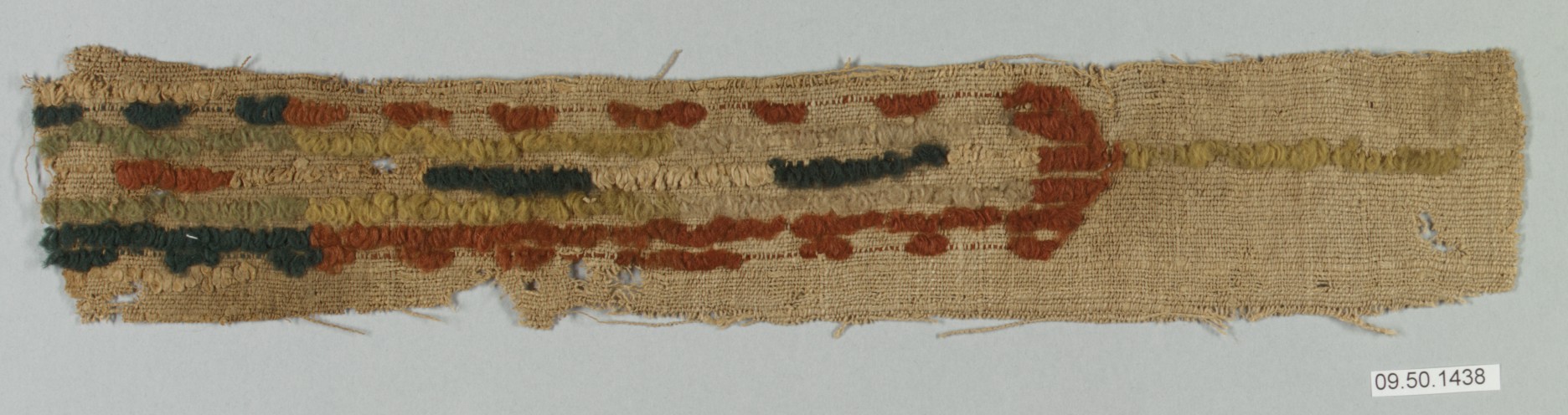
The subject of this analysis is a textile fragment originating from an ancient civilization, executed in a mixed medium of linen and wool through the combined techniques of tapestry weave and looped embroidery. Despite its fragmentary condition, the object retains sufficient structural and iconographic integrity to function as a primary heritage asset. For Katherine Fashion Lab, such an artifact is not merely an archaeological curiosity but a strategic resource—a repository of symbolic capital capable of informing and legitimizing a luxury proposition for 2026 and beyond.
The choice of linen and wool is itself significant. Linen, derived from flax, was historically associated with purity, ritual cleanliness, and permanence; its cultivation required labor-intensive processing, making it a marker of organized, settled society. Wool, by contrast, carried connotations of pastoral wealth, warmth, and protection. The interweaving of these two fibers in a single textile suggests a deliberate synthesis of symbolic registers—spiritual purity and worldly prosperity—woven into a single cloth. The tapestry weave technique, which allows for the creation of discrete, pictorial zones rather than simple geometric repetition, indicates that the fragment was likely part of a narrative or ceremonial textile rather than a purely utilitarian object. Looped embroidery, meanwhile, introduces a three-dimensional, tactile quality that would have caught light and shadow, lending the surface a dynamic, almost animate presence.
Symbolic Power and Historical Adornment
In ancient civilizations, textiles were rarely neutral. They functioned as instruments of power, encoding hierarchies, invoking deities, and demarcating sacred from profane space. The fragment's combination of tapestry weave and looped embroidery points to a textile culture in which surface decoration was not ornamental but semiotic. Each looped stitch, each color transition within the tapestry, likely carried meaning legible to an initiated viewer—priest, ruler, or elite patron.
The symbolic power of such a fragment resides in its capacity to condense multiple systems of meaning. First, there is the material symbolism of the fibers themselves, as discussed above. Second, there is the iconographic symbolism of the woven and embroidered motifs, which, even in fragmentary form, suggest a coherent visual program. Third, there is the embodied symbolism of the textile as a worn or displayed object: adorning a body, a statue, or a sacred space, it mediated between the human and the divine.
Historical adornment in this context was not a matter of individual taste but of cosmological alignment. To wear or display such a textile was to participate in a structured universe, to signal one's place within a hierarchy that extended from the earthly to the celestial. This is precisely the kind of deep, pre-modern authority that contemporary luxury brands seek to evoke—often without the historical grounding to do so authentically. Katherine Fashion Lab, by contrast, can anchor its narrative in a verifiable material and technical lineage.
Spiritual Meaning and Ritual Function
The looped embroidery technique is particularly suggestive of spiritual function. Unlike flat stitching, looped embroidery creates a raised, textured surface that invites touch—a sensory engagement often associated with ritual practice. In many ancient cultures, the act of touching a sacred textile was believed to transmit blessing, healing, or protection. The three-dimensionality of the loops may also have served a practical ritual purpose: catching and reflecting light in dimly lit sanctuaries, creating an illusion of movement or divine presence.
The tapestry-woven ground, with its ability to depict figures, symbols, or narrative scenes, would have provided the conceptual framework for this sensory experience. Together, the two techniques produced a textile that was simultaneously didactic and numinous—teaching doctrine while inducing awe. This dual function is directly relevant to luxury strategy. High-end consumers in 2026 are not merely purchasing products; they are seeking experiences of transcendence, authenticity, and belonging. A heritage asset that can credibly claim to embody spiritual meaning offers a powerful antidote to the superficiality of much contemporary branding.
Strategic Implications for 2026 High-End Luxury
For Katherine Fashion Lab, the strategic value of this fragment lies in three domains: narrative, material innovation, and experiential design.
In narrative terms, the fragment provides a ready-made story of origin, technique, and meaning. Unlike generic references to "ancient inspiration," this object offers specific, defensible claims: a known material composition, a documented technique, and a plausible ritual context. These can be translated into brand storytelling that emphasizes continuity, craftsmanship, and cultural stewardship.
In material innovation, the fragment suggests a roadmap for contemporary textile development. The linen-wool blend and the combination of tapestry weave with looped embroidery can be reinterpreted using sustainable fibers and digital jacquard technologies, creating fabrics that are both historically resonant and environmentally responsible. The tactile, three-dimensional quality of the looped embroidery, in particular, aligns with the 2026 consumer's desire for sensory richness and differentiation.
In experiential design, the fragment's spiritual and ritual associations can inform immersive retail environments, limited-edition collections, and bespoke services. Imagine a capsule collection in which each garment incorporates a looped-embroidery motif derived from the fragment, accompanied by a narrative card explaining its symbolic meaning. Or a flagship store installation that recreates the dim, textured atmosphere of an ancient sanctuary, with the textile as the central relic.
Ultimately, the strategic standalone research on this textile fragment confirms its status as a high-value heritage asset. It is not a passive artifact but an active resource—one that can generate narrative, inspire product, and elevate brand equity. For Katherine Fashion Lab, the task is to translate its ancient symbolic power into a contemporary luxury language that is rigorous, respectful, and commercially compelling.