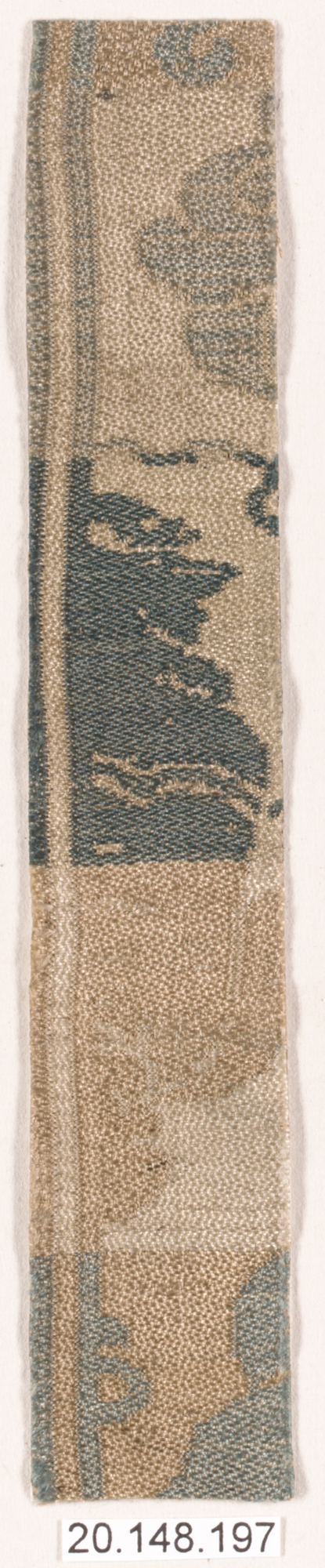
Heritage Asset Analysis: Japanese Silk Compound-Weave Textile as a Vehicle of Symbolic Power
Introduction and Object Definition
This heritage analysis examines a single artefact class — a Japanese silk textile executed in compound weave — as a strategic asset for Katherine Fashion Lab's 2026 luxury positioning. The piece under consideration is defined by three interlocking attributes: its material (silk), its structural complexity (compound weave, in which multiple warp or weft systems interlace to produce integral, non-embroidered pattern), and its cultural origin (Japan). Compound-weave silks — including nishiki (brocade), tsuzure and related figured weaves — represent one of the most technically demanding textile traditions in world history. Unlike surface decoration, the pattern is constructed within the fabric's architecture, meaning ornament and structure are inseparable. This inseparability is the philosophical core of the piece and the foundation of its luxury value.
Historical Adornment and the Politics of Cloth
In Japan, figured silk was never merely clothing. From the Nara period onward, compound-weave silks functioned as instruments of statecraft. Court rank, ritual authority, and diplomatic prestige were encoded in weave density, colour, and motif. The shōzoku garments of Shinto clergy, the costumes of Noh theatre, and the formal kimono of the Edo-period elite all relied on woven — not printed — figuration to signal legitimacy. A compound weave was expensive in a way that was legible: it consumed more silk, more loom time, and more specialised labour than any plain or simple patterned cloth. To wear it was to display command over scarce resources and inherited technique.
This created a durable association between woven complexity and social authority. The garment did not merely indicate wealth; it performed it structurally. For a contemporary luxury house, this history offers a critical strategic insight: the value proposition is intrinsic, not applied. The pattern cannot be separated from the cloth, and therefore cannot be cheaply replicated.
Symbolic Power and Spiritual Meaning
The motifs carried by Japanese compound-weave silks are a compressed symbolic language. Recurring elements include the dragon (imperial and elemental power), the phoenix (renewal and feminine sovereignty), the chrysanthemum (longevity and the throne), the paulownia (righteous governance), and geometric repeats such as shippō (the seven treasures) and sayagata (an esoteric Buddhist lattice). These are not decorative fillers. They are semantically loaded signs whose meanings were codified across centuries of court, temple, and warrior culture.
Spiritually, silk itself carried significance. In Shinto practice, cloth offerings (mitegura) mediate between the human and the sacred; woven fabric is a boundary object between worlds. In Buddhist contexts, the finest silks draped altars and icons, and the labour of weaving was understood as devotional. The weaver's discipline — thousands of precise interlacings — was read as an ethical and spiritual practice, not an industrial process. This gives the piece a moral provenance: it embodies patience, mastery, and intention. In an era of algorithmic speed and disposable fashion, that provenance is a differentiating asset.
Technical Rarity as a Luxury Moat
Compound weave is a barrier to entry. It requires specialised looms, often drawloom or jacquard-adjacent mechanisms, and weavers trained over decades. Regional traditions — Nishijin in Kyoto, for instance — sustain ecosystems of dyeing, preparation, and finishing that cannot be relocated without loss of authenticity. For Katherine Fashion Lab, this matters strategically: the piece sits in a category where supply is structurally constrained. Scarcity is not manufactured through marketing; it is inherent in the craft. That is the most defensible form of exclusivity available to a luxury house in 2026.
2026 Luxury Strategy: Positioning the Piece
Three strategic vectors follow from this analysis.
First, provenance-led storytelling. The 2026 luxury consumer — particularly in Asia and among globally mobile high-net-worth cohorts — rewards verifiable heritage over logo visibility. The piece should be presented with documented lineage: region, workshop, weave structure, and motif meaning. Narrative becomes product specification.
Second, symbolic authority as brand equity. Katherine Fashion Lab can license the symbolic vocabulary of Japanese compound weave — dragon, phoenix, chrysanthemum — as a proprietary visual code. Used consistently, these motifs become recognisable brand signatures with deep cultural legitimacy, avoiding the appropriation risk that accompanies shallow borrowing.
Third, craft as sustainability argument. Long-life, repairable, heirloom-grade textiles align with the durability narrative reshaping luxury. A compound-weave piece is, by design, anti-fast-fashion. This supports pricing power and ESG positioning simultaneously.
Conclusion
The Japanese silk compound-weave piece is not a costume element; it is a heritage asset with structural, symbolic, and spiritual depth. Its value is woven in, not applied. For Katherine Fashion Lab, the strategic imperative for 2026 is to treat such pieces as intellectual property and cultural capital, not inventory. Handled with scholarly rigour and design discipline, this heritage offers a rare combination: defensible scarcity, authentic meaning, and enduring luxury authority.