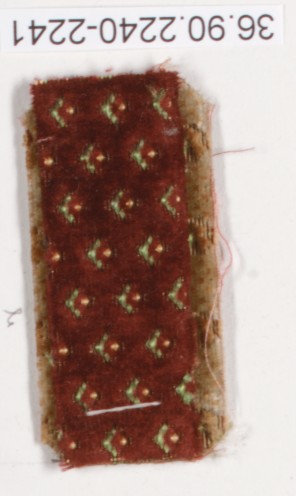
Piece as Paradigm: A Couture Analysis of Singularity in Silk
The concept of the "piece" within haute couture occupies a rarefied position in the lexicon of luxury. It is not merely a garment; it is an autonomous aesthetic proposition—a self-contained thesis on form, material, and meaning. When that piece is executed in silk, the most historically freighted of all textile fibers, and when its provenance is drawn from the deep well of global heritage, the analysis ceases to be about clothing alone. It becomes a study in cultural transmission, material intelligence, and the economics of singularity. This standalone study examines the couture piece as an object of intellectual and commercial consequence, using silk as its analytical lens and global heritage as its contextual frame.
The Ontology of the Piece: Autonomy and Intent
In the atelier tradition, a "piece" is distinguished from a "look" or a "collection" by its self-sufficiency. It does not require the syntax of a runway narrative to be legible. A couture piece is a closed system of intention—every seam, every drape, every point of tension exists in service of a unified expressive goal. This autonomy is what elevates a garment from merchandise to artifact. The piece operates as a synecdoche: it stands for an entire philosophy of making, yet it is complete in itself.
When we consider the piece through the lens of global heritage, this autonomy acquires a second layer. The piece becomes a vessel for inherited knowledge—techniques, motifs, and material sensibilities passed down through generations and across geographies. It is not a pastiche of heritage but a distillation of it. The couturier who works in this mode is less a designer than a curator of memory, translating the intangible into the tactile.
Silk as Material Intelligence
No fiber carries a denser cultural payload than silk. Its origins in ancient China, its role in the Silk Road's exchange of goods and ideas, its association with ritual, royalty, and refinement across Asia, the Middle East, and Europe—all of this is embedded in the fiber itself. Silk is not a neutral medium; it is a historical actor. To work in silk is to enter into a conversation with that history, whether one acknowledges it or not.
From a technical standpoint, silk's properties make it uniquely suited to the couture piece. Its tensile strength allows for constructions of extreme delicacy without sacrificing structural integrity. Its drape—at once fluid and weighted—permits the kind of controlled improvisation that distinguishes haute couture from ready-to-wear. Its luster interacts with light in a way that renders surface and depth indistinguishable, a quality that resonates with the piece's own oscillation between the visible and the implied.
But the material intelligence of silk extends beyond physics. In the context of global heritage, silk functions as a connective tissue between disparate traditions. Japanese kimono silk, Indian mulberry silk, Italian sericulture, French lyonnaise weaving—each represents a distinct epistemology of the fiber. A couture piece that draws on this heritage must navigate these differences with precision, avoiding the flattening logic of appropriation while honoring the specificity of each source.
Heritage as Methodology, Not Motif
The most common failure in heritage-inspired couture is the reduction of heritage to motif—the application of recognizable symbols onto a Western silhouette. This approach treats heritage as decoration rather than as a generative principle. True heritage-driven couture uses tradition as a methodology, allowing the logic of the source culture to shape the construction, the proportion, and the very experience of wearing the piece.
Consider, for example, the Japanese principle of ma—the meaningful interval, the space between things. A couture piece informed by ma might prioritize negative space over embellishment, allowing the silk to breathe and the body to move within a structured void. Or consider the Indian concept of jugaad—frugal innovation, the art of making do with elegance. A piece shaped by jugaad might incorporate reclaimed or remixed silk, transforming limitation into a design language.
This methodological approach requires deep study. It demands that the couturier move beyond the visual archive and into the epistemological one. The result is a piece that does not merely look global; it thinks globally. It is a product of what the anthropologist Arjun Appadurai might call "vernacular globalization"—the localization of global flows into a singular, situated object.
The Economics of Singularity
From a market perspective, the standalone piece in heritage silk occupies a paradoxical position. It is, by definition, non-scalable. Its value derives precisely from its irreproducibility—the fact that it cannot be mass-produced without losing its essence. In an era of algorithmic abundance, the couture piece asserts the premium of the singular.
This singularity is not merely a function of labor hours or material cost. It is a function of intellectual capital. The piece carries within it the accumulated knowledge of heritage techniques, the discernment of the curator, and the skill of the artisan. These are not interchangeable inputs. They are the very conditions of the piece's existence.
For the collector or the institution, acquiring such a piece is an act of cultural stewardship. It is a recognition that certain forms of value cannot be digitized, replicated, or outsourced. The piece becomes a hedge against the homogenization of global fashion—a material argument for the persistence of difference.
Conclusion: The Piece as Proposition
To analyze a couture piece in silk, born of global heritage, is to analyze a proposition about how we might make and wear meaning in a globalized world. The piece does not resolve the tensions between tradition and innovation, local and global, singular and systemic. Instead, it holds them in productive suspension. It is a silk thread stretched across geographies and generations—fragile, tensile, and luminous with implication.
In the end, the piece is not an answer. It is a question posed in the most refined of materials, inviting us to consider what we value, what we inherit, and what we choose to make of both.