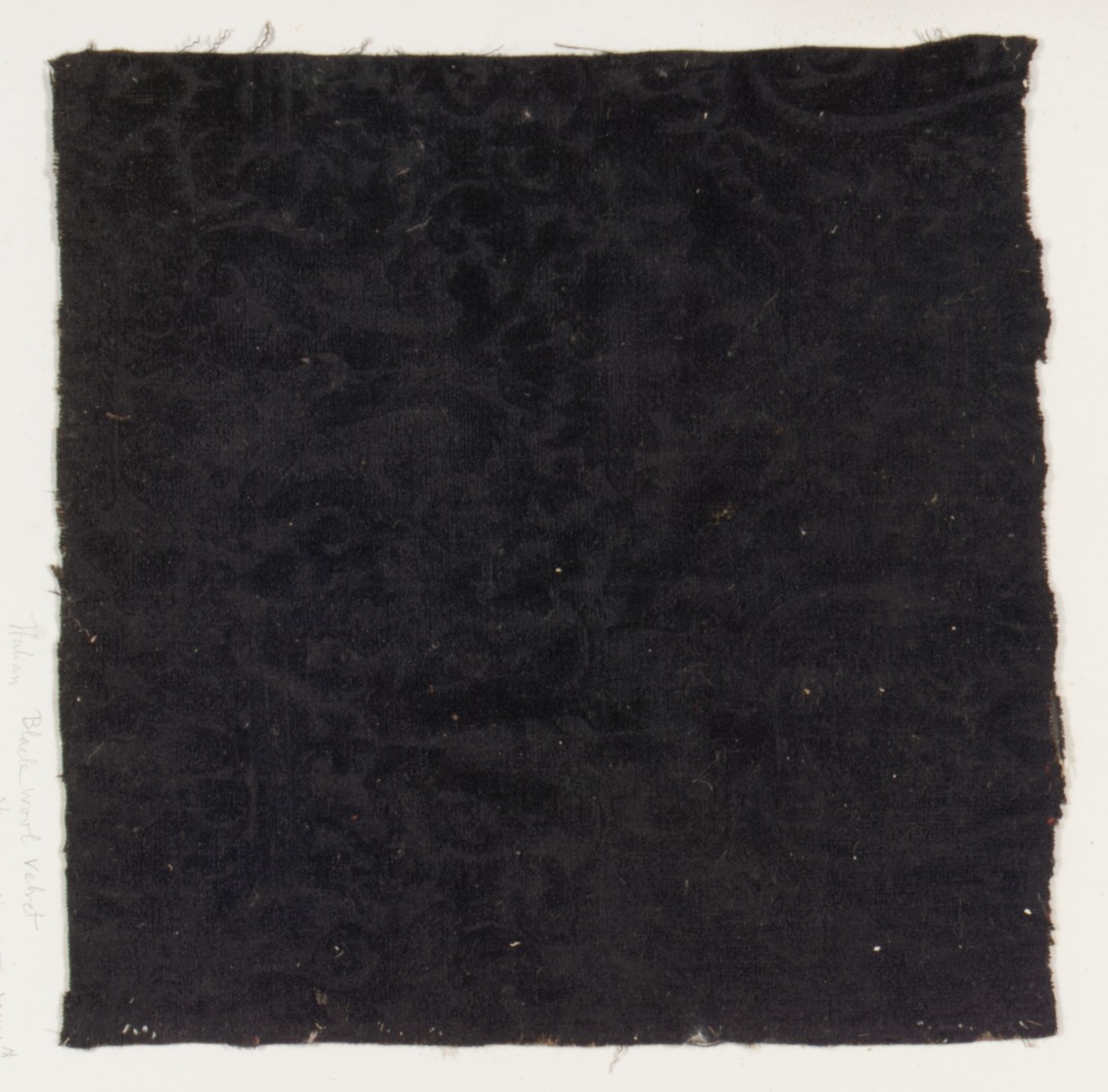
Fragment as Method: A Couture Study in Wool and Global Heritage
The contemporary couture landscape is defined less by the finished garment than by the intelligence of its construction. Within this paradigm, Fragment emerges not as a title but as a methodology — a deliberate curatorial stance in which the partial, the residual, and the reclaimed become the primary units of design. This standalone study examines Fragment through the lens of global heritage and a single, uncompromising material: wool. The result is an object of quiet authority, one that resists the spectacle of seasonal novelty in favor of structural permanence.
The Conceptual Premise: Incompletion as Intent
Fragment begins with a refusal. It declines the modernist fantasy of the seamless whole — the garment as a closed, self-referential system. Instead, it treats the couture object as an assembly of inherited parts, each carrying its own history of touch, wear, and migration. This is not deconstruction for its own sake; it is a rigorous form of archaeological tailoring. Every panel, seam, and edge is positioned as evidence of a prior life, and the designer's role is reframed from author to archivist.
Such an approach places Fragment within a distinguished lineage. It echoes the Japanese principle of boro, where indigo-dyed rags are layered and stitched across generations until the repair becomes the fabric. It resonates with the European piécé tradition, in which disparate textiles are joined to create a unified field. And it draws on West African strip-weaving, where narrow bands are assembled into a larger cloth whose seams are celebrated rather than concealed. Fragment does not quote these traditions; it operates within their shared logic — that wholeness is achieved through the honest accumulation of parts.
Wool as the Sole Medium: Material Integrity
The decision to restrict Fragment to wool is central to its argument. Wool is a fiber of memory. It holds shape, responds to moisture, and records the body's movements in its own relaxed structure. Unlike silk, which flatters through drape, or synthetics, which perform through elasticity, wool possesses a structural honesty. It reveals its quality in the hand, not merely in the eye.
Within this study, wool is deployed in three distinct registers. First, a tightly woven merino provides the garment's architectural spine — used for the bodice and the primary seams, where precision is non-negotiable. Second, a coarse, undyed lambswool supplies the fragmented overlays, its visible slubs and irregularities serving as a counterpoint to the precision beneath. Third, a felted wool, produced through controlled agitation, is cut into irregular shapes that function as both patch and reinforcement, blurring the boundary between repair and ornament.
Crucially, no synthetic interfacing, no fusible, and no hidden plastic components are permitted. Every element of structure must derive from wool itself — through felting, fulling, or hand-stitched interlining. This constraint is not nostalgic; it is a test of couture competence. When a material cannot be disguised, the maker's skill is fully exposed.
Global Heritage as Structural Logic
Fragment's engagement with global heritage is neither decorative nor appropriative. It does not borrow motifs; it borrows systems of construction. From the Andean polleras, it takes the principle of the horizontal band as a unit of composition. From the Korean jogakbo, it adopts the practice of joining small, irregular scraps into a surface that is stronger than any single piece. From Scottish tweed, it inherits the understanding that color can be embedded in the fiber itself, not applied to the surface.
These references are not cited for exotic effect. They are structural decisions. A panel of Fragment may be assembled using a jogakbo logic, yet its seam allowance is finished with the precision of a Savile Row tailor. A felted overlay may recall the density of Central Asian koshma, yet its edges are bound with a hand-rolled hem that would satisfy a Parisian atelier. The result is a garment that belongs to no single tradition, yet respects all of them.
Construction and the Ethics of the Fragment
In Fragment, the seam is not an error to be hidden. It is a visible argument. Each join is executed with a hand-finished flat-felled seam, pressed open and topstitched with a single needle. Where fragments meet at irregular angles, the maker inserts a gusset of felted wool, creating a soft transition that absorbs stress and adds visual texture. The garment's interior is as resolved as its exterior — no raw edges, no loose threads, no shortcuts.
This ethic extends to sourcing. The wool used in this study is drawn from small-batch mills in Yorkshire, Sardinia, and New Mexico, each selected for its traceable supply chain and its willingness to produce undyed or naturally pigmented yarns. The fragments themselves are not scraps from other collections; they are purpose-cut remnants from the mill's own archive, ensuring that the "fragment" is an intentional unit, not a byproduct of waste.
The result is a garment that carries its own provenance. It does not pretend to be new. It presents itself as a convergence of histories — fiber, labor, and tradition — held together by the maker's hand. In an industry that often mistakes novelty for innovation, Fragment offers a different proposition: that the most radical act in couture today may be to build slowly, from what already exists, with a single material and an honest seam.
Conclusion: The Fragment as Complete
Fragment is not an unfinished garment. It is a complete statement about how couture might proceed when it stops chasing the seamless and starts honoring the partial. By restricting itself to wool and grounding itself in global heritage, it achieves a rare coherence — one in which material, method, and meaning are inseparable. For Katherine Fashion Lab, this standalone study serves as both a technical benchmark and a philosophical anchor: proof that the fragment, when handled with rigor, is not a compromise but a form of wholeness.