Heritage Analysis: Pyxis Fragments from Iran
Object Overview and Material Significance
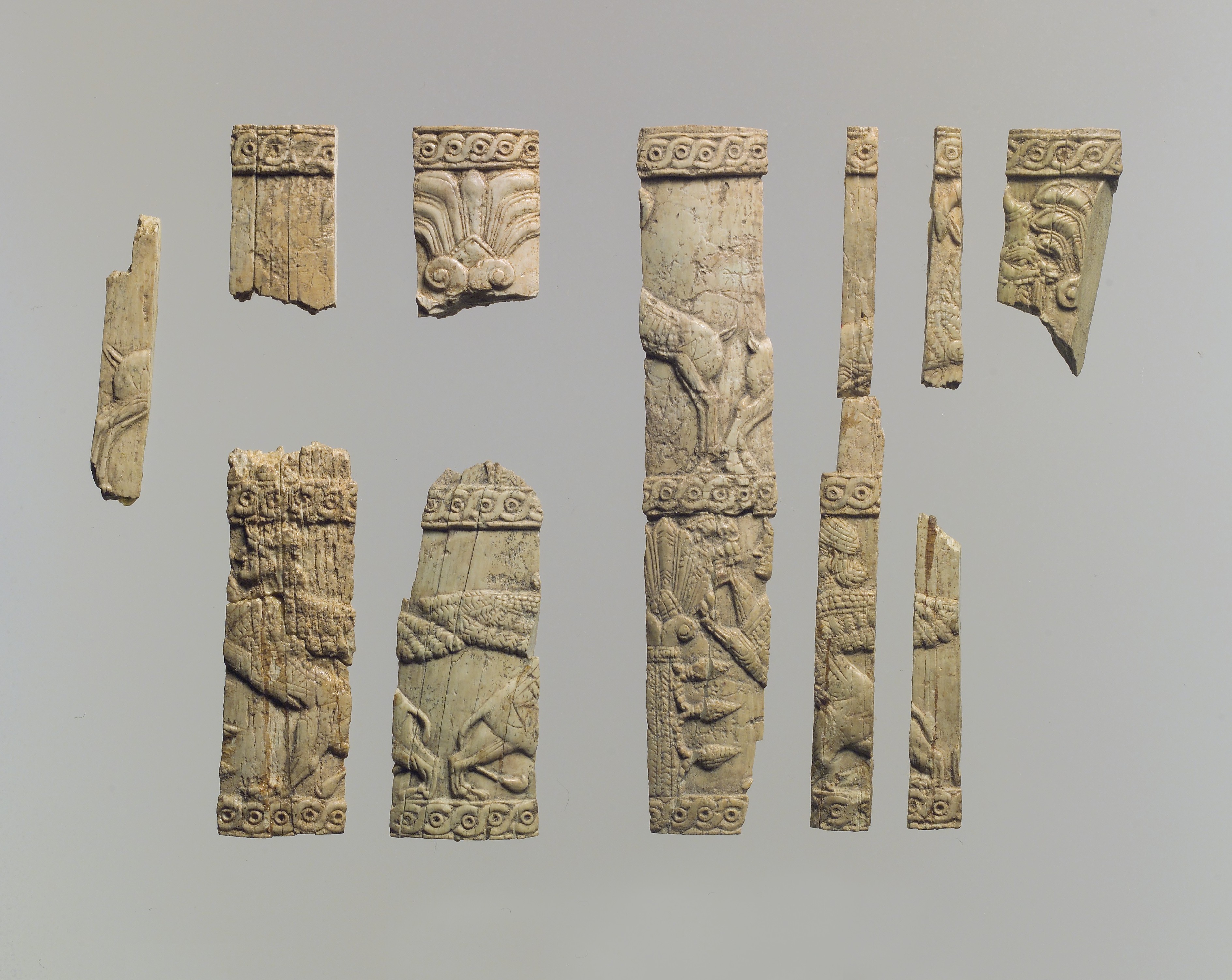
The pyxis fragments under examination represent a rare convergence of material scarcity, artisanal mastery, and symbolic density. Originating from the Iranian cultural sphere—likely within the Achaemenid or early Sasanian horizon, where ivory was imported via Indian Ocean and Mesopotamian trade corridors—these fragments once formed part of a cylindrical container with a fitted lid, traditionally used to house precious substances: cosmetics, unguents, ritual pigments, or small sacred amulets. Ivory, in the ancient Iranian context, was not merely a luxury substrate but a strategic material of diplomatic and spiritual capital. Its acquisition required long-distance networks, its carving demanded specialized guild knowledge, and its possession signaled alignment with courtly or priestly elites. For Katherine Fashion Lab, the pyxis fragments offer a heritage narrative that bridges material provenance with intangible value—a critical axis for 2026 luxury positioning.
Symbolic Power and Historical Adornment
In Iranian antiquity, the pyxis was never a neutral object. Its cylindrical form echoed the architectural logic of sacred enclosures—fire temples, royal audience halls, and tomb chambers—while its ivory surface served as a canvas for incised or relief-carved motifs that encoded power. Common decorative programs included winged sun discs, stylized lotuses, confronted animals (lions, griffins, ibexes), and geometric bands representing cosmic order. Each motif functioned as adornment with apotropaic and legitimizing intent. A pyxis placed in a noblewoman’s quarters or a priest’s sanctuary was not simply a container; it was a portable emblem of protection, fertility, and social rank. The fragments’ wear patterns—polished edges, residual pigment traces, and micro-fractures—suggest repeated ritual or cosmetic use, indicating that the object participated in daily performances of identity. This aligns with the broader Iranian principle of farr (divine glory), where visible beauty and material rarity were understood as outward signs of inner legitimacy. For a luxury brand, this historical layer provides a defensible claim: adornment as a technology of power, not mere decoration.
Spiritual Meaning and Ritual Function
The spiritual dimension of the pyxis fragments operates on three levels. First, the container itself—as a vessel—symbolizes the holding of essence, a concept resonant with Zoroastrian and later Sufi metaphors of the heart as a receptacle for divine light. Second, ivory’s organic origin (elephant tusk) carried connotations of strength, memory, and long life, making it an appropriate material for objects intended to preserve substances believed to confer vitality. Third, the carved motifs often referenced cosmological thresholds: the transition between profane and sacred space, between the living and the ancestral. A pyxis might have held kohl mixed with powdered lapis or a resinous incense burned during purification rites. Its fragments, therefore, are not broken artifacts but compressed spiritual archives. They remind us that in Iranian heritage, luxury was inseparable from metaphysics—beauty served as a bridge to the invisible. This principle directly challenges the secularized aesthetics of contemporary high-end goods, offering Katherine Fashion Lab a counter-narrative of depth over display.
Materiality, Craft, and the Aesthetics of Repair
From a conservation and design standpoint, the pyxis fragments are instructive precisely because they are incomplete. The fractures reveal the ivory’s internal grain, the tool marks of the ancient carver, and the layering of pigment or gilding. In heritage strategy, fragmentation is not a deficit but a design asset. It invites a narrative of endurance, adaptation, and the beauty of residual form. For 2026 luxury consumers—increasingly skeptical of pristine, mass-produced perfection—the pyxis fragments model a different value proposition: the heirloom that has survived, the object that carries time in its surface. Katherine Fashion Lab can translate this into product development by embracing visible joinery, asymmetric inlays, or modular components that reference the pyxis lid-and-body logic. The goal is not replication but strategic transposition: taking the fragment’s aura of authenticity and embedding it in wearable or collectible forms.
2026 High-End Luxury Strategy: From Provenance to Protocol
For Katherine Fashion Lab, the pyxis fragments should anchor a three-part strategy. First, narrative provenance: position the brand as a curator of Iranian ivory heritage, emphasizing ethical sourcing, scholarly verification, and limited-edition releases tied to museum or archaeological partnerships. Second, symbolic adornment: develop a signature motif system drawn from the fragments’ carved lexicon—winged discs, lotus bands, confronted animals—but abstracted for contemporary wearables, handbags, and small leather goods. Third, spiritual luxury protocol: create a client experience that frames each purchase as an act of cultural stewardship, including a certificate of motif lineage and a ritual of care (cleaning, storing, passing on). This positions the brand against fast luxury and toward what we term deep luxury—objects that carry memory, meaning, and material conscience. In a 2026 market defined by authenticity audits and cultural accountability, the pyxis fragments offer Katherine Fashion Lab a defensible, emotionally resonant, and historically grounded platform. The fragments are not relics of a lost past; they are blueprints for a more intelligent future of adornment.