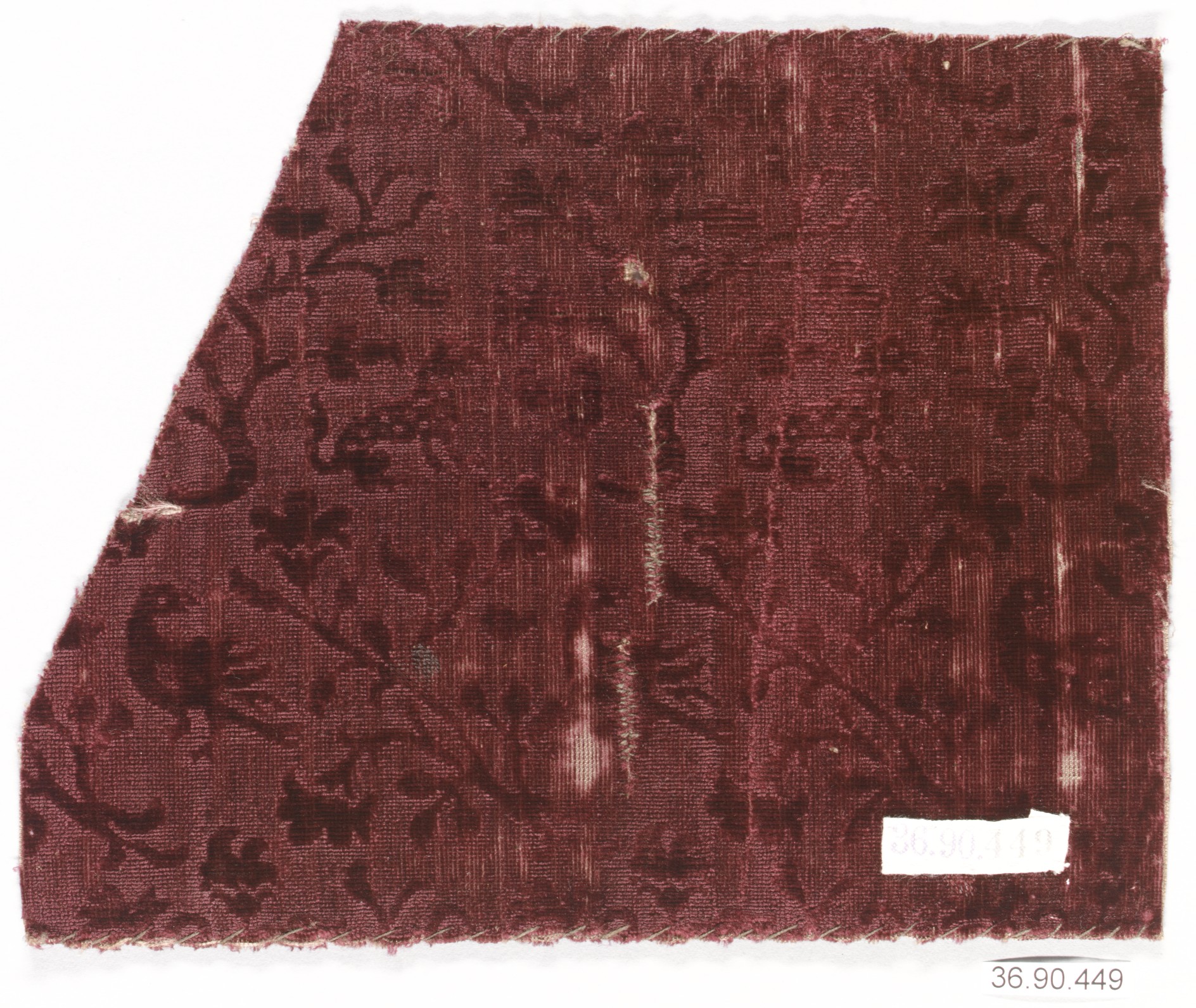
Piece as Paradigm: The Silk Couture Object in Global Heritage
In the lexicon of haute couture, the term piece carries a weight that transcends mere garment classification. It denotes singularity—an object whose construction, provenance, and material integrity elevate it beyond the seasonal and into the archival. When such a piece is realized in silk, and when its lineage draws upon global heritage, the resulting object becomes a study in cultural synthesis, technical mastery, and the economics of scarcity. This standalone analysis examines the silk couture piece as a discrete category of luxury artifact, interrogating how material, method, and meaning converge.
The Material Imperative: Silk as Civilizational Currency
Silk is not merely a fiber; it is a historical agent. For millennia, it functioned as the connective tissue between civilizations—a commodity that financed empires, catalyzed the Silk Road, and embedded itself in the ritual and regalia of courts from Hangzhou to Constantinople to Versailles. Its biochemical structure—a fibroin core encased in sericin—yields a tensile strength comparable to steel by weight, yet drapes with a fluidity that no synthetic has replicated. For the couturier, silk presents both opportunity and constraint: it accepts dye with extraordinary depth, holds sculptural form through bias cutting, and reflects light in a manner that animates the wearer's movement. But it also refuses concealment. Every stitch, every seam allowance, every hand-rolled hem is legible. In this sense, silk is the most honest of materials—and the most unforgiving.
Within the context of global heritage, silk carries additional semiotic freight. A piece constructed from mulberry silk sourced from established sericultural regions invokes a continuity of knowledge transmission—from Chinese sericulture to Byzantine weaving to Italian seta production. The couturier who selects such material is not simply choosing a fabric; they are entering a lineage.
Global Heritage as Design Methodology
The phrase global heritage in couture discourse often risks reduction to pastiche—a superficial borrowing of motifs divorced from their contexts. The more rigorous approach treats heritage as a methodology rather than a mood board. A piece that draws on global heritage might incorporate:
Technique transfer: The application of Japanese shibori resist-dyeing to a Western couture silhouette, or the integration of Indian zardozi embroidery into a structured bodice, requires not appropriation but apprenticeship—a genuine command of the originating craft.
Material provenance: The specific origin of silk—whether from the Gangetic plains, the Aegean region, or the historic mills of Como—shapes the piece's hand, luster, and cultural resonance.
Architectural syncretism: The piece may reconcile disparate tailoring traditions—the kimono's planar construction with the corseted Western bodice, for instance—to create a hybrid form that belongs fully to neither tradition and therefore to both.
This syncretism is not novelty for its own sake. It reflects the contemporary reality of a globalized luxury market in which the collector is as likely to be in Seoul or São Paulo as in Paris, and in which cultural fluency is a form of capital.
The Standalone Study: Autonomy and Interpretation
To treat a silk couture piece as a standalone study is to remove it from the runway's narrative arc and the collection's thematic apparatus. This decontextualization is not a loss but a clarification. Freed from the styling of a show, the piece reveals its internal logic: the ratio of hand-finishing to machine work, the engineering of its internal structure, the calibration of weight and transparency. A standalone silk piece must justify itself entirely through its own material and formal properties. It cannot rely on the momentum of a collection or the charisma of a runway moment.
This autonomy invites a closer reading. Consider the hem: a hand-rolled edge on silk chiffon signals a commitment to traditional couture flou techniques that require hundreds of hours of artisanal labor. Consider the lining: a silk crepe de chine lining, rather than a synthetic substitute, indicates that the piece's interior is as considered as its exterior—a hallmark of archival-grade construction. Consider the closures: hand-covered buttons, each requiring precise bias cutting and tension, represent the piece's refusal of industrial shortcuts.
These details are not incidental. They constitute the piece's value architecture—the tangible and intangible factors that determine its position within the market and its trajectory within the archive. In an era of algorithmic fashion and accelerated production cycles, the silk couture piece operates on an inverse logic: it is slow, scarce, and resistant to replication.
Conclusion: The Piece as Cultural Artifact
The silk couture piece, grounded in global heritage and examined as a standalone study, emerges as more than a garment. It is a cultural artifact that encodes material science, artisanal knowledge, and cross-cultural exchange. Its value is not determined solely by brand or trend but by the integrity of its construction and the depth of its references. For the collector and the critic alike, such a piece demands a form of attention that is increasingly rare: the willingness to look closely, to understand the labor embedded in the object, and to recognize that in couture, as in heritage, the finest things are those that resist the erosion of time.