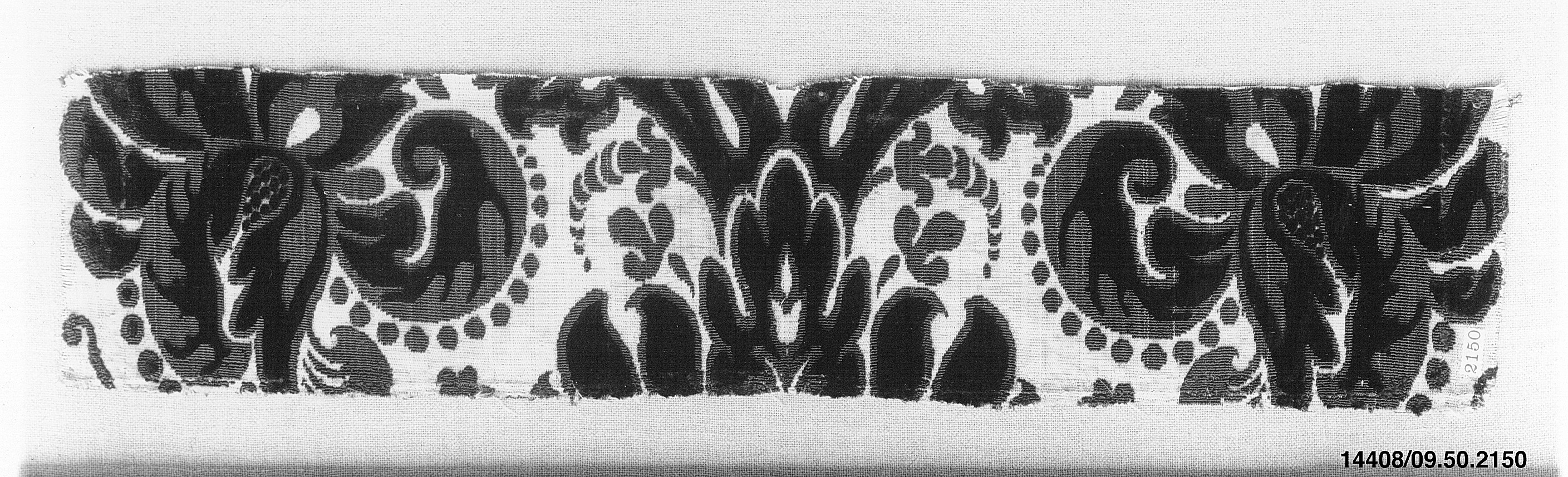
Piece as Palimpsest: Reading a Global Heritage Textile in Silk and Metal Thread
Within the disciplined vocabulary of couture analysis, the term piece carries a weight that exceeds mere taxonomy. It designates an object that has survived the attrition of time and the volatility of taste to stand as a discrete, self-sufficient artifact—a garment or textile fragment whose value resides not in its membership within a collection or its allegiance to a house signature, but in its capacity to sustain scrutiny on its own terms. The present study examines one such piece: a global heritage textile executed in silk and metal thread, presented here as a standalone object of inquiry. Its provenance is deliberately diffuse—drawn from the interstices of multiple craft traditions rather than anchored to a single atelier—and it is precisely this ambiguity that renders it instructive. To analyze a piece of this order is to confront the methodological problem at the heart of contemporary couture scholarship: how does one read an object whose authorship is collective, whose geography is plural, and whose materiality is simultaneously luxurious and utilitarian?
Materiality as Argument
The foundational claim of any serious textile analysis is that material is never neutral. Silk and metal thread constitute a particularly charged pairing, and their combination within a single piece is never accidental. Silk, the protein filament secreted by the Bombyx mori, has for millennia functioned as the substrate of prestige economies—a fiber whose tensile strength, luster, and dye affinity made it the preferred medium of ceremonial and courtly dress from Hangzhou to Isfahan to Lyon. Metal thread—whether produced through the laborious technique of membrane gimp, in which a strip of gilt animal membrane is wound around a silk core, or through the more robust method of wire drawing—introduces a fundamentally different order of value. Where silk absorbs and diffuses light, metal thread reflects it; where silk yields to the drape of the body, metal thread resists, imposing structure and memory upon the cloth.
The interplay of these two materials generates what might be termed a double economy of surface. The silk provides the ground against which the metal thread performs its intermittent brilliance, and the metal thread, in turn, disciplines the silk, preventing it from dissolving into pure softness. In the piece under consideration, this dialectic is legible at the level of the weave itself: the metal weft is not merely applied as embroidery but integrated into the structural fabric, suggesting a level of technical ambition that aligns the object with the highest traditions of drawloom and lampas production. The resulting surface is neither fully textile nor fully metallic; it occupies an interstitial category that resists the conventional distinctions between cloth and ornament.
Global Heritage Without a Single Origin
To describe the piece as belonging to "global heritage" is not to evade the question of origin but to reframe it. The metal-thread traditions of the world—Byzantine klapot, Persian gulabtun, Indian zari, Chinese jinshan, Andean silver-wrapped filament—developed along distinct technological trajectories, yet they converge on a shared insight: that the incorporation of metal into cloth is a means of encoding permanence into a medium otherwise defined by its perishability. Textiles are among the most fragile of human artifacts; metal thread is an attempt to arrest that fragility, to lend the cloth a quality of endurance that approaches the monumental.
The piece analyzed here participates in this convergence without being reducible to any single lineage. Its structural logic—the integration of metallic weft into a silk ground—recalls the lampas traditions of Central Asia and the silk-weaving centers of the eastern Mediterranean. Its decorative grammar, however, resists easy attribution: the motifs are neither strictly geometric nor fully figural, occupying a zone of abstraction that has parallels in Safavid velvets, Ming kesi, and Ottoman çatma alike. This is not to suggest that the piece is a pastiche or a modern confection, but rather that it emerges from a historical moment—or a sustained craft continuum—in which the transmission of technique across geographies was more fluid than nationalist art histories have typically allowed. Global heritage, in this reading, is not a synonym for placelessness; it is an acknowledgment that the object's genealogy is a network rather than a line.
Technique, Labor, and the Politics of Time
Any couture analysis that stops at the visual is incomplete. The production of a silk-and-metal-thread piece of this complexity presupposes an infrastructure of specialized labor: sericulturists, throwsters, dyers, wire-drawers, gimp-makers, and weavers whose skills are transmitted through apprenticeship rather than documentation. The time embedded in the object is not merely the hours of weaving but the generations of tacit knowledge that made those hours possible. In an era when the fashion industry's dominant temporality is the seasonal cycle—compressed further by the logic of drops and digital immediacy—the piece asserts an alternative chronometry. It is slow not as an aesthetic posture but as a material condition. The metal thread cannot be rushed; the silk will not forgive haste.
This temporal politics has ethical implications. To valorize such a piece is to valorize the craft economies that produced it, economies that are increasingly endangered by the globalization of textile production and the substitution of metallic-effect synthetics for genuine metal thread. The piece thus functions as a counter-archive: a material argument for the irreplaceability of certain forms of human skill, and a rebuke to the assumption that technological substitution is always equivalent to preservation.
Standalone Study as Method
Finally, the decision to treat the piece as a standalone study is itself methodologically significant. Couture analysis has traditionally organized itself around designers, houses, and collections—frameworks that privilege attribution and chronology. The standalone study inverts this hierarchy, beginning with the object and allowing its material and technical properties to generate the questions. This approach owes something to the object-centered methodologies of decorative arts scholarship and something to the anthropological insistence on the social life of things, but it is also a pragmatic response to the realities of global heritage: many of the most significant textiles in the world's collections cannot be securely attributed, and to insist on attribution as a precondition for analysis is to consign them to silence.
The piece examined here—silk and metal thread, global in its heritage, singular in its execution—demonstrates that such silence is unnecessary. Read closely, it yields a dense account of material intelligence, cross-cultural transmission, and the enduring human investment in making cloth that outlasts its makers. It is, in the fullest sense, a piece: complete, autonomous, and eloquent.