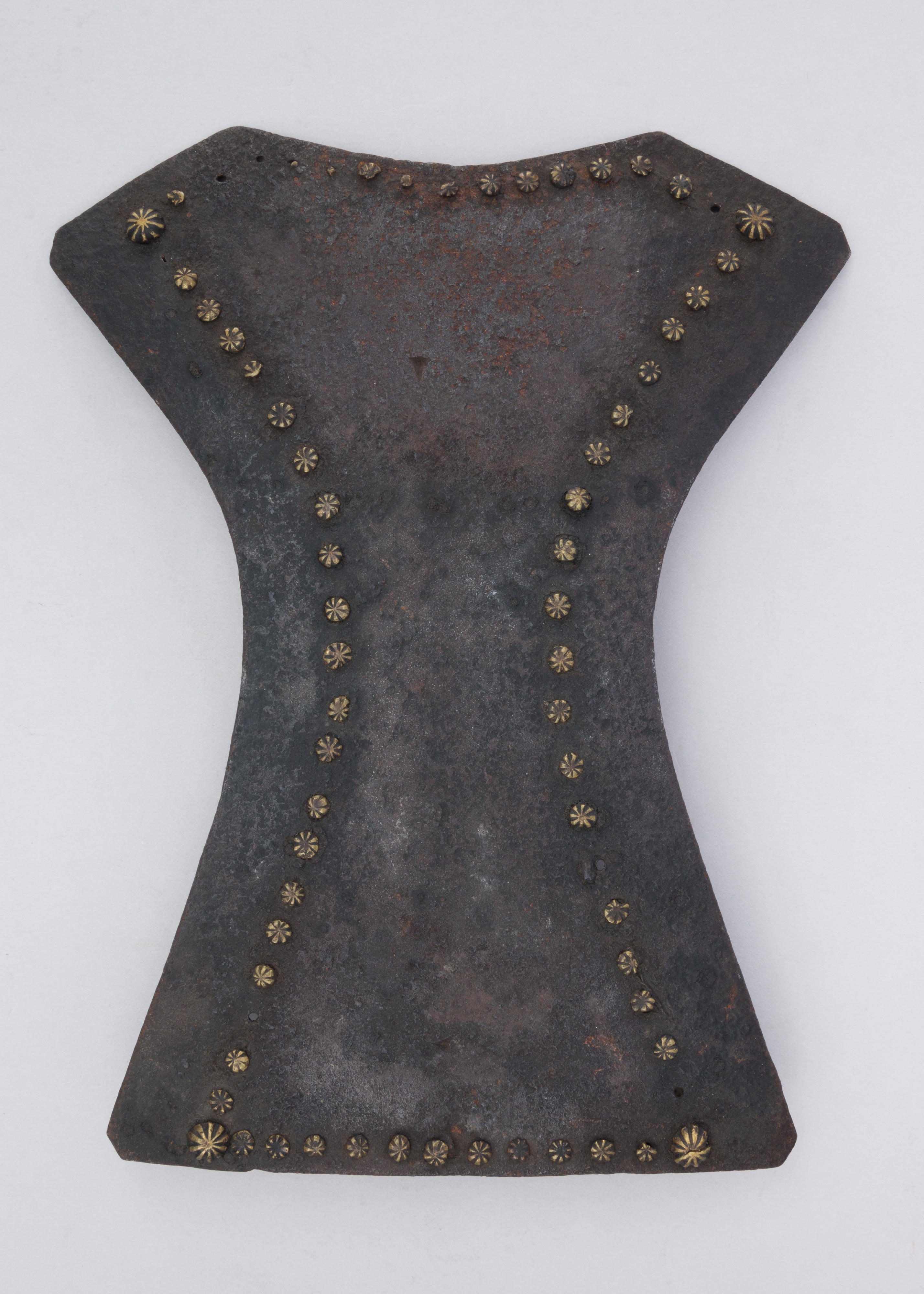
Brigandine Plate: The Italian Armorer's Synthesis of Steel and Copper Alloy
Within the broader historiography of European defensive armor, the brigandine occupies a peculiar and often underappreciated position. Unlike the fully articulated plate harness that dominates popular imagination, the brigandine represents a hybrid logic—one that privileges flexibility, modularity, and cost-efficiency over the sculptural totality of white armor. The Italian variant, distinguished by its refined use of steel plates riveted beneath a textile or leather facing and frequently embellished with copper-alloy fittings, constitutes a sophisticated case study in material intelligence. This standalone analysis examines the Italian brigandine plate as both an engineering artifact and a cultural signifier, arguing that its metallurgical composition and construction methodology reveal a distinctly Italian approach to martial utility—one that reconciles protection with mobility, and economy with prestige.
Origins and the Italian Context
The brigandine emerged across Europe during the fourteenth century, but its Italian iterations acquired a distinctive character shaped by the peninsula's fragmented political geography and its advanced metallurgical infrastructure. City-states such as Milan, Brescia, and Venice had cultivated reputations for arms production that rivaled—and in some respects surpassed—the great armor centers of Germany. The Italian brigandine plate drew upon this ecosystem of specialized workshops, where smiths, armourers, and copper-alloy casters operated within tightly integrated guild structures.
Italian brigandines were typically constructed from dozens of small, overlapping steel plates—known as lamellae or piastre—riveted to the interior of a sturdy canvas or velvet shell. The external surface was often finished with rivets whose heads were themselves crafted from copper alloy, creating a decorative grid that simultaneously served a structural function. This dual-purpose aesthetic—where ornamentation is inseparable from mechanics—remains one of the most compelling features of the Italian tradition.
Material Composition: Steel and Copper Alloy in Dialogue
The metallurgical profile of the Italian brigandine reflects a deliberate hierarchy of materials. The steel plates, typically ranging from 0.5 to 1.5 millimeters in thickness, were forged from bloomery iron carburized and quenched to achieve a balance of hardness and toughness. Italian smiths, benefiting from access to high-quality ore from the Alpine regions, produced steel with relatively consistent carbon content—an advantage that translated into plates capable of resisting cutting blows while remaining ductile enough to absorb impact without catastrophic fracture.
The copper-alloy components—rivets, washers, and occasionally decorative studs—served multiple functions. Metallurgically, copper alloys such as latten (a brass-like alloy) offered corrosion resistance superior to iron, protecting the rivet heads from rust and thereby extending the garment's service life. Structurally, the softer copper alloy acted as a sacrificial interface between the steel plates and the textile shell, distributing stress and reducing the likelihood of tear-out under impact. Aesthetically, the warm golden tone of the brass rivets against the dark steel and rich fabric created a visual rhythm that signaled both wealth and martial competence.
This material dialogue—hard steel and softer copper alloy, rigid plate and pliable textile—embodies a principle that modern materials engineers would recognize as functionally graded design. Each component performs a specific role, and the system as a whole exceeds the sum of its parts.
Construction Methodology and Tactical Logic
The Italian brigandine was not a mass-produced commodity in the modern sense, but neither was it a purely bespoke artisanal object. Workshops operated on a semi-standardized basis, with plates cut to templates and rivet holes punched in consistent patterns. This allowed for a degree of interchangeability and repair that full plate harness could not easily accommodate. A damaged plate could be removed and replaced without dismantling the entire garment—a logistical advantage in campaign conditions.
Tactically, the brigandine offered distinct benefits over both mail and full plate. It was lighter and more breathable than a complete harness of white armor, making it suitable for extended wear by infantry, archers, and light cavalry. Its flexibility at the waist and shoulders facilitated movement, while the overlapping plates provided adequate protection against cuts and glancing blows. For the Italian condottieri and their retainers, the brigandine represented a pragmatic compromise—one that acknowledged the realities of Renaissance warfare, where mobility and endurance often mattered as much as absolute protection.
Cultural Signification and Legacy
Beyond its functional attributes, the Italian brigandine carried significant cultural weight. In portraiture and civic ceremony, a finely wrought brigandine—its copper-alloy rivets gleaming against velvet—communicated status, taste, and martial virtue. Unlike the anonymous uniformity of mass-issued armor, the brigandine retained an element of individuality, its fabric facing and decorative rivets serving as a canvas for personal or familial expression.
The decline of the brigandine in the sixteenth century coincided with the ascendancy of firearms and the consequent shift toward heavier, more comprehensive plate defenses. Yet its influence persisted in the form of the jack of plate and later the cuirassier's armor, both of which inherited the brigandine's logic of composite construction. In the broader arc of armor history, the Italian brigandine plate stands as a testament to a civilization that understood defense not as a monolithic barrier but as a carefully orchestrated system of materials, each contributing its unique properties to a coherent whole.
Conclusion
The Italian brigandine plate is more than a historical curiosity. It is a case study in the intelligent integration of dissimilar materials—steel for strength, copper alloy for durability and decoration, textile for flexibility and comfort. Its design anticipates modern principles of composite armor and modular protection, while its aesthetic sensibility reflects the distinctive cultural values of Renaissance Italy. For the contemporary analyst, the brigandine serves as a reminder that the most effective solutions are often those that embrace complexity rather than resist it—a lesson as relevant to twenty-first-century materials science as it was to the armorers of fifteenth-century Milan.