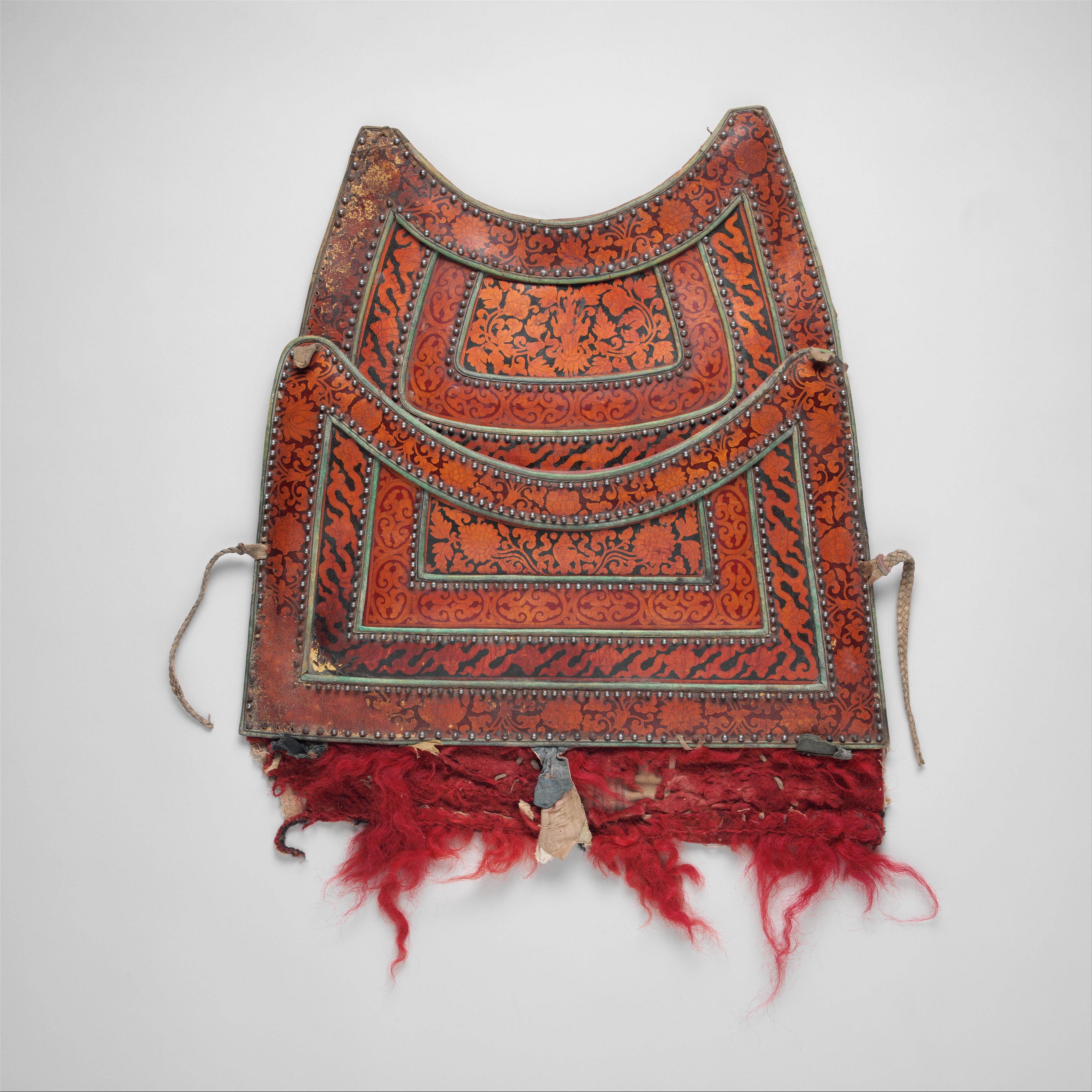
Executive Summary: From Equine Armor to Atelier Asset
This strategic heritage analysis examines a 17th-19th century Tibetan/Mongolian Horse Peytral (breast defense) as a foundational artifact for Katherine Fashion Lab's 2026 luxury narrative. Moving beyond mere historical curiosity, we deconstruct this object as a concentrated nexus of symbolic power, spiritual technology, and consummate craftsmanship. The peytral is not simply armor; it is a mobile temple, a heraldic banner, and a talismanic system for a nomadic elite. Our analysis will decode its layered semiotics, extract its principles of historical adornment, and propose a forward-facing strategy to translate its profound resonance into a disruptive high-end luxury position, moving from clothing the body to armoring the modern psyche.
Decoding the Artifact: A Semiotics of Sovereign Power
The peytral operates on multiple symbolic registers, each reinforcing the status, spiritual authority, and invincibility of the rider-horse dyad, a central unit of nomadic power.
The Cosmological Mandala and the Mount of the Gods
The central, often circular or lobed, iron or leather plate frequently functions as a mandala—a microcosm of the universe. Stylized lotus motifs (drawn from Buddhist iconography) or a "seed of life" geometric pattern place the horse at the center of a cosmologically ordered reality. Applied pigments and gilding would catch the light, transforming the animal into a radiant, divine entity. In Tibetan tradition, the horse is a psychopomp and a symbol of wind (lungta, or prayer flag energy). Adorning its breast directly protects and amplifies the life-force (sok) of both steed and rider, making the peytral an instrument of spiritual ecology.
Ferocity and Aegis: The Therianthropic Guardian
The use of applied brass or copper alloy repoussé work, depicting snarling makaras (mythological water dragons), snow lions, or garudas, serves a dual purpose. Visually, it projects terrifying prowess in battle. Spiritually, these are not mere decorations but invoked guardians (srungma). They are apotropaic, deflecting not only physical weapons but also invisible malignant forces and the "evil eye." The integration of yak hair, often dyed red, as a fringe or plume amplifies this effect. The yak, a symbol of alpine strength and endurance, lends its primal vitality, while the movement of the hair in motion creates a dynamic, living aura of protection, blurring the line between artifact and beast.
Material Hierarchy as Social Code
The material palette is a direct transcription of social and spiritual hierarchy. The foundational leather—robust, flexible, and organic—speaks to the pastoral- nomadic base. Overlaid iron signifies martial strength. The strategic application of silver, and especially gold (likely mercury gilding), highlights sacred geometries and deities, following the Buddhist principle that precious materials are meritorious offerings that generate spiritual wealth. The shellac varnish not only preserves but sanctifies, giving the pigments a luminous, jewel-like depth. Each material is intentional, creating a stratified text that communicates elite status to both human and divine audiences.
Principles of Historical Adornment: A Curatorial Framework
For Katherine Fashion Lab, the peytral offers three core principles for modern translation:
1. Layered Armature vs. Tailored Clothing: The peytral is an applied armature. It enhances the body's form without conforming to it, creating a powerful silhouette of added volume and symbolic projection. This challenges the atelier to think beyond the dress or jacket toward wearable architectures—couture that builds upon the body's frame.
2. Narrative Density Through Technique: Every square inch carries meaning through a confluence of techniques: tooling, metalworking, appliqué, painting, and hairwork. This justifies extreme luxury price points through narrative and labor intensity, advocating for collections where a single piece tells a complete mythos through mixed media.
3. The Talismanic Function: Adornment here is performative protection. It is worn with intent. This transforms luxury from an expression of taste to an instrument of personal empowerment—a modern talisman against the chaos of the digital age.
Strategic Translation: The 2026 High-End Luxury Strategy
For the 2026 collection, we propose the strategic pillar: "Psychic Armor." This moves the brand from fashion into the realm of curated, ceremonial objects for contemporary life. The peytral is not replicated; its logic is re-engineered.
Collection Manifesto: The Nine-Point Mandala
Develop a flagship womenswear and objet d'art collection inspired by the peytral's structure. Key pieces include:
• The Chest Plate Bodice: A structured leather bodice featuring a central mandala in repoussé silver or gold, set with a single, cabochon "third eye" stone (e.g., polished dinosaur gembone or smoky quartz).
• Yak Hair Aura Skirts & Capes: Fringes of ethically sourced, hand-dyed yak hair integrated into shearling or cashmere volumes, creating a dynamic, protective silhouette that moves with intentional drama.
• Guardian Jewelry System: Not mere accessories, but modular pieces—a garuda clasp that secures a cape, makara cufflinks, a pendant that slots into the bodice—forming a personal guardian mythology for the client.
Client Experience & Brand Ecosystem
• Commissioning Ritual: Clients participate in a "Talisman Mapping" session with the Lead Heritage Curator and designer to select symbols (e.g., for "clarity," "resilience," "influence") translated into their custom piece.
• Material Storytelling: Leverage the profound materiality: "Nomadic Iron" (treated for a unique patina), "Merit Gold" (sourced from ethical, artisanal mines), "Alpine Yak Cashmere." Each material is presented with its heritage and spiritual connotation.
• Beyond Apparel: Launch a line of "Altar Objects"—sculptural stand-alone peytrals for the home, functioning as art and focal points for intention, directly linking to the original artifact as a standalone power object.
Conclusion: Positioning as Cultural Alchemists
By leveraging the Tibetan/Mongolian peytral, Katherine Fashion Lab can execute a decisive pivot from transient trend to enduring legacy. We cease to be a "lab" experimenting with style and become cultural alchemists, transmuting dense heritage into profound modern value. The 2026 "Psychic Armor" strategy addresses the core desire of the post-pandemic luxury consumer: meaning, protection, and a grounded, powerful identity. We will not sell clothing; we will commission modern heirlooms that serve as both aesthetic statement and spiritual aegis, armoring the contemporary sovereign for the battles of boardroom and soul. This positions the brand at the apex of the luxury market, where price is justified by unparalleled narrative depth, ceremonial client engagement, and the timeless human need for adorned, symbolic protection.