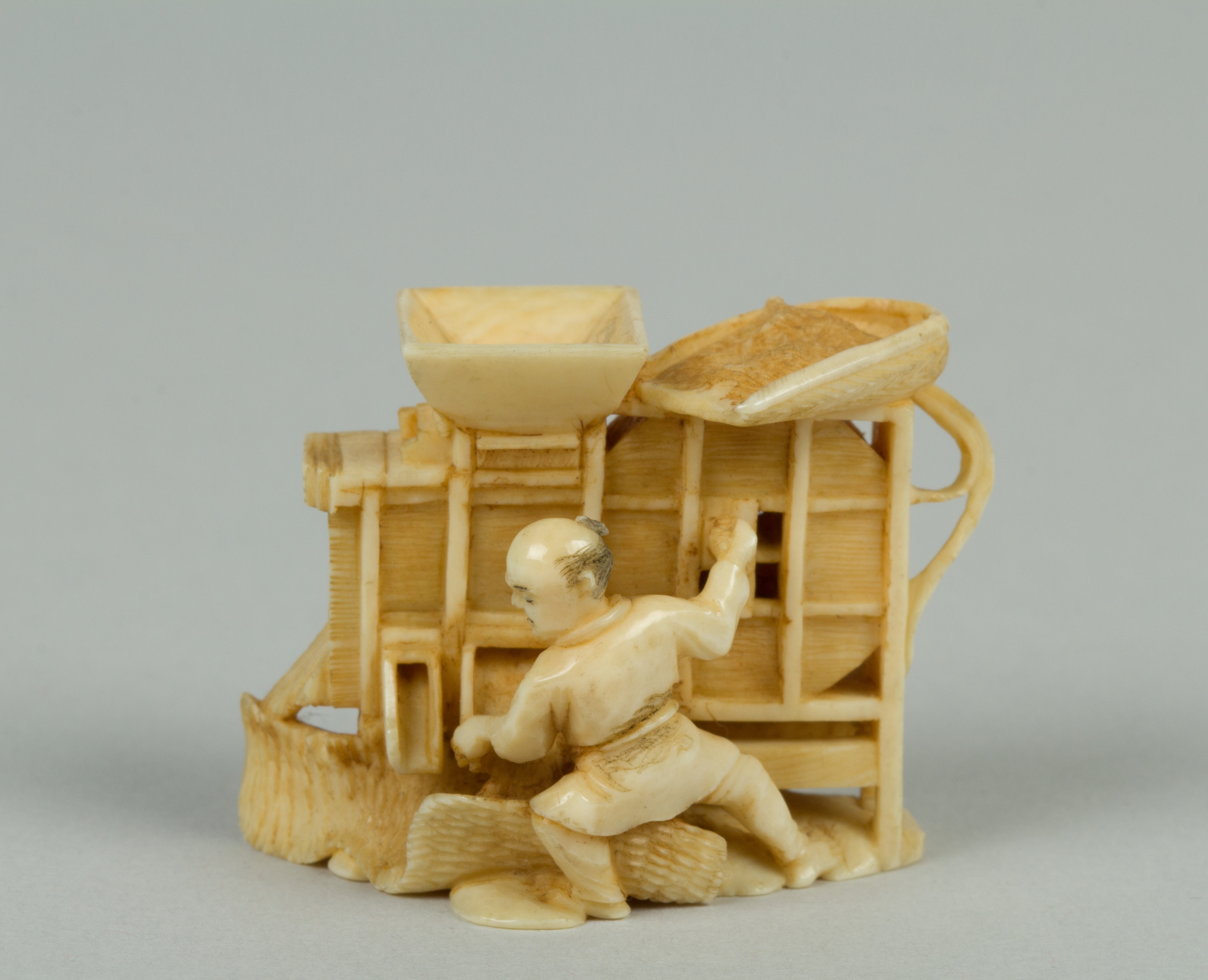
Netsuke: The Miniature Vessel of Japanese Symbolic Power and Its Strategic Relevance for 2026 Luxury
Introduction: Strategic Rationale for a Standalone Heritage Study
In the architecture of high-end luxury, the most durable assets are rarely the largest. Katherine Fashion Lab’s decision to commission a standalone research paper on netsuke—the miniature, ivory-carved toggles of Edo-period Japan—reflects a calculated assessment of cultural capital. Netsuke represents a convergence of scarcity, narrative density, and tactile intimacy that aligns precisely with the 2026 luxury consumer’s demand for provenance, meaning, and discreet connoisseurship. This analysis examines netsuke through four strategic lenses: symbolic power, historical adornment, spiritual meaning, and application to a 2026 luxury portfolio.
Historical Adornment: Function as the Foundation of Desire
Netsuke emerged in seventeenth-century Japan as a functional necessity. Traditional kosode robes lacked pockets, so men suspended pouches, tobacco cases, and inro (stacked medicine containers) from a cord passed under the sash. The netsuke—a carved button—anchored the cord at the top, preventing it from slipping. This utilitarian origin is strategically significant: netsuke was never decorative excess but engineered elegance. Every curve, hole, and weight distribution served a purpose before it served beauty.
By the mid-Edo period, netsuke had evolved into a luxury category in its own right. Carvers in Osaka, Kyoto, and Edo (Tokyo) developed distinct schools, and patrons commissioned pieces from ivory, boxwood, and horn. Ivory, prized for its fine grain and ability to hold microscopic detail, became the preferred medium for the most prestigious commissions. The medium itself signaled status: ivory was imported, expensive, and required masterful control to avoid cracking. A netsuke was worn at the waist, visible only in glimpses—an adornment of intimacy rather than display. This paradox—high value concealed in plain sight—offers a direct strategic lesson for 2026 luxury, where overt logos are declining in favor of quiet, encoded signals.
Symbolic Power: Miniature Narratives of Authority and Wit
The symbolic power of netsuke operates on multiple levels. First, subject matter was rarely random. Carvers depicted animals, deities, folklore figures, and everyday characters—each carrying layered meaning. A tiger and bamboo composition signaled courage tempered by flexibility. A rat with a daikon radish referenced the Daikokuten legend, associating the owner with wealth and resourcefulness. A kitsune (fox) mask invoked Inari, the deity of fertility and rice, but also warned of deception. These were not mere ornaments; they were portable philosophical statements.
Second, netsuke functioned as social signaling. The choice of subject, the quality of carving, and the material itself communicated the wearer’s education, taste, and access to elite artisans. In a rigidly hierarchical society, netsuke offered a subtle channel for individuality within prescribed boundaries. Third, the himotoshi—the cord holes—were often carved asymmetrically, forcing the wearer to orient the piece in a specific way. This physical engagement created a private ritual of touch, reinforcing the owner’s bond with the object. For Katherine Fashion Lab, this suggests a strategic principle: luxury objects that require learned handling generate deeper loyalty than passive display items.
Spiritual Meaning: Shinto, Buddhism, and the Animate Object
Netsuke’s spiritual dimension is inseparable from Japanese cosmology. Shinto animism holds that objects can possess kami (spirits), and Buddhist thought emphasizes impermanence and the beauty of the worn, the patinated, the used. Netsuke were not kept in vitrines; they were rubbed, dropped, and darkened by skin oils over decades. This tsuya (lustrous patina) was not damage but evidence of relationship—a visual record of devotion.
Many netsuke depicted shishi (lion-dogs) as guardians, Daruma as perseverance, and rakan (Buddhist saints) as enlightened witnesses. Wearing such a piece was an act of daily invocation. The small scale mattered spiritually: it demanded proximity. Unlike a temple sculpture viewed from afar, a netsuke was held in the palm. This intimacy transformed the wearer’s body into a temporary shrine. In 2026 luxury strategy, this translates to objects designed for ritualized touch—fragrance caps, jewelry clasps, bag hardware—that create moments of mindful engagement rather than passive consumption.
2026 Luxury Strategy: From Ivory Ethics to Heritage Innovation
Any contemporary strategy involving netsuke must address the ivory question with absolute clarity. Katherine Fashion Lab should not source, sell, or promote new ivory. Instead, the strategic opportunity lies in three areas:
1. Archival inspiration, not material replication. Study netsuke’s carving techniques, subject symbolism, and scale logic to inform new collections in ethically sourced bone, tagua nut, or recycled composite. The heritage is the grammar, not the banned substance.
2. Curated provenance partnerships. Collaborate with museums and licensed antique dealers to create limited-edition capsules that reference authenticated Edo-period netsuke. Each piece could include a digital certificate linking to the original inspiration, satisfying the 2026 consumer’s demand for traceable narrative.
3. The “hidden signal” product line. Develop small, tactile accessories—cord locks, charm toggles, bag anchors—that carry netsuke-derived motifs (shishi, waves, pine) but remain illegible to the untrained eye. This serves the luxury consumer who rejects loud branding but seeks peer recognition.
Furthermore, netsuke’s history of male adornment offers a strategic entry into the growing men’s high jewelry and accessory market. A contemporary netsuke-inspired toggle in titanium or responsibly sourced horn could anchor a hand-stitched leather cord for a card case or key ring—functional, beautiful, and coded with symbolic power.
Conclusion: The Strategic Case for Miniature Mastery
Netsuke teaches Katherine Fashion Lab that luxury’s future is not bigger, shinier, or louder. It is smaller, denser, and more meaningful. The ivory medium is historically significant but ethically closed; the symbolic power, historical adornment logic, and spiritual intimacy remain fully available for reinterpretation. By treating netsuke as a strategic lens rather than a product category, the brand can build a 2026 collection that honors Japanese heritage while meeting the modern luxury consumer’s demand for provenance, touch, and quiet authority. The miniature, once again, becomes the most powerful statement.