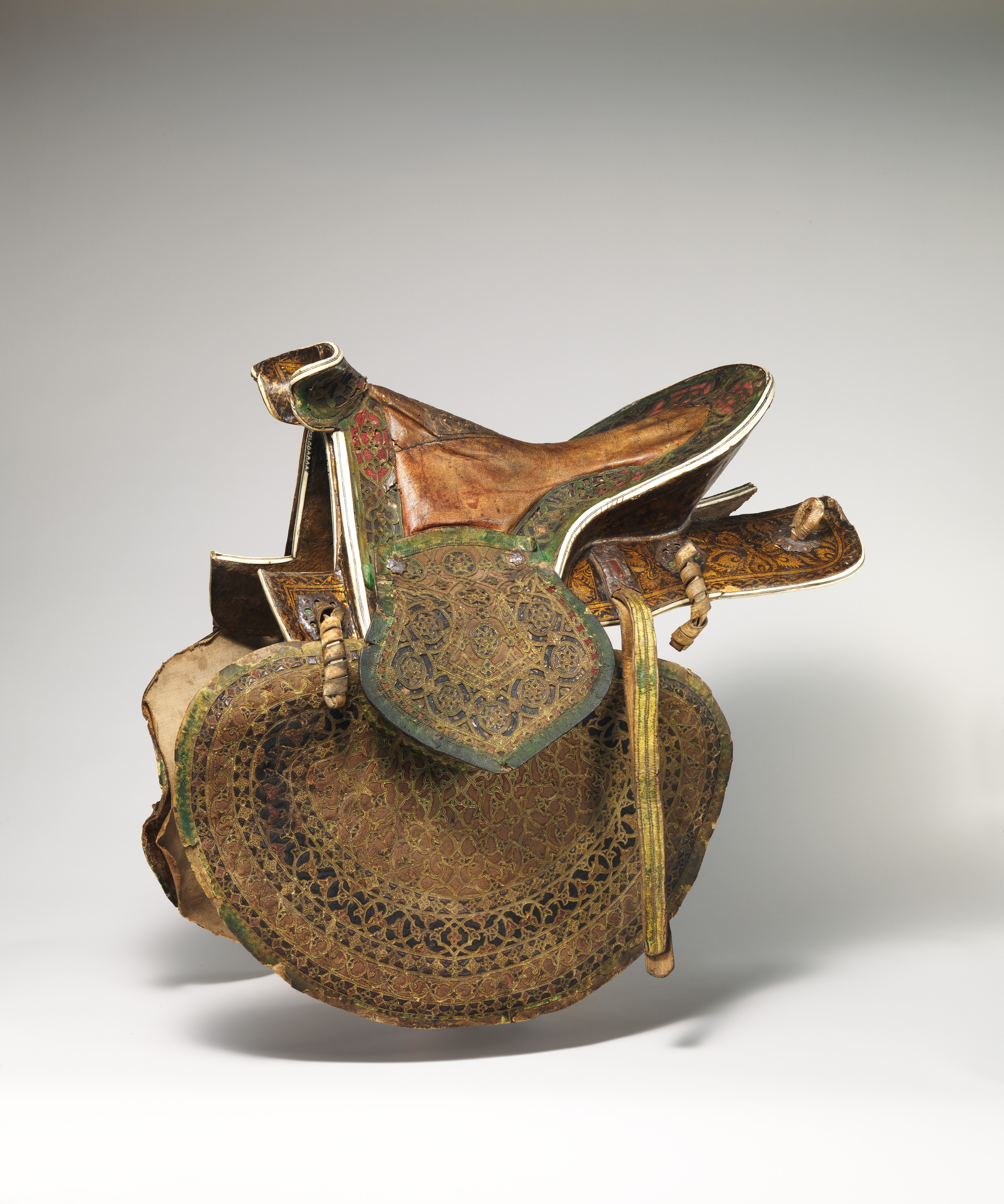
Heritage Analysis: The Turkish Saddle as Cultural Vessel and Luxury Signal
Introduction: The Saddle as Strategic Artifact
Within the material culture of the Turkic world, the saddle (Turkish: eyer) occupies a position of rare strategic density. It is simultaneously a functional instrument of mobility, a marker of rank, a spiritual talisman, and a canvas for some of the most sophisticated decorative arts produced across Anatolia and Central Asia. For Katherine Fashion Lab, the Turkish saddle represents more than an equestrian object; it is a compressed archive of symbolic power, nomadic cosmology, and artisanal mastery. This analysis examines its historical adornment, spiritual meaning, material intelligence, and its capacity to inform a 2026 high-end luxury strategy grounded in authenticity rather than appropriation.
Symbolic Power: Rank, Authority, and the Horsebound Elite
In Ottoman and earlier Seljuk contexts, the saddle functioned as a portable throne. The horse was the axis of military, diplomatic, and economic life, and the quality of one's saddle communicated status with immediate legibility. Ornate saddles were instruments of political theater: a vizier's saddle, a sultan's ceremonial saddle, or a tribal chieftain's saddle each encoded hierarchy through materials and ornamentation. Iron fittings, silver inlay, and gilded copper alloy signaled proximity to power, while the density of adornment on the pommel and cantle communicated lineage and martial achievement.
Critically, the saddle was not merely displayed; it was used. This distinguishes it from purely ceremonial regalia. Its symbolic power derived from the fact that it carried the body of the rider into battle, across trade routes, and into ceremonial processions. The object's authority was performative and embodied, a characteristic that resonates with contemporary luxury consumers who seek objects that are both meaningful and functional.
Historical Adornment and Material Intelligence
The material composition of the Turkish saddle reflects an advanced, multi-material craft ecosystem. Wooden frames, typically of walnut or beech, were shaped to distribute weight and withstand torsion. Staghorn and bone were employed for structural reinforcement and decorative inlay, prized for their density, tonal warmth, and capacity to accept fine carving. Bark and leather provided the primary covering, with leather tanned and tooled to create surfaces that aged into a distinctive patina.
Textile elements, including kilim-derived weaves, felt, and embroidered covers, introduced color, pattern, and tactile richness. Iron fittings, sometimes damascened, served both structural and aesthetic functions. Pigment, often mineral-based, was applied to wood and leather to create geometric and floral motifs with symbolic resonance. The result was an object that combined engineering, sculpture, and textile art within a single form.
This material intelligence is strategically significant. It demonstrates that the Turkish saddle tradition was inherently interdisciplinary, anticipating contemporary luxury's demand for objects that integrate diverse craft disciplines rather than siloing them.
Spiritual Meaning: Talismanic Protection and Cosmological Order
Beyond status, the Turkish saddle carried spiritual weight. Among Turkic nomadic communities, the horse and its tack were imbued with protective and cosmological significance. Amuletic motifs, including triangular forms, ram's horn patterns, and stylized eyes, were incorporated into saddle decoration to ward off misfortune. These were not ornamental flourishes but functional talismans, intended to safeguard the rider in a world understood as spiritually contested.
The saddle also mediated between the human and animal realms, serving as the interface where rider and horse became a single martial and spiritual unit. In Sufi and dervish contexts, the horse could symbolize the ego or the soul in motion toward the divine, and the saddle thus became a site of disciplined transformation. This layer of meaning gives the object a depth that purely secular luxury artifacts rarely possess.
Material and Craft Decline: A Strategic Gap
The twentieth century witnessed the decline of the saddle as a central cultural object across Anatolia, as motorized transport and urbanization displaced equestrian life. Master saddlers, once organized in guilds with rigorous apprenticeship systems, diminished in number. Many techniques, particularly staghorn inlay, fine leather tooling, and kilim-integrated saddle covers, are now practiced by a small cohort of heritage artisans, often in regional centers such as Konya, Gaziantep, and parts of Eastern Anatolia.
This decline creates a strategic gap. The knowledge is endangered but not extinct, and the aesthetic vocabulary remains legible to global luxury consumers. The challenge for Katherine Fashion Lab is to engage this heritage with rigor, attribution, and economic partnership rather than extraction.
2026 Luxury Strategy: From Artifact to Brand Architecture
A 2026 strategy should treat the Turkish saddle not as a motif to be applied to handbags, but as a design philosophy and a supply chain proposition. Three strategic pillars emerge:
1. Material authenticity. Prioritize staghorn, vegetable-tanned leather, hand-forged iron, and natural pigments sourced through transparent partnerships with Anatolian artisans. Position these materials as alternatives to synthetic and over-scaled luxury inputs, aligning with the growing consumer preference for provenance and durability.
2. Symbolic literacy. Deploy talismanic and geometric motifs with documented meaning, supported by curatorial narratives. This differentiates the brand from surface-level ethnic referencing and builds intellectual credibility.
3. Craft infrastructure. Invest in atelier partnerships, apprenticeship programs, and co-design models that give Turkish master saddlers equity and visibility. This transforms heritage from a marketing asset into a living ecosystem.
Executed with discipline, the Turkish saddle offers Katherine Fashion Lab a rare strategic position: a heritage object that is functional, spiritual, materially complex, and historically elite. It is not a trend to be mined but a tradition to be stewarded, and that distinction is precisely what will define high-end luxury in 2026 and beyond.