The Art of Insertion: A Structural Dialogue in Couture
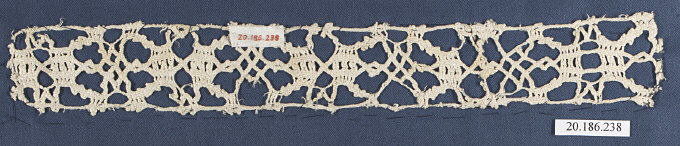
Within the rigorous lexicon of haute couture, the technique of Insertion stands as a masterclass in intentional construction and aesthetic restraint. It is not mere adornment, but a fundamental architectural decision—the deliberate embedding of one textile or lace panel into another, creating a seamless yet distinctly articulated whole. At Katherine Fashion Lab, we approach Insertion not as a decorative afterthought, but as the very syntax of a garment's narrative. It is a dialogue between solid and void, opacity and transparency, history and innovation. When the origin of this practice is traced to a Global Heritage, and its material manifestation is realized through the exquisite medium of Bobbin Lace, the technique transcends craft to become a profound study in cultural confluence and technical virtuosity.
Deconstructing the Seam: Insertion as Conceptual Framework
To understand Insertion is to redefine the seam. Traditionally, a seam is a junction, a necessary closure often minimized or hidden. Insertion inverts this principle, elevating the junction to the status of featured artifact. It is the conscious creation of a linear event within the fabric plane. This requires a premeditated deconstruction of the base material—precise cuts are made, edges are meticulously finished, and the inserted element is joined with such finesse that the connection itself becomes the ornament. The effect is one of controlled revelation. The viewer's eye is led along these intentional lines, appreciating the contrast in texture and pattern, while the integrity of the silhouette remains uncompromised. In a standalone study, freed from the distractions of overarching thematic collections, we can isolate Insertion's pure power: its ability to guide perception, articulate form, and introduce rhythm and cadence to a garment's surface, much like a musical score written directly onto the body.
Bobbin Lace: The Pinnacle of Patience and Precision
The choice of bobbin lace as the primary material for this study is both historically resonant and technically exigent. Born from a European heritage, with profound roots in regions from Belgium and France to Malta and Slovenia, bobbin lace is the product of countless hours, a textile built not from a woven continuum but from a constellation of individual threads twisted, crossed, and plaited around pins placed on a parchment pattern. Each piece is a micro-architecture of air and linen (or silk, or contemporary synthetics). Its value lies in its paradoxical nature: formidable strength derived from delicate filigree, incredible complexity achieved through the repetition of simple movements. For the couturier, bobbin lace presents a unique challenge and opportunity. It is a completed artwork in itself, yet its true couture potential is unlocked only when it ceases to be an appliqué and becomes an integral, inserted component of a larger fabric ecosystem.
Global Heritage: A Tapestry of Techniques
While bobbin lace provides our material focus, the conceptual origin of "Global Heritage" expands our understanding of Insertion beyond a single point. This technique finds echoes in diverse traditions worldwide. Consider the openwork Japanese *kogin* sashiko, where patterned stitches are inserted into a homespun fabric to strengthen and embellish simultaneously. Reflect on the intricate Indian *gota* work, where ribbons of gold or silver are inserted and stitched onto fabric to create luminous borders. Or the fine whitework embroidery of Madeira, where sections of fabric are cut away and replaced with stunning embroidered nets. Viewing bobbin lace insertion through this global lens liberates it from a purely Western canon. It becomes part of a universal human impulse to interrupt a surface with intention, to weave story and skill into the very structure of cloth. Our study at the Lab examines how the precise, geometric logic of European bobbin lace can converse with the more organic, flowing insertion philosophies of other cultures, seeking a hybrid language of line and form.
The Couture Synthesis: Integration as Innovation
The final and most critical phase of our standalone study is the synthesis: the moment of insertion itself. This is where couture philosophy is tested. We reject the simple overlay. Instead, we engineer the base fabric—often a luxurious silk georgette, a crisp cotton organdy, or a fluid crepe—to receive the lace. A panel is carefully removed, its edges turned and prepared with hand-stitching so fine as to be invisible. The bobbin lace, itself shaped and sometimes reinforced with nearly imperceptible tulle, is then woven into the garment's foundation. The goal is a flawless integration where the transition is as important as the elements themselves. The lace becomes a window, a reinforcing rib, a delicate expansion joint in the fabric's architecture. Light and skin interact dynamically with the composite material, creating shifting patterns of shadow and revelation that change with movement. This is insertion as holistic design: the lace is not on the dress; it is the dress.
Conclusion: The Future of a Foundational Technique
This focused examination of Insertion through the dual lenses of bobbin lace and global heritage reaffirms the technique's enduring relevance in forward-facing couture. In an age of digital printing and laser cutting, the human-intensive, tactile mastery of hand-guided insertion speaks to an irreplaceable value. It represents a slow, intelligent, and deeply personal approach to fashion. For Katherine Fashion Lab, the study underscores that true luxury lies in these hidden dialogues—between different textile histories, between the hand and the material, and between the structural and the decorative. Insertion, in its purest form, is a reminder that the most powerful statements in fashion are often not about addition, but about intelligent and beautiful integration. It is a foundational technique that will continue to inspire new generations of artisans to see the seam not as an end, but as a magnificent beginning.