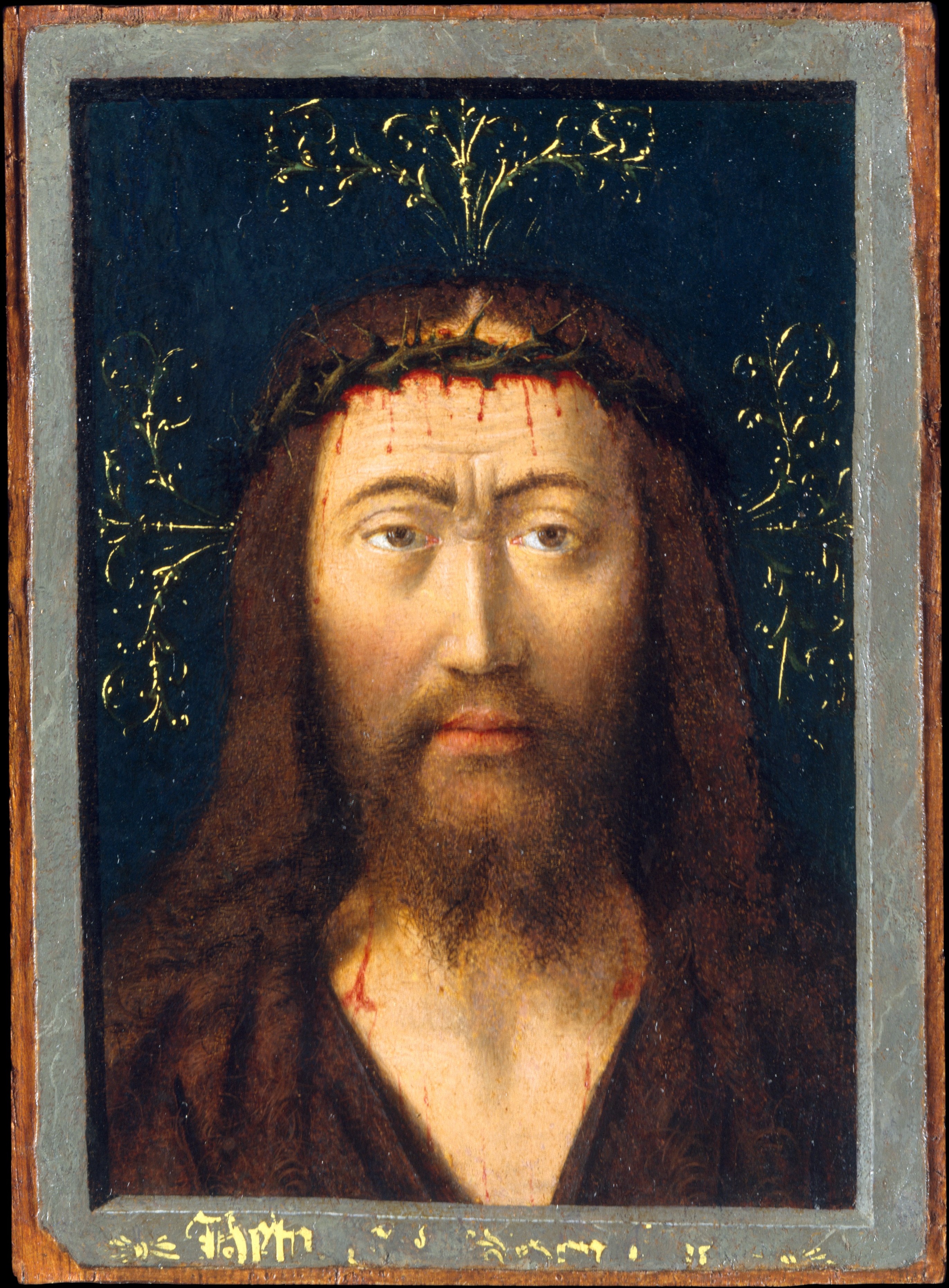
Heritage Asset Analysis: Head of Christ (Ecce Homo)
Object Overview and Material Integrity
The Head of Christ (Ecce Homo) represents a singular convergence of devotional function and material sophistication. Executed in oil on parchment and subsequently laid down on wood, the work reflects a technically demanding practice common to late medieval and early Renaissance workshops, where parchment offered a luminous, velvety ground for pigment while wood provided structural rigidity for long-term preservation. The Ecce Homo subject—Pilate's presentation of the scourged Christ to the crowd—is among the most psychologically charged episodes in Christian iconography, and this head study isolates the moment of silent accusation and sovereign endurance.
From a conservation standpoint, the parchment-to-wood transfer is not a defect but a historical intervention, evidence of the object's continuous valuation across centuries. Each layer—animal skin, oil binder, pigment, wood support—constitutes a stratified archive of patronage, piety, and custodianship. For Katherine Fashion Lab, this material biography is itself a luxury narrative: the object was never discarded, only reinforced.
Symbolic Power and the Iconography of the Gaze
The defining symbolic instrument of this work is the direct gaze of Christ. Unlike narrative crucifixion scenes, the isolated head compresses theology into a single vector of eye contact. The viewer is placed in the position of the crowd—complicit, judged, and addressed. In semiotic terms, the image operates as a relic of encounter: it does not depict an event so much as enforce a relationship.
Three symbolic registers dominate:
1. The Crown of Thorns as Counter-Crown. The woven thorns invert imperial laurel and royal diadem, asserting a kingship constituted by suffering rather than conquest. This inversion has historically appealed to reformist, monastic, and aristocratic patrons alike, each reading the symbol through their own political theology.
2. The Ecce Homo Gesture. The absent Pilate—implied but not shown—externalizes judgment onto the beholder. The work thus functions as a mirror of conscience, a mechanism Katherine Fashion Lab can translate into experiential retail: the object that looks back.
3. The Wound and the Serenity. Blood and bruising coexist with an expression of composed authority. This tension between damage and dignity is the work's emotional core and its most transferable symbolic asset.
Historical Adornment and Devotional Practice
Works of this type were rarely displayed bare. Contemporary inventories record such heads mounted in carved wood tabernacles, framed in gilded gesso, veiled with silk during Lent, or set within private oratories alongside reliquaries and illuminated manuscripts. Adornment was liturgical, not decorative: the frame mediated access, the veil regulated visibility, and the candle regulated time.
This historical context establishes a precedent for ritualized presentation—an essential concept for 2026 luxury strategy. The object's original audience did not simply view it; they approached it through a choreography of unveiling, kneeling, and illumination. Katherine Fashion Lab can claim continuity with this tradition by designing client experiences that are sequenced, temporal, and reverent rather than instantaneous and transactional.
Spiritual Meaning and Contemporary Resonance
The Ecce Homo tradition speaks to a permanent human condition: the exposure of the innocent to public judgment. In an era of algorithmic visibility and reputational volatility, the image acquires renewed urgency. Its spiritual claim is not sentimental consolation but dignity under exposure—a proposition with clear resonance for a luxury house addressing clients navigating public life.
The work also embodies the theological principle of kenosis, self-emptying. Stripped of garment, status, and protection, the figure retains authority. For a fashion house, this is a disciplined counterpoint to the industry's default language of accumulation and display. Restraint becomes the highest form of presence.
2026 High-End Luxury Strategy: Positioning Recommendations
1. The Icon of the Unflinching Gaze. Position the Ecce Homo as the house's symbolic anchor for a collection or capsule built on the theme of composure under scrutiny. Silhouettes should reference the head study's austerity: close-fitting hoods, high collars, unadorned planes interrupted by a single deliberate detail—a thorn-like pin, a wound-red thread, a gilded seam.
2. Material Continuity. The parchment-on-wood construction offers a direct design brief. Parchment-toned leathers, vellum-finish textiles, and oil-glazed surfaces can echo the object's layered materiality. Sustainability messaging should emphasize reinforcement over replacement, mirroring the historical transfer of parchment to wood.
3. Ritualized Retail. Develop an in-store or private-client ceremony of unveiling, staged in low light with controlled illumination, echoing oratory practice. The product is revealed, not displayed.
4. Narrative Licensing and Cultural Partnerships. Collaborate with museums holding comparable Ecce Homo works for scholarly validation, limited editions, and archival publications. The standalone research context supports a whitepaper or catalogue raisonné positioning the house as custodian, not merely consumer, of heritage.
5. Digital Ethics. Given the theme of public judgment, the house should pair the campaign with a stated position on image rights, consent, and the treatment of individuals under visibility—converting symbolic power into reputational equity.
Conclusion
The Head of Christ (Ecce Homo) is not a passive devotional artifact but an active symbolic instrument. Its material history demonstrates endurance; its iconography demonstrates authority under duress; its devotional history demonstrates the luxury of regulated access. For Katherine Fashion Lab, the strategic opportunity in 2026 lies in translating these three registers—materials, gaze, ritual—into a coherent proposition: a house that understands adornment as meaning, and exposure as the ultimate test of dignity.