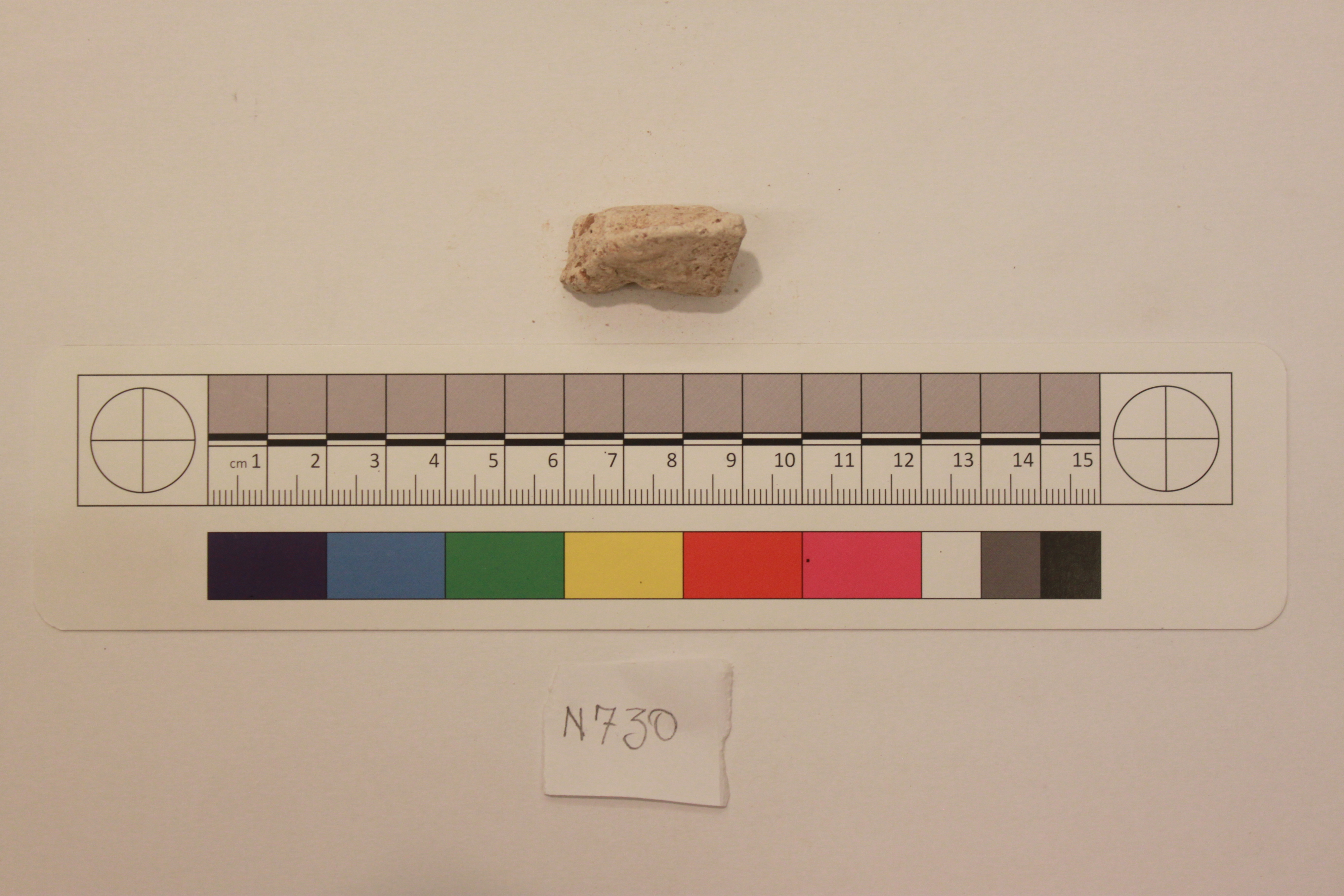
Executive Summary: The Stucco Fragment as a Strategic Heritage Asset
This strategic standalone research paper, prepared for Katherine Fashion Lab, analyzes a carved stucco fragment from an unspecified ancient civilization. Moving beyond mere aesthetic appreciation, this document positions the artifact as a core strategic asset for the development of a 2026 high-end luxury strategy. The analysis deconstructs the fragment’s inherent symbolic power, its role in historical adornment, and its embedded spiritual meaning. These elements are then synthesized into a forward-looking framework that translates ancient, non-verbal codes of prestige into a contemporary luxury lexicon. The objective is to leverage this heritage not as a nostalgic reference, but as a proprietary system of value creation, enabling Katherine Fashion Lab to articulate a unique narrative of timeless authority and cultivated exclusivity in a saturated market.
Deconstructing the Artifact: Symbolic Power and Material Intelligence
The medium of carved stucco is itself a statement of sophisticated material intelligence. Stucco, a malleable plaster, allowed artisans to achieve a high level of detail and narrative complexity, often mimicking more permanent stone in architectural contexts. This fragment, therefore, is not a mere decorative piece but a durable manifestation of a civilization’s will to impose narrative and order onto its environment. The act of carving transforms a humble composite material into a carrier of meaning, a dynamic relevant to luxury’s own alchemy of transforming raw materials into objects of desire.
The Grammar of Symbolic Power
The carved imagery—whether depicting mythological figures, sacred flora and fauna, or intricate geometric patterns—operates as a concentrated grammar of power. In ancient contexts, such adornment was rarely arbitrary. It served to demarcate sacred from profane space, to assert dynastic legitimacy, or to invoke divine protection. For Katherine Fashion Lab, the symbolic power lies not in replicating specific iconography, but in mastering the principle of encoded communication. The fragment teaches that true luxury communicates in layers; its meaning is accessible to the initiated but retains an aura of mystery for the broader audience. This creates a powerful in-group dynamic essential for modern luxury communities.
Adornment Beyond the Body: The Architecture of Presence
This artifact redefines the concept of historical adornment. It is adornment of space, of architecture, and by extension, of the civilization itself. The individual adorned the self, but the civilization adorned its temples, palaces, and tombs. This shifts the perspective from personal ornament to environmental and atmospheric curation. For a 2026 strategy, this suggests moving beyond garments as isolated objects. The concept of adornment can expand to encompass total environment: the retail space as a curated sanctuary, the packaging as a ritual unboxing, the garment as an architectural form that sculpts space around the wearer. The body becomes the column upon which contemporary narratives are carved.
The Spiritual Substrate: Meaning as the Ultimate Luxury
In pre-modern contexts, the spiritual and the material were inextricably linked. The stucco fragment likely possessed a spiritual meaning, serving as a votive offering, a protective talisman, or a depiction of cosmological order. This spiritual substrate is the most potent element for modern translation. In a 2026 landscape marked by digital saturation and material excess, luxury consumers are increasingly seeking meaning, authenticity, and connection—a secular form of spirituality. The artifact provides a blueprint for embedding non-transactional value.
From Ritual to Ritualistic Experience
The spiritual function of the fragment was activated through ritual and context. Katherine Fashion Lab can translate this by designing ritualistic experiences into its product lifecycle and client journey. This involves the meticulous craftsmanship that borders on devotion, the seasonal collection presented as a cyclical narrative rather than a commercial drop, and client interactions that feel ceremonial rather than transactional. The product becomes a talisman of personal values—of sustainability understood as reverence for resources, of craftsmanship as a meditative practice, of design intelligence as a form of modern wisdom.
Strategic Application: The 2026 High-End Luxury Framework
The insights derived from the stucco fragment inform a tripartite strategy for 2026, positioning Katherine Fashion Lab at the intersection of cultural depth and avant-garde expression.
Pillar 1: The Archetype Collection (Narrative Codification)
Launch a flagship "Archetype" collection that abstracts the fragment’s principles. Instead of literal prints, develop proprietary textile manipulations that echo carved relief: heavy embroideries with dimensional depth, laser-cutting that creates lace-like "negative space" narratives, and jacquards encoding symbolic patterns. Silhouettes should reflect architectural integrity—structured, columnar, and voluminous, playing with light and shadow as the stucco would. The collection narrative will be built around rediscovered "cultural codes," presented through an academic lens of research, thus justifying premium positioning and creating a rich storyworld.
Pillar 2: The Patina of Time (Material Innovation & Sustainability)
The fragment’s aged surface—its patina—speaks of endurance and authenticity. This inspires a material strategy focused on innovative aging and noble degradation. Partner with textile labs to develop fabrics that evolve beautifully over time, or pre-treat materials using organic, non-toxic processes to impart a unique, heritage-like hand-feel. Frame sustainability not as a reduction, but as an elevation—a conscious choice for materials that tell a story of longevity, mirroring the fragment’s journey through centuries. This creates an emotional durability to match physical durability.
Pillar 3: The Sanctuary Strategy (Spatial & Digital Experience)
Translate the architectural adornment principle into physical and digital touchpoints. Flagship stores should be conceived as contemporary sanctuaries or "excavation sites," with textured stucco-like walls, curated artifact displays (perhaps collaborations with museums), and a serene, ritualistic atmosphere. The digital counterpart becomes an "Archive of Meanings," a content platform exploring the symbolism behind designs, featuring interviews with cultural historians, and offering virtual tours of the inspirational sources. This builds a universe, not just a store.
Conclusion: From Fragment to Framework
The carved stucco fragment, in its silent eloquence, provides Katherine Fashion Lab with a complete strategic toolkit for 2026. It models how to wield symbolic power through encoded design, how to expand adornment into environmental experience, and how to embed spiritual meaning into material objects. By treating this heritage not as a static reference but as a dynamic system, the Lab can cultivate an unparalleled brand aura. The goal is to create collections that feel less like seasonal fashion and more like curated cultural artifacts for the contemporary world—possessing a gravity, a narrative depth, and a sense of timeless authority that transcends trends. In doing so, Katherine Fashion Lab will not merely reference history; it will assume the mantle of a modern-day atelier crafting the heirlooms and sanctuaries for a new era of discerning luxury.