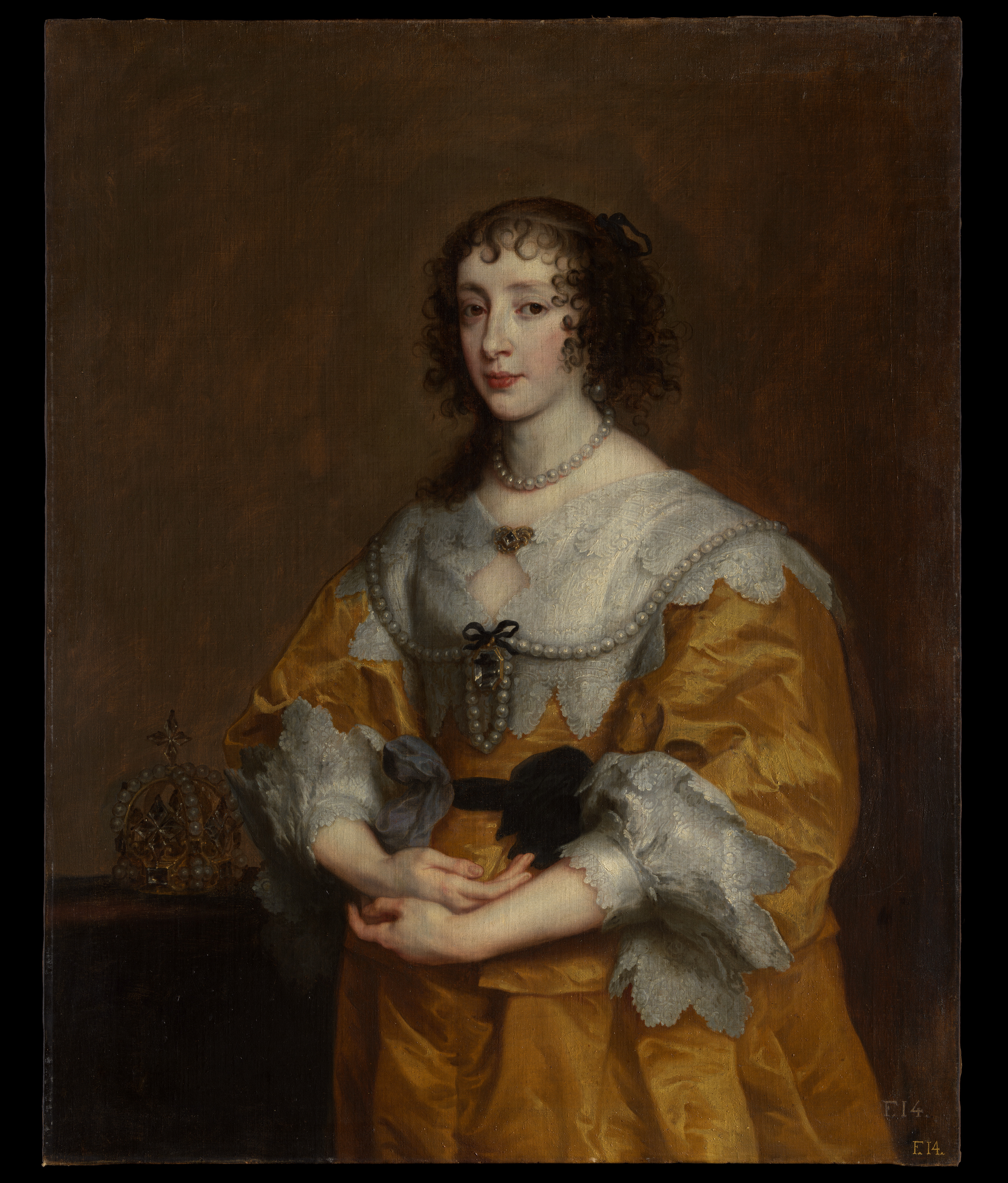
Heritage Analysis: Queen Henrietta Maria — Symbolic Power, Adornment, and the 2026 Luxury Horizon
Introduction: A Portrait as Strategic Asset
Within the Katherine Fashion Lab archive, few historical figures offer as rich a strategic resource as Queen Henrietta Maria (1609–1669), consort of Charles I of England. The oil-on-canvas portraits attributed to her court painters—most notably Anthony van Dyck and Daniel Mytens—constitute a visual economy of power in which adornment functions as diplomacy, theology, and propaganda simultaneously. For a 2026 luxury strategy, Henrietta Maria is not merely a historical reference; she is a case study in how personal style becomes institutional authority. This analysis examines four dimensions of her heritage: symbolic power, historical adornment, spiritual meaning, and direct application to high-end luxury positioning.
Symbolic Power: The Consort as Political Instrument
Henrietta Maria's portraits were never neutral records. They were instruments of statecraft. As a Bourbon princess married into a Stuart court, her image had to reconcile French Catholic heritage with English Protestant governance—a tension she resolved through visual excess. Van Dyck's depictions show her in flowing silks, pearl ropes, and elaborate lace, each element signifying wealth, legitimacy, and divine right. The symbolic grammar was deliberate: pearls represented purity and royal tears; lace signaled continental refinement; the color palette—often silver, blue, and crimson—evoked Marian iconography and Stuart heraldry respectively.
For luxury brands, the lesson is that symbolic power is not decorative but transactional. Henrietta Maria's adornment purchased political capital. In 2026, high-end labels must similarly treat every design decision as a semiotic investment—not merely aesthetic but strategic. A pearl earring is never just an earring; it is a claim to a lineage of meaning.
Historical Adornment: The Material Language of Authority
The oil-on-canvas medium itself is part of the adornment narrative. Portraits were commissioned to circulate in courts, to be copied, and to project presence across geographies. Henrietta Maria's wardrobe in these paintings reveals a sophisticated material hierarchy: imported Italian silks, Flemish lace, Spanish leather gloves, and French ribbons. Each textile carried trade implications and cultural allegiance. Her hair—often dressed in loose curls or adorned with feathers—was a study in calculated informality, suggesting natural grace while requiring hours of labor.
Critically, Henrietta Maria used adornment to mask vulnerability. During periods of political instability, her portraits became more opulent, not less. This counterintuitive strategy—luxury as armor—is directly relevant to contemporary luxury houses facing market volatility. When consumer confidence wavers, heritage brands should intensify material authenticity and craft storytelling, not retreat into minimalism. The 2026 luxury consumer, navigating economic uncertainty, will reward visible permanence over ephemeral trends.
Spiritual Meaning: Catholic Mysticism in a Protestant Court
Henrietta Maria's spirituality was inseparable from her adornment. As a devout Catholic in a Protestant realm, she embedded spiritual signifiers into her public image: rosary beads worn as jewelry, crosses integrated into lace patterns, and a recurring use of blue—the Marian color—in her gowns. Her private chapel at Somerset House was a masterpiece of Counter-Reformation aesthetics, and her portraits often allude to saintly virtue through pose and attribute.
This spiritual layering offers a critical insight for 2026 luxury strategy: consumers increasingly seek meaning beyond status. High-end brands that can articulate a spiritual or philosophical dimension—without appropriation or superficiality—will capture a premium. Henrietta Maria's model suggests that spirituality in luxury is not about religious dogma but about transcendent value: the promise that an object connects the wearer to something larger than fashion. For Katherine Fashion Lab, this translates into collections that reference ritual, protection, and legacy—not as themes but as structural design principles.
2026 High-End Luxury Strategy: From Archive to Atelier
How should a contemporary luxury house operationalize Henrietta Maria's heritage? Three strategic pillars emerge.
First, symbolic layering. Every product should carry at least three levels of meaning: material (craft), historical (reference), and personal (ritual). A hand-embroidered glove, for example, can reference Henrietta Maria's Spanish leather, incorporate a Marian blue thread, and be packaged with a meditation on protection. This density justifies premium pricing and resists commodification.
Second, material authenticity as armor. In volatile markets, heritage brands must double down on provenance. Henrietta Maria's silks were traceable to specific mills; her lace to specific convents. In 2026, blockchain-verified supply chains and artisan registries will serve the same function—not as transparency gimmicks but as proof of permanence. The consumer should feel they are acquiring a fragment of history, not a seasonal item.
Third, spiritual minimalism. Henrietta Maria's spirituality was visually rich but theologically disciplined. Luxury brands should adopt a similar discipline: one clear symbolic system, repeated and refined, rather than eclectic pastiche. A 2026 collection might center on a single motif—the pearl, the cross, the blue thread—and explore it across categories. This creates recognition, ritual, and resale value.
Conclusion: The Consort as Creative Director
Queen Henrietta Maria was, in effect, the creative director of her own image. She understood that power is performed through adornment, that spirituality requires material expression, and that political survival depends on strategic visibility. For Katherine Fashion Lab, her oil-on-canvas legacy is not a static archive but a dynamic playbook. The 2026 luxury landscape will reward brands that treat heritage as a living system—where symbolic power, historical adornment, and spiritual meaning converge into products that are not merely purchased but believed in. Henrietta Maria's pearls were never just pearls. Neither should ours be.