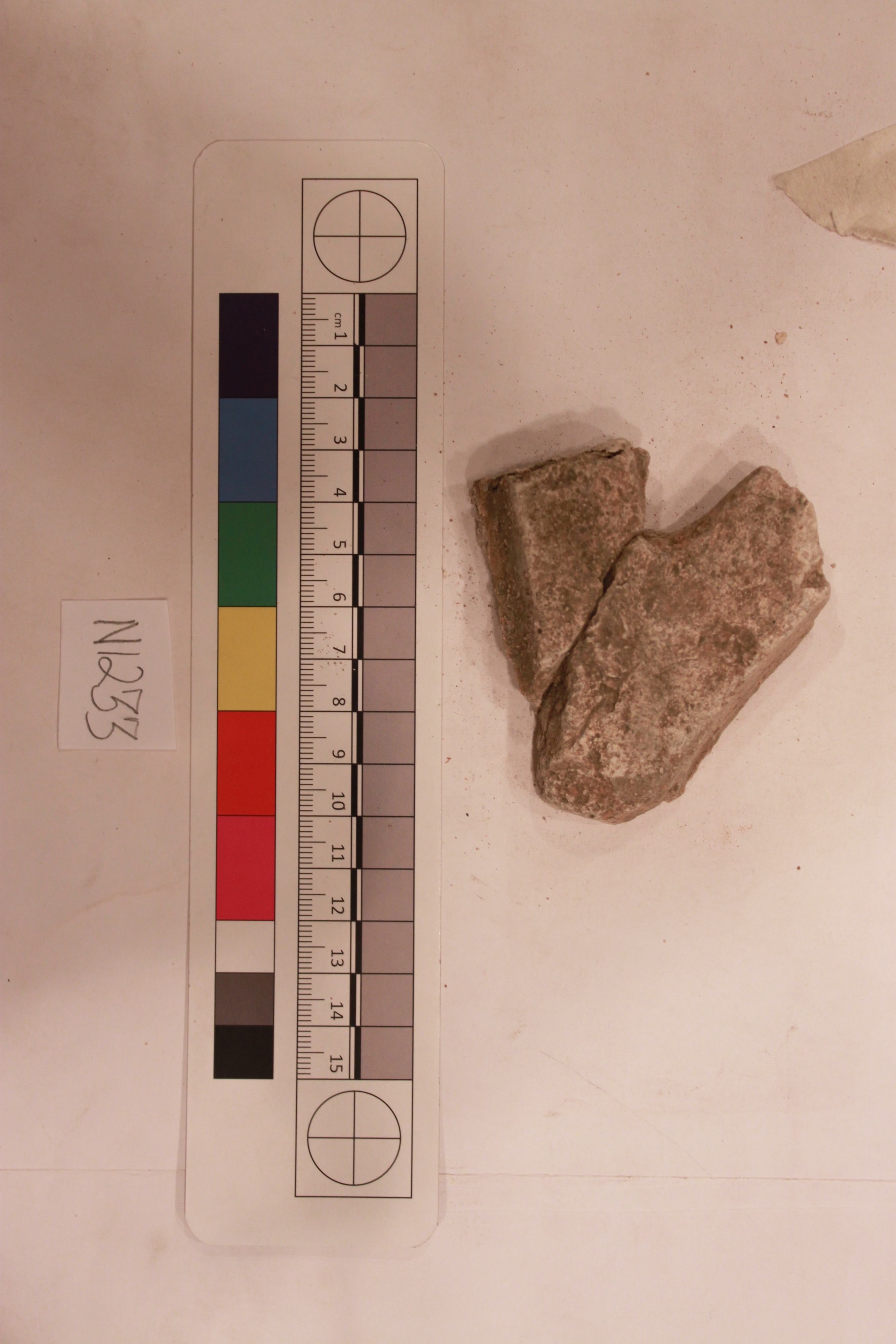
Stucco Fragment: A Couture Analysis of Surface, Structure, and Cultural Memory
The stucco fragment under examination represents a singular, standalone study in the Katherine Fashion Lab’s ongoing investigation of architectural ornament as a precursor to couture surface design. Originating from the broad and contested terrain of Global Heritage, this carved and painted stucco piece is not merely a relic of architectural decoration. It is a compressed archive of material intelligence, carrying within its layered surface the dual language of structural engineering and aesthetic refinement. For the contemporary couturier, the fragment offers a masterclass in how relief, pigment, and substrate can conspire to produce an object that is simultaneously robust and ethereal, monumental and intimate.
The fragment’s provenance, designated as Global Heritage, deliberately resists narrow geographic or dynastic attribution. This is not an evasion but an analytical stance. Stucco—a composite of gypsum, lime, sand, and organic binders—has been manipulated across cultures from the Mediterranean to South Asia, from pre-Columbian Mesoamerica to the Islamic architectural traditions of Persia and the Iberian Peninsula. Each tradition developed distinct carving protocols, pigment palettes, and curing techniques, yet all shared a fundamental insight: stucco is a material of additive sculpture, capable of capturing the most delicate undercut and the most sweeping planar gesture. In the context of haute couture, this additive logic parallels the way a designer builds volume through layering—tulle over crinoline, organza over silk faille—where the final silhouette emerges not from subtraction but from accumulation.
Materiality and the Grammar of Relief
The stucco fragment’s carved surface presents a topography of ridges, hollows, and softened edges. Under raking light, these modulations create a shifting chiaroscuro that changes with the viewer’s position. This is a critical lesson for couture surface design: ornament should not be static. A garment’s embellishment—whether embroidered, appliquéd, or structurally pleated—must reward movement. The fragment’s relief carving, likely executed with a combination of modeling tools and incision, demonstrates a hierarchy of depth. Primary motifs project boldly, secondary details recede, and tertiary lines whisper across the plane. In a couture atelier, this translates to a similar hierarchy in surface treatment: a bold shoulder line, a mid-tone beaded motif, and a fine thread of metallic couching that catches the eye only upon close inspection.
The painted surface of the stucco introduces a second analytical layer. Pigments applied to stucco—typically mineral-based earths, ochres, malachite greens, and lapis-derived blues—penetrate the porous substrate rather than sitting upon it. This is not paint as a skin but paint as a stain, a dye-like integration that alters the material’s chromatic identity without obscuring its texture. Couture has long engaged with this principle through dip-dyeing, hand-painting on silk, and the use of natural indigo or madder root to achieve color that appears to emanate from the fiber itself. The stucco fragment’s painted passages, now faded and abraded by time, reveal the fugitive nature of surface color. Yet this very impermanence is a design instruction: couture garments are not meant to be archival in the museum sense. They are meant to live, to fade, to crease, and to record the body’s passage.
Structural Logic and the Couture Silhouette
Beyond surface, the stucco fragment offers a structural proposition. Stucco is applied over a core—often masonry, wood, or a rough armature—and must adhere, cure, and resist cracking. The fragment’s survival across centuries attests to a sophisticated understanding of substrate preparation, moisture control, and aggregate grading. In couture, the analogous challenge is the relationship between the garment’s outer surface and its internal architecture. A bias-cut silk gown may appear fluid, but its integrity depends on the precise tension of its seams, the weight of its underlining, and the grain of its fabric. The stucco fragment reminds us that surface beauty is never accidental; it is the visible expression of invisible engineering.
Moreover, the fragment’s carved motifs—whether vegetal, geometric, or figural—demonstrate a principle of compositional balance that couture designers instinctively pursue. The distribution of positive and negative space, the repetition of a module with subtle variation, the transition from dense ornament to bare ground: these are the same decisions a designer makes when placing a beaded panel on a wool crepe sheath or arranging a cascade of fabric flowers on a bodice. The stucco fragment is not a pattern to be copied but a system to be internalized.
Global Heritage and the Ethics of Appropriation
To analyze a stucco fragment under the banner of Global Heritage is to confront the ethical dimensions of cross-cultural inspiration. The fragment’s anonymity—its lack of a single origin story—can be both liberating and dangerous. It liberates the designer from the constraints of a specific tradition’s rules, allowing formal experimentation. But it also risks erasing the labor, ritual, and meaning embedded in the original object. Katherine Fashion Lab’s approach is to treat such fragments as interlocutors, not as raw material. The goal is not to replicate a stucco relief in leather or sequins, but to understand how its makers thought about depth, light, and durability, and to translate those principles into a contemporary couture vocabulary that acknowledges its sources.
Conclusion: The Fragment as Couture Proposition
The stucco fragment, carved and painted, is a study in controlled complexity. It teaches the couturier that surface is never superficial, that ornament must be structural, and that color should inhabit material rather than mask it. As a standalone study, it resists easy categorization, much like the most ambitious couture. It asks us to consider the garment not as a flat canvas but as a three-dimensional object that will be seen in motion, under varied light, and across time. In the Katherine Fashion Lab, this fragment is not a curiosity but a thesis: that the future of couture lies in a deeper reading of the past’s material intelligence, where every crack, every pigment ghost, and every carved ridge is a design instruction waiting to be translated into cloth.