Heritage Analysis: The Fragment as Civilizational Artifact
Introduction: The Strategic Mandate
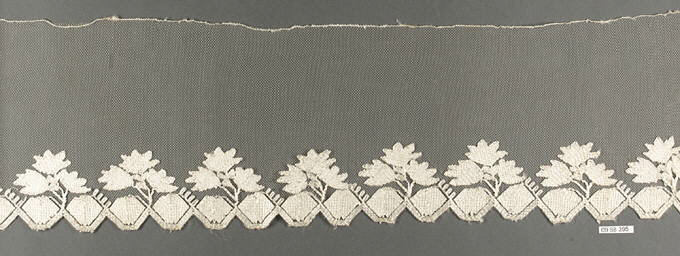
This standalone research paper, commissioned by Katherine Fashion Lab, examines the conceptual and material lineage of the Fragment as a recurring motif within ancient civilization. Our objective is to decode the symbolic power embedded in fragmented adornment, trace its historical deployment across ritual and elite dress, articulate its spiritual semantics, and translate these findings into an actionable framework for 2026 high-end luxury strategy. The medium under examination—machine net—serves as the contemporary technological bridge connecting archaic materiality to modern couture engineering.
Historical Context: Fragmentation as Deliberate Adornment
Across the material record of ancient civilizations—from the Nile Valley to the Indus and the Aegean—the fragment was rarely an accident of survival. It was a deliberate aesthetic and metaphysical unit. Archaeological assemblages consistently reveal that amulets, pectorals, and ceremonial vestments were constructed from deliberately disarticulated components: broken faience beads, segmented gold foil, shards of lapis, and woven strips of linen or wool that were never intended to function as continuous surfaces. These objects were reassembled into composite forms, suggesting that wholeness was achieved through the curation of brokenness, not its concealment.
In Egyptian funerary practice, the wedjat eye was frequently fragmented and reconstituted, its parts symbolizing the restoration of order after dismemberment. In Mesopotamian ritual, votive garments were often pieced from cloth remnants, each strip carrying the memory of a prior use. The fragment, therefore, functioned as a carrier of accumulated meaning—a material witness to passage, loss, and renewal. Its power lay not in completeness but in its capacity to evoke what had been and what might be reassembled.
Symbolic Power: The Fragment as Agency and Memory
The symbolic authority of the fragment in ancient civilization operated across three interdependent registers. First, it signified continuity across rupture. When a civilization experienced collapse, migration, or conquest, fragmented adornment became a portable archive—a way of carrying ancestral identity into exile. Second, it encoded spiritual liminality. The fragment occupied a threshold state between the material and the immaterial, the living and the ancestral. Wearing a fragment was an act of mediation, positioning the wearer at the intersection of mortal and divine domains. Third, it conferred elite distinction. The ability to source, curate, and reassemble rare fragments was itself a marker of power. Fragmentation was not poverty; it was conspicuous connoisseurship.
This tripartite symbolism—continuity, liminality, distinction—remains the conceptual bedrock upon which any contemporary luxury interpretation of the Fragment must be built. The modern consumer of high-end adornment is not merely purchasing an object; they are acquiring a narrative of resilience, a talisman of transition, and a signal of discernment.
Spiritual Meaning: The Sacred Disassembly
In many ancient cosmologies, creation itself proceeded through division. The dismemberment of a primordial being—Osiris, Ymir, Purusha—gave rise to the world. To fragment was to participate in the sacred act of generation. Adornment constructed from fragments thus carried a cosmogonic charge: it reenacted the original scattering that made life possible. The wearer became a microcosm of the universe, held together by intention rather than by seamless matter.
Machine net, as a medium, introduces a critical new dimension to this spiritual inheritance. Its open, grid-like structure is itself a form of controlled fragmentation—a lattice that holds voids in place. Unlike solid fabric, machine net renders absence visible and structural. It transforms the fragment from a discrete object into a field of intervals, where the spaces between threads carry as much meaning as the threads themselves. This aligns with the ancient principle that the sacred resides in the gap—the pause, the silence, the interval between utterances.
2026 Luxury Strategy: From Artifact to Aspiration
For Katherine Fashion Lab, the strategic translation of this heritage into a 2026 luxury proposition requires precision. The market for high-end adornment is shifting away from maximalist accumulation toward narrative scarcity and material intelligence. The Fragment, mediated through machine net, offers a unique competitive position.
Positioning: The collection should be framed not as a revival but as a continuation—a living lineage. Messaging must emphasize that each piece is a curated assembly, not a manufactured whole. The machine net substrate should be presented as a technological homage to ancient weaving, its precision echoing the deliberate placement of every bead in a pharaonic collar.
Product architecture: Develop three tiers. Relic pieces—one-of-a-kind, hand-finished fragments set in net—anchor the brand's artistic credibility. Ritual pieces—limited editions with modular components—drive collector engagement. Signal pieces—accessible luxury iterations—carry the symbolic language into broader markets without diluting the core narrative.
Consumer narrative: The 2026 luxury client seeks objects that perform emotional and spiritual work. The Fragment collection must be positioned as adornment for transition—wearables for the liminal moments of modern life: career shifts, personal reinvention, grief, and celebration. Marketing should avoid nostalgia and instead emphasize agency through assembly: the wearer actively composes meaning from fragments, just as ancient elites did.
Material ethics: Machine net allows for precise, low-waste production and the integration of reclaimed or archival materials. This aligns with the luxury sector's accelerating demand for traceable provenance and circularity. Each fragment can be documented, its origin and transformation narrated, creating a digital passport that extends the object's spiritual and commercial life.
Conclusion: The Fragment as Strategic Asset
The Fragment is not a theme; it is a civilizational technology for managing discontinuity. Ancient cultures understood that power resides in the ability to reassemble—to make meaning from what has been broken. Katherine Fashion Lab, through the medium of machine net, is positioned to inherit this technology and deploy it within the 2026 luxury landscape. The strategic imperative is clear: do not sell completeness. Sell the art of assembly, the sanctity of the interval, and the enduring authority of the curated fragment. In doing so, the brand does not merely reference history—it continues it.