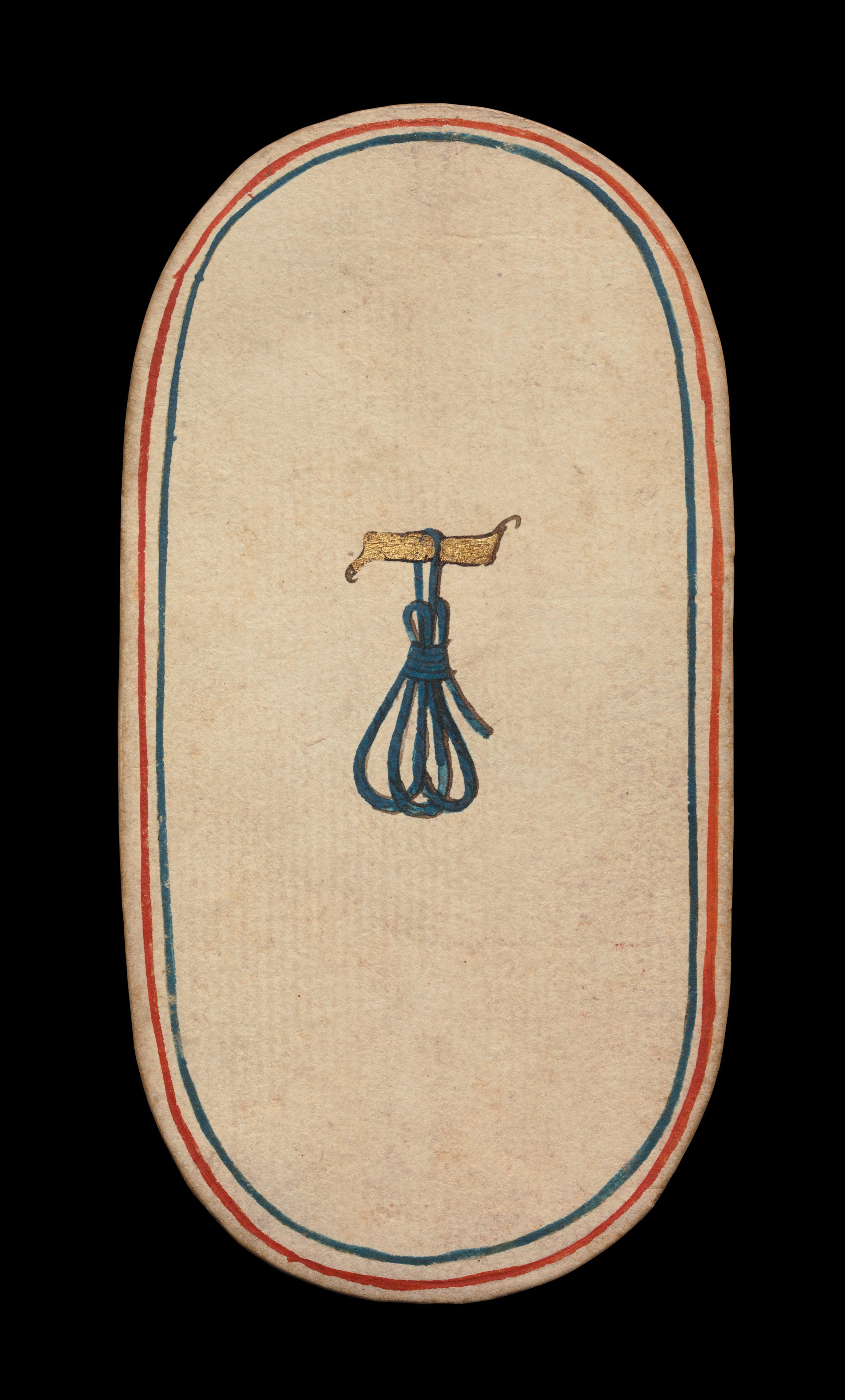
Strategic Heritage Analysis: The One of Tethers from The Cloisters Playing Cards
Object Provenance and Material Authority
The One of Tethers, held within The Cloisters Playing Cards (c. 1475–1480), represents one of the most materially sophisticated survivals of South Netherlandish courtly gaming culture. Produced in the Burgundian Netherlands during the height of Valois patronage, the card is constructed from four layers of laminated pasteboard—a technical decision that speaks to the intended longevity and prestige of the object. Unlike disposable paper ephemera, this multi-layer construction signals that these cards were conceived as durable luxury goods, likely commissioned for a noble household rather than a tavern. The surface treatment—pen and ink underdrawing, opaque paint, translucent glazes, and applied silver and gold leaf—places the card in direct dialogue with panel painting and manuscript illumination of the period. The use of applied precious metal is especially significant: gold and silver were not merely decorative but indexed spiritual radiance and temporal authority in late medieval visual culture. For Katherine Fashion Lab, this object establishes a material precedent for luxury that is additive, layered, and technically overdetermined—values that translate directly into 2026 product architecture.
Symbolic Power of the Tether
The suit of tethers—sometimes called "ropes" or "leashes" in related Netherlandish decks—carries a dense symbolic load. In the medieval moral imagination, the tether was an ambivalent sign: it could denote bondage, restraint, and the fallen will, but equally fidelity, measured discipline, and the binding of vows. The One of Tethers, as the suit's origin point, functions as a semantic anchor: every subsequent card in the suit derives its meaning from this single, isolated cord. Visually, the card likely presents a single tether rendered with the same care afforded to figural subjects, elevating a utilitarian object to the status of heraldic emblem. This is a critical strategic insight. The card demonstrates that ordinary instruments of daily life can be transfigured into carriers of aristocratic meaning through material treatment and compositional isolation. The tether is not depicted in use; it is displayed, almost relic-like. That gesture of display—removing an object from function and presenting it as symbol—is precisely the operation that distinguishes heritage luxury from commodity production.
Historical Adornment and the Aesthetics of Restraint
South Netherlandish playing cards of this period participate in a broader visual economy of controlled ornamentation. The Burgundian court prized surfaces that rewarded close looking: glazed passages that shift with the light, silver that tarnishes and thus records time, gold that refuses to be photographed accurately. The One of Tethers, as a numeral card rather than a court card, is especially instructive. It lacks the anthropomorphic drama of a King or Queen, yet it is executed with equivalent material expenditure. This suggests that the deck's hierarchy is not one of value but of function: every card, including the humblest numeral, is a jewel. For a contemporary luxury house, this is a powerful counterargument to the tiered product ladders that dominate accessible luxury. The Cloisters cards propose an alternative model: uniform material excellence across the entire collection, with differentiation achieved through iconography rather than quality degradation.
Spiritual Meaning and the Moralized Game
Late medieval card games were frequently moralized. Preachers and didactic authors read the suits as allegories of the Christian life: the tether could signify the discipline of the soul, the bond of charity, or the snare of sin, depending on context. The application of gold and silver further spiritualizes the object, recalling the luminous grounds of devotional manuscripts and the precious metals of reliquaries. Playing cards thus occupied a liminal space between recreation and devotion, between the gaming table and the altar. This ambiguity is strategically valuable. It allows a heritage brand to claim playful seriousness—an object that is at once entertainment and ethical instrument. In 2026, as luxury consumers seek experiences that reconcile pleasure with meaning, the moralized card offers a historical license for products that are both delightful and disciplining, both sensuous and principled.
2026 Luxury Strategy: From Artifact to Architecture
For Katherine Fashion Lab, the One of Tethers suggests four actionable strategic pillars. First, material layering as narrative. The four-ply pasteboard and glazed surface model a product story built on accumulated craft stages, each visible and nameable. Second, the elevation of the ordinary. The tether—a rope—becomes luxury through isolation and treatment. This supports collections that transform utilitarian archetypes (the harness, the strap, the cord) into signature icons. Third, uniform excellence. The numeral card's parity with court cards argues for democratized craftsmanship within a single collection, a direct challenge to good-better-best merchandising. Fourth, spiritualized materiality. Applied gold and silver are not mere finishes; they are theological claims. In 2026, luxury must again make claims—about beauty, permanence, and meaning—and the One of Tethers provides a historical grammar for doing so without irony.
Conclusion
The One of Tethers is not a minor object. It is a compressed treatise on value: on how materials signify, how symbols bind, and how play can be sanctified. Its South Netherlandish makers understood that luxury is not the absence of restraint but its most articulate form. For Katherine Fashion Lab, the card offers a heritage mandate: to build collections that are layered like pasteboard, luminous like gold, and morally legible like the tethered soul. In a market saturated with novelty, the deepest innovation may be the disciplined return to symbolic power—one tether, one card, one collection at a time.