Introduction: A Textile Narrative of Intervention and Disorder
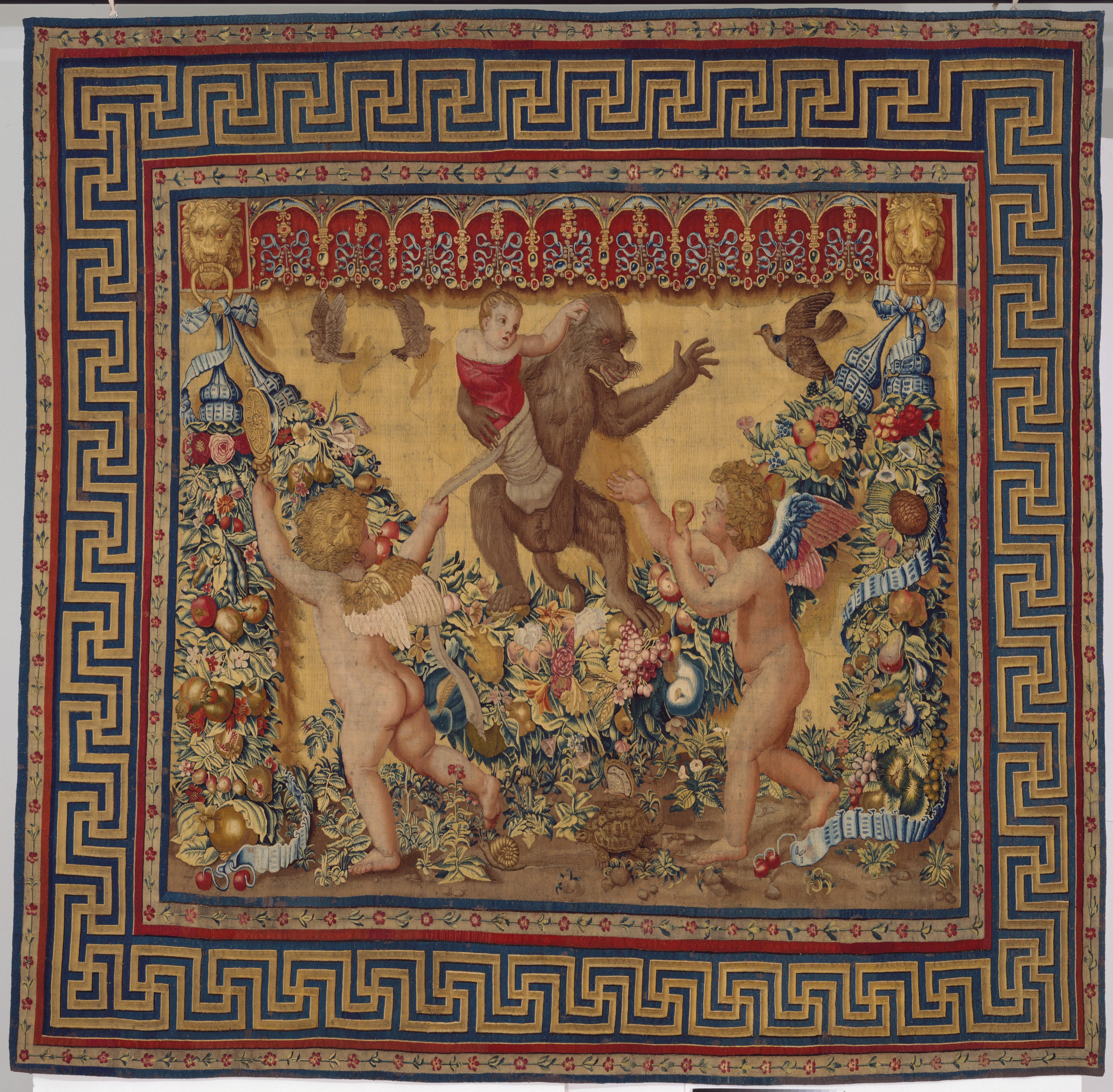
Within the distinguished corpus of the Giochi di Putti—a celebrated cycle of Renaissance tapestries depicting the amorous and mischievous exploits of cherubic figures—the panel titled Two Putti Trying To Stop a Monkey Abducting a Child occupies a singular position. As a standalone study, this work rewards close material and iconographic scrutiny. Woven from wool warps and wool and silk wefts, the tapestry originates from Global Heritage, a designation that situates it within the broader circulation of European luxury textiles across courts and collections. Yet its true distinction lies not merely in provenance but in its dramatic compression of narrative tension into a single, frozen moment of rescue and resistance.
Materiality and Technique: The Grammar of Wool and Silk
The technical composition of this tapestry is fundamental to its expressive power. The wool warps provide a robust, stable armature—a structural integrity essential for a large-format hanging intended for display in a princely chamber or gallery. More significantly, the mixed wool and silk wefts create a sophisticated interplay of matte and luster. Wool, dyed in earthy ochres, russets, and muted greens, establishes the dominant tonal field: the fleshy plumpness of the putti, the coarse fur of the monkey, and the textured ground of the setting. Silk, introduced selectively, catches light along the highlights of the child’s garment, the sheen of the monkey’s tail, and the delicate edges of the putti’s wings. This material hierarchy is not decorative accident; it is a deliberate strategy of emphasis. Where silk appears, the viewer’s eye is drawn—to the point of contact between putto and monkey, to the vulnerable body of the child, to the tensed musculature of the interveners. The weave thus becomes a form of rhetoric, arguing for the centrality of the rescue gesture through sheer luminosity.
Iconography: Putti as Agents of Moral Order
In classical and Renaissance visual culture, putti are ambiguous creatures. They may signify sacred love, profane desire, or simply the unruly vitality of childhood. Here, however, they are cast as agents of moral order. The monkey—a creature traditionally associated with mimicry, cunning, and base instinct—has seized a human child. This abduction is not merely a narrative incident; it is an allegorical violation. The monkey represents the triumph of appetite over reason, of chaos over civility. The two putti who intervene embody the countervailing forces: courage, vigilance, and the instinct to protect the innocent. Their struggle is physical—grasping limbs, pulling the monkey’s tail, blocking its escape—but it is also symbolic. The tapestry insists that even the most playful or marginal figures can be called upon to defend the social and moral order.
Compositional Drama: The Choreography of Resistance
Visually, the panel is organized around a diagonal axis of conflict. The monkey, positioned at the upper right, pulls the child toward the edge of the frame—a direction that signals danger, exile, and the brink of loss. The two putti, anchored at the lower left, exert counterforce. Their bodies are twisted, their faces contorted with effort. One putto grips the monkey’s hind leg; the other reaches for the child’s arm. The child, suspended between these forces, becomes a fulcrum of anxiety. The background—likely a simplified landscape or garden—remains deliberately understated, denying the viewer any distraction from the central action. This compositional economy is characteristic of the Giochi di Putti at their most effective: the narrative is legible at a glance, yet the emotional stakes deepen upon sustained looking.
Context and Connoisseurship: The Standalone Study
As a standalone study, this tapestry invites questions that a complete cycle might obscure. Why isolate this particular episode? What does it reveal about the patron’s taste or the workshop’s priorities? The answer may lie in the universality of its theme. Unlike more esoteric mythological scenes, the rescue of a child from a monkey speaks directly to fundamental human anxieties: the vulnerability of the young, the threat of the wild, the necessity of collective action. For a Renaissance collector, such a panel could function as a memento mori of sorts—a reminder that civilization is fragile and must be actively defended. For the modern viewer, it resonates differently: as a study in material craftsmanship, as an example of narrative efficiency, and as a testament to the enduring power of the Giochi di Putti to transform wool and silk into moral argument.
Conclusion: The Tapestry as Ethical Object
In sum, Two Putti Trying To Stop a Monkey Abducting a Child is far more than a charming diversion. Its wool warps and wool and silk wefts constitute a technical achievement, but its true significance lies in the way it marshals material, composition, and iconography toward a single ethical proposition: that intervention is possible, that order can be restored, and that even the smallest among us—putti, children, or woven figures—can become protagonists in the drama of preservation. As a standalone study from Global Heritage, it stands as a compelling reminder that couture and tapestry analysis must attend not only to beauty but to the moral fictions that beauty is asked to carry.