Executive Summary: The Strategic Value of Sacred Utility
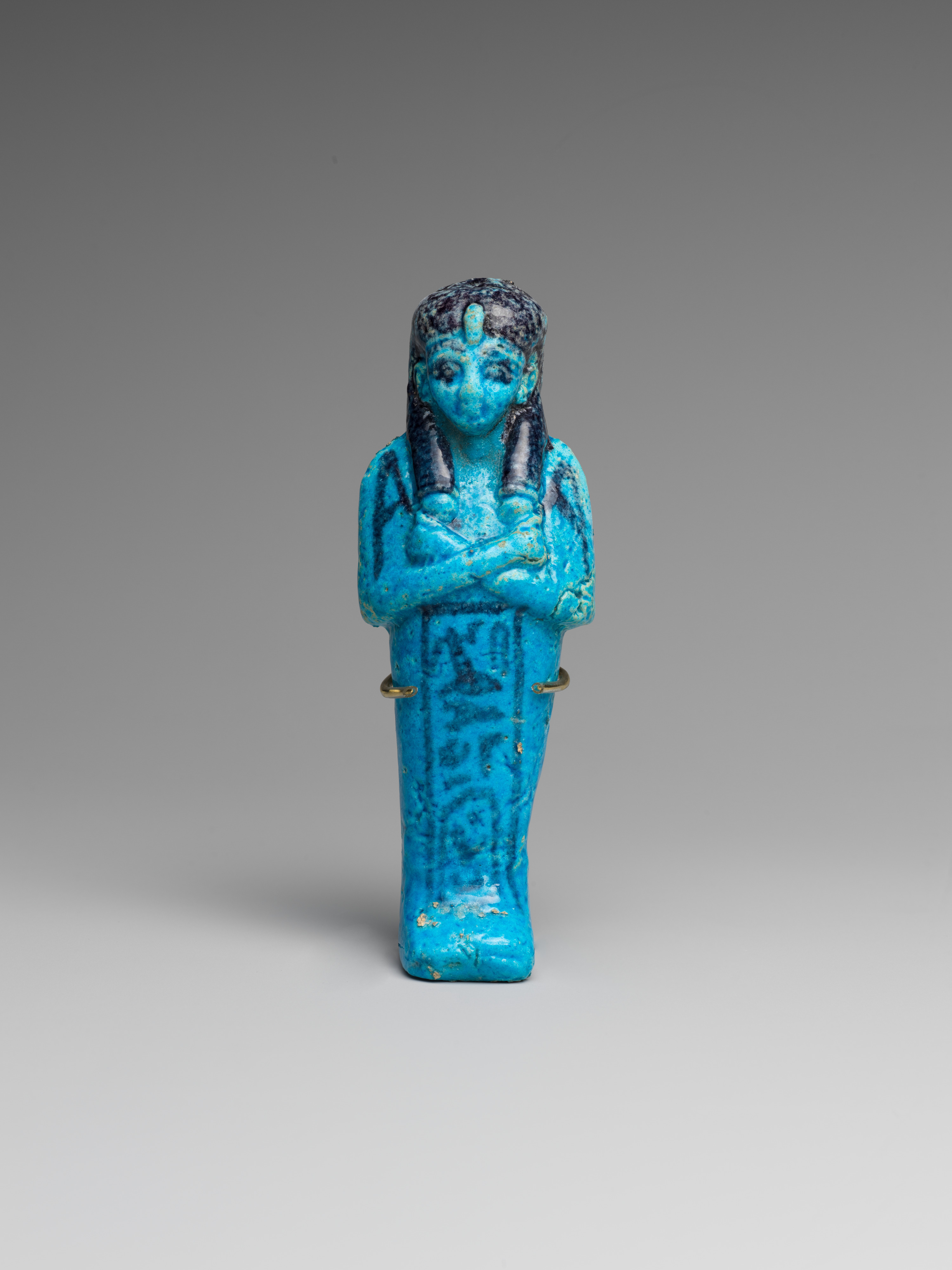
Within the artifact portfolio of Katherine Fashion Lab's heritage division, the Shabti of the God's Wife Maatkare represents a paradigm of functional divinity. Crafted in faience during Egypt's 21st Dynasty (circa 1069–945 BCE), this funerary figurine was designed not for display, but for ritual labor in the afterlife. For a 2026 luxury strategy, the Shabti offers a counterintuitive yet potent proposition: the elevation of service into sanctity. This analysis examines the object's symbolic power, its role in historical adornment, its spiritual mechanics, and its translation into a high-end luxury framework that prioritizes quiet authority over spectacle.
Symbolic Power: The God's Wife as Institutional Brand
Theocratic Authority and Female Sovereignty
The title God's Wife of Amun was not merely ceremonial. By the 21st Dynasty, the God's Wife held de facto political control over Thebes, wielding economic and religious power comparable to a pharaoh. Maatkare, likely a daughter of High Priest Pinudjem I, was installed as the living embodiment of divine consort. Her Shabti therefore carries a dual charge: it serves her in death while projecting her institutional identity into eternity. The figurine is a portable emblem of female sovereignty, a statement that power persists beyond the mortal body.
For Katherine Fashion Lab, this translates to a luxury strategy built on matriarchal legacy. In 2026, high-end consumers increasingly reject performative wealth in favor of narrative depth and quiet influence. The Shabti's symbolism—authority earned through sacred duty, not conquest—aligns with a feminine archetype of stewardship. A handbag, a timepiece, or a couture garment can be positioned not as an accessory, but as an instrument of one's enduring purpose.
Maat as Strategic Order
The name Maatkare embeds maat—cosmic truth, balance, and justice. The Shabti thus performs a double function: it labors for the deceased, and it upholds universal order. In luxury terms, this is the promise of alignment. A 2026 client does not buy a product; they acquire a token of integrity that signals they operate within a moral and aesthetic equilibrium. The Shabti's symbolic power lies in its unwavering reliability—a quality that luxury brands must now engineer into every touchpoint.
Historical Adornment: Faience as Democratic Luxury
The Materiality of Radiance
Faience—crushed quartz mixed with lime and natron, then fired to a vitreous, turquoise-blue glaze—was Egypt's first mass-produced luxury material. It mimicked lapis lazuli and turquoise, stones reserved for royalty, yet could be molded into intricate forms for a broader elite. The Shabti of Maatkare is therefore a masterclass in accessible exclusivity. Its surface catches light like water, a visual metaphor for rebirth and the Nile's fertility. The glaze's slight imperfections—crazing, color variation—are not flaws but signatures of handcraft.
For 2026 high-end strategy, faience offers a blueprint for sustainable luxury. The material is abundant, non-extractive, and requires artisanal mastery rather than industrial scale. Katherine Fashion Lab can adopt a faience-inspired aesthetic: matte-to-gloss ceramic finishes, glazed leathers, and turquoise and cobalt palettes that evoke ancient radiance without literal imitation. The message is clear: true luxury transforms the ordinary into the eternal.
Adornment as Ritual Armor
Shabtis were often placed in miniature coffins or nested boxes, wrapped in linen, and inscribed with Chapter 6 of the Book of the Dead. This layered presentation is a historical precedent for unboxing as ceremony. The adornment of the Shabti—its text, its tools (hoe, pick, basket)—was not decorative but functional magic. Each element served a purpose in the afterlife economy. In luxury terms, this is design with intentionality: every stitch, clasp, and engraving must justify its existence through use and meaning.
Spiritual Meaning: The Afterlife as Brand Promise
Answering the Call
The Shabti's core spiritual function is responsive service. When the deceased is called to labor in the Field of Reeds, the figurine answers: "Here I am." This ritual call-and-response is a profound model for luxury client relationships. The 2026 consumer seeks presence, not performance. They want a brand that responds to their unspoken needs—anticipatory, silent, and utterly dependable. The Shabti does not shout; it waits to be summoned.
Eternity as Product Lifecycle
Unlike modern disposability, the Shabti was built for infinite duration. Its faience body, though fragile, was intended to outlast the tomb itself. This spiritual endurance challenges luxury's obsession with seasonal novelty. A 2026 strategy must embrace heirloom logic: pieces designed to be passed down, repaired, and re-consecrated. The Shabti teaches that true luxury is not consumed; it is inherited.
2026 High-End Luxury Strategy: From Artifact to Atelier
Positioning: The Quiet Sovereign
Katherine Fashion Lab should position the Shabti-inspired collection as "The Quiet Sovereign"—a line for women who lead without spectacle. Key products: glazed ceramic hardware, turquoise enamel accents, linen-and-silk textiles, and modular jewelry that can be "nested" like shabti boxes. Marketing avoids the word "power"; instead, it uses stewardship, continuity, and alignment.
Experience Design: The Ritual of Acquisition
Purchase should mimic the Shabti's preparation: a private viewing, a hand-wrapped object, a written invocation (not a receipt). Clients receive a numbered "labor contract"—a poetic certificate stating the piece's intended service. This transforms transaction into covenant.
Material Innovation: Faience Reimagined
Partner with ceramic ateliers to develop bio-based glazes that replicate faience's depth. Use recycled quartz and plant ash. The result: a circular luxury material that honors the ancient recipe while meeting 2026 sustainability mandates.
Narrative Pillars for Campaign
1. The Answering Servant: Every product responds to a real need—no excess.
2. Maat in Motion: Balance as the highest luxury.
3. Faience Forever: Beauty that outlives the season.
Conclusion: The Shabti as Strategic Mirror
The Shabti of the God's Wife Maatkare is not a relic of death but a manual for enduring influence. It teaches that symbolic power comes from sacred duty, historical adornment from transformative materials, spiritual meaning from responsive presence, and luxury strategy from eternal service. For Katherine Fashion Lab in 2026, the path forward is not to imitate antiquity, but to operationalize its logic. Create objects that answer when called. Design for the afterlife of the garment. And remember: the most powerful luxury is the one that labors quietly on behalf of its owner.