Introduction: The Sampler as a Paradigm of Textile Literacy
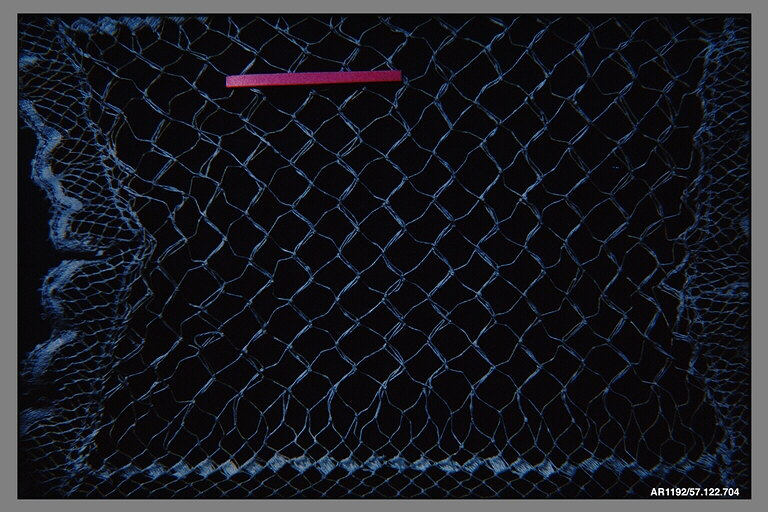
The sampler occupies a singular position within the global heritage of textile arts. Neither purely utilitarian nor exclusively ornamental, it functions as a pedagogical instrument, an archival document, and an aesthetic object simultaneously. Within the analytical framework of Katherine Fashion Lab, the sampler merits standalone study—not merely as a historical curiosity, but as a sophisticated system of knowledge transmission that predates formal design education by centuries. Its material composition, typically cotton and embroidered net, reveals a deliberate interplay between structural integrity and decorative expression. This analysis examines the sampler as a transnational artifact, tracing its evolution across cultures while interrogating its relevance to contemporary couture practice.
Materiality and Technique: Cotton and Embroidered Net
The selection of cotton as a foundational substrate is far from incidental. Cotton's cellulose structure offers a stable, receptive ground for needlework, accommodating dense embroidery without distortion. When paired with embroidered net—a fine, open-weave fabric that provides both transparency and structural support—the sampler achieves a distinctive duality. The net acts as a scaffold, while the embroidery imposes narrative and pattern. This combination is technically demanding: the embroiderer must calibrate thread tension to avoid tearing the delicate net, while ensuring that the cotton base does not pucker under accumulated stitches.
From a couture perspective, this material pairing anticipates modern hybrid textiles, where contrasting substrates are laminated or interwoven to achieve functional and aesthetic goals. The sampler's use of embroidered net also introduces a layer of visual complexity. Light passes through the open mesh, casting subtle shadows that animate the embroidered motifs. This optical effect—rarely acknowledged in traditional textile histories—positions the sampler as an early experiment in diaphanous surface design, a precursor to the sheer overlays and illusion tulle seen in contemporary haute couture.
Global Heritage: A Cartography of Stitch and Symbol
While the sampler is often associated with European and North American traditions, its origins are decidedly global. Precedents can be traced to ancient Egypt, where linen fragments with decorative stitching served as reference pieces for weavers. In the Islamic world, particularly during the medieval period, samplers functioned as portable pattern libraries, allowing artisans to carry geometric and arabesque motifs across trade routes. By the sixteenth century, the practice had migrated to Europe, where it became a cornerstone of female education. Yet even within this Eurocentric narrative, the influence of imported cotton and indigo from India, and silk threads from China, underscores the sampler's embeddedness in global supply chains.
In West Africa, textile samplers took the form of adire and indigo resist-dyed cloths, where pattern repetition served both mnemonic and market functions. In Japan, the shishu sampler tradition emphasized precise silk embroidery on fine cotton, often depicting natural motifs that encoded seasonal and poetic references. These parallel traditions challenge the notion of a single sampler lineage. Instead, they reveal a polycentric phenomenon: communities across the world independently developed textile reference systems that combined instruction, documentation, and artistry. For Katherine Fashion Lab, this global heritage is not a footnote but a central thesis—couture's future lies in recognizing and synthesizing these diverse epistemologies.
Standalone Study: The Sampler as Autonomous Artifact
To treat the sampler as a standalone study requires resisting the impulse to classify it solely as a preparatory sketch. While its pedagogical function is undeniable, the sampler also operates as a finished object with its own aesthetic logic. The composition of motifs—alphabets, numerals, floral bands, religious verses, and abstract geometries—follows principles of balance, rhythm, and negative space that align with formal design theory. In many instances, the sampler's maker exercised considerable creative agency, deviating from prescribed patterns to introduce personal flourishes or experimental stitch combinations.
This autonomy is particularly evident in samplers that incorporate embroidered net as a distinct layer. Rather than treating the net as a mere backing, skilled artisans often allowed it to remain visible, creating a deliberate contrast between opaque embroidery and translucent ground. This technique anticipates the layering strategies of modern couture, where tulle, organza, and lace are manipulated to generate depth and movement. The sampler, therefore, is not a relic but a living precedent—a demonstration of how material intelligence and technical precision can coalesce into an object of enduring visual power.
Couture Implications: From Heritage to Innovation
For contemporary couture, the sampler offers three critical lessons. First, it validates the importance of process over product. The sampler's value lies in its visible evidence of trial, error, and refinement—a reminder that couture's authority derives from iterative craft, not instantaneous design. Second, it champions material literacy. Understanding how cotton and embroidered net behave under tension, moisture, and light is not archaic knowledge; it is the foundation of sustainable, high-performance textile innovation. Third, it models cultural synthesis. The sampler's global heritage demonstrates that cross-cultural exchange is not a modern phenomenon but a historical constant, one that enriches rather than dilutes aesthetic identity.
In conclusion, the sampler—constructed from cotton and embroidered net, rooted in global heritage, and examined as a standalone study—is far more than a historical curiosity. It is a sophisticated textile system that encodes knowledge, negotiates material constraints, and asserts artistic autonomy. For Katherine Fashion Lab, the sampler serves as both mirror and map: a reflection of couture's enduring principles and a guide for its future evolution. To ignore it is to overlook one of the most eloquent arguments for craft as a form of intellectual inquiry.