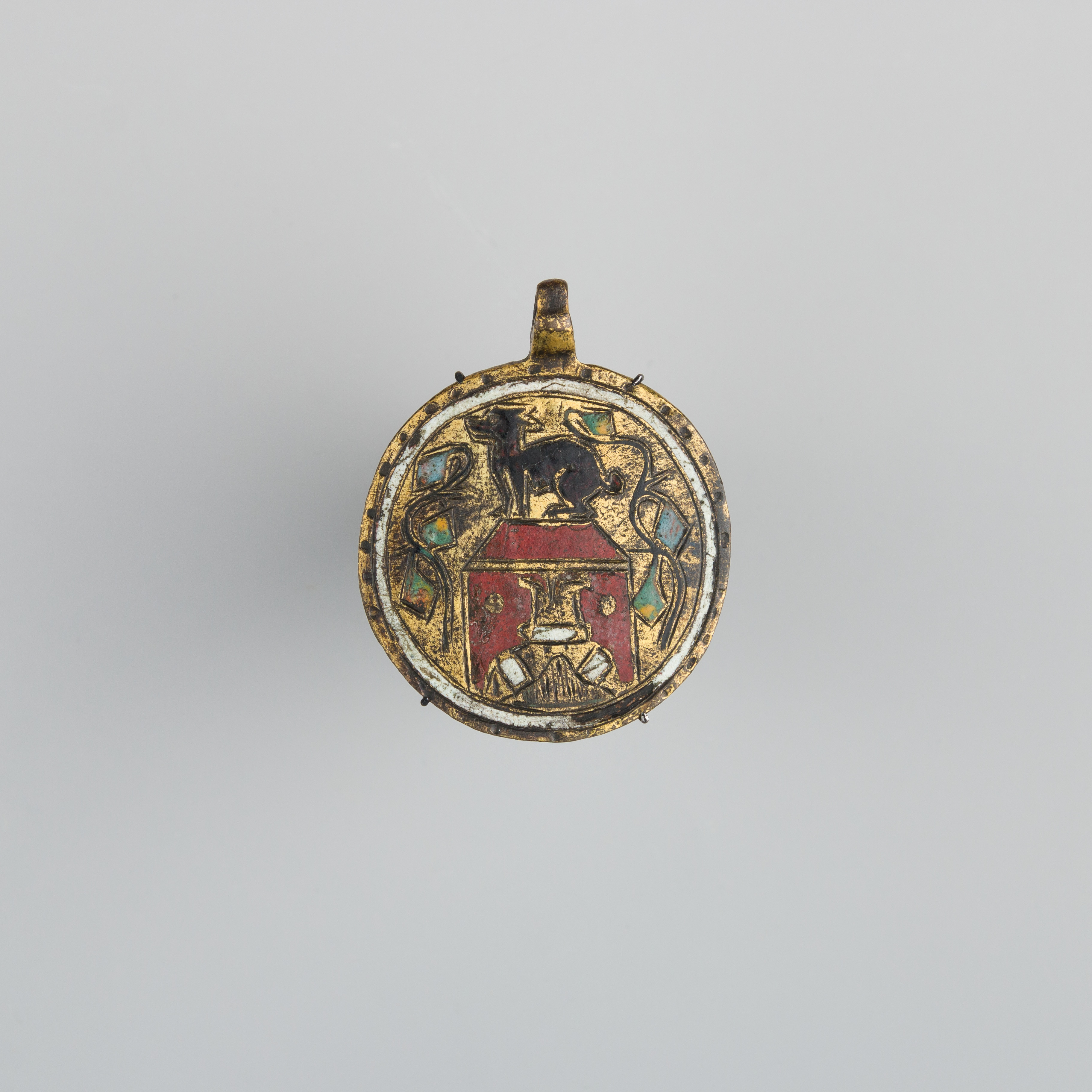
Heritage Asset Analysis: The Spanish Badge or Harness Pendant
Introduction: A Strategic Artifact of Iberian Power
Within the Katherine Fashion Lab heritage portfolio, the Spanish badge or harness pendant stands as a singularly potent artifact. Executed in copper, gold, and enamel, this object occupies a dual identity: it is at once a functional equestrian fitting and a heraldic declaration of identity, allegiance, and spiritual protection. For a luxury house preparing its 2026 strategic positioning, the harness pendant offers a rare convergence of symbolic power, historical adornment, and spiritual meaning—three pillars that define the next generation of high-end consumer desire. This analysis examines the pendant's Iberian origins, its semiotic density, and its translation into a commercially viable luxury narrative.
Historical Context: Iberia as a Crucible of Adornment
The harness pendant flourished across medieval and early modern Iberia, particularly between the thirteenth and sixteenth centuries. In a peninsula shaped by Reconquista warfare, Mudéjar craftsmanship, and the unification of Castile and Aragon, equestrian equipment became a stage for political theatre. Horses were not merely transport; they were instruments of chivalric identity, and their trappings broadcast the status of the rider to any observer.
Spanish pendants were typically suspended from the breast strap or bridle of a horse, swinging with the animal's movement to catch light and draw the eye. The use of copper as a base, gilded with gold, and finished with champlevé or cloisonné enamel reflects a sophisticated metallurgical tradition inherited from Visigothic, Islamic, and European workshops. The enamels—often in deep blues, reds, and greens—were not decorative afterthoughts but carriers of meaning, each hue governed by the medieval grammar of heraldry and devotion.
Symbolic Power: Heraldry, Lineage, and Display
The primary symbolic function of the Spanish harness pendant was heraldic identification. In an age before standardized uniforms, the pendant allowed a knight or nobleman to be recognized at distance and in motion. Castles, lions, crosses, and fleurs-de-lis rendered in enamel communicated lineage, territorial claim, and feudal loyalty. For the modern luxury strategist, this is a critical insight: the pendant was a wearable brand mark centuries before the concept existed, an early instance of logo-driven identity.
Beyond heraldry, the pendant signified martial readiness and wealth. Gold gilding on copper required capital and skilled labor; enamel demanded technical mastery. To display such an object was to declare membership in a warrior aristocracy that could afford beauty in the service of violence. This tension—refinement married to power—is precisely the emotional territory that contemporary luxury consumers seek.
Spiritual Meaning: Amuletic Protection and Sacred Invocation
Spanish harness pendants were rarely secular alone. Many bore religious iconography: the cross, the scallop shell of Santiago, the Virgin Mary, or invocations such as "Ave Maria." These were not ornamental pieties but active amulets, believed to shield rider and horse from harm in battle and travel. The pendant thus operated on two planes simultaneously—announcing earthly rank while petitioning heavenly protection.
This dual register gives the artifact exceptional depth for luxury storytelling. It embodies the pre-modern conviction that adornment is a form of armor, that beauty and belief are inseparable. In a 2026 market defined by consumers seeking meaning over mere status, this spiritual dimension provides a narrative of guardianship and intention that transcends trend cycles.
Materiality as Strategy: Copper, Gold, and Enamel
The material composition of the Spanish pendant is itself a strategic asset. Copper offers warmth and workability; gold confers permanence and prestige; enamel introduces color, fragility, and craft intimacy. This triad supports a luxury proposition built on layered materiality—the very quality that distinguishes heritage-based collections from seasonal fashion.
For Katherine Fashion Lab, the pendant's construction suggests a design language of suspended, articulated forms, tactile surfaces, and chromatic depth. It invites reinterpretation in fine jewelry, hardware for leather goods, and even architectural motifs for retail environments.
2026 Luxury Strategy: From Artifact to Market Position
Entering 2026, the global luxury sector faces a consumer who is educated, skeptical of novelty for its own sake, and hungry for provenance. The Spanish harness pendant answers this demand on four fronts:
1. Authenticity: Its documented Iberian origin and medieval function provide verifiable heritage, insulating the brand from accusations of cultural pastiche.
2. Narrative density: Heraldry, spirituality, and equestrian chivalry supply multiple storylines for campaigns, editorial, and client education.
3. Gender-neutral appeal: As an object of armor and adornment rather than gendered jewelry, it supports inclusive luxury positioning.
4. Sustainability resonance: The pendant's pre-industrial craftsmanship and repairable material logic align with circular-economy values without appearing opportunistic.
Strategically, Katherine Fashion Lab should position the pendant as the anchor motif of a "Guarded Heritage" collection—a line that frames luxury as protection, identity, and blessing. Limited editions, made in copper with gold vermeil and hand-enameled details, would honor the original medium while meeting modern durability standards.
Conclusion: The Pendant as Strategic Keystone
The Spanish badge or harness pendant is more than a historical curiosity. It is a compressed statement of power, faith, and craft—precisely the values that will define high-end luxury in 2026. By centering this artifact in its heritage research, Katherine Fashion Lab claims a lineage of adornment that is aristocratic yet accessible, martial yet spiritual, ancient yet urgently contemporary. The pendant does not merely decorate the horse; it declares the rider. In the same way, it can declare the brand.