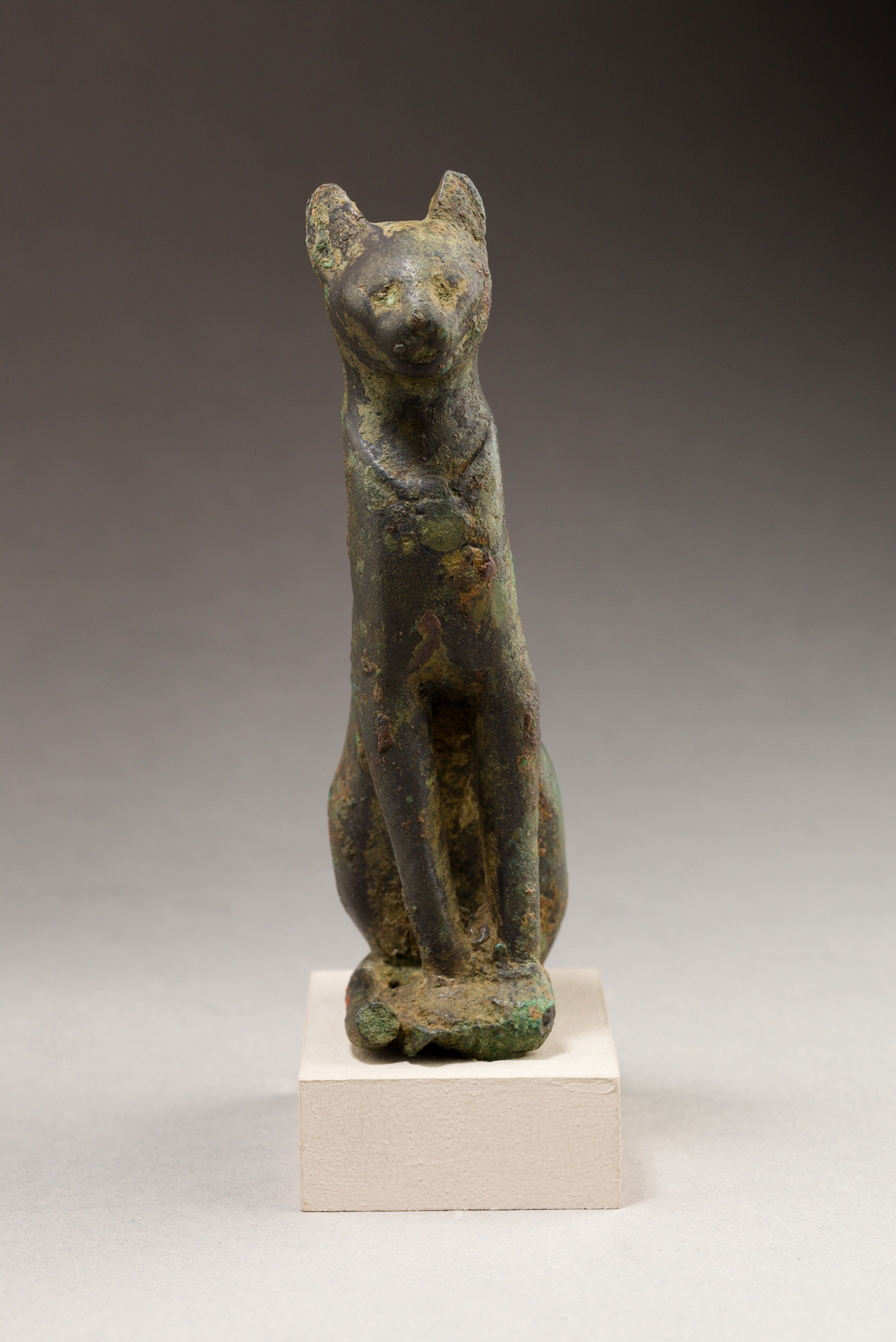
Executive Summary: The Cupreous Cat as Strategic Heritage Asset
Within the competitive landscape of 2026 high-end luxury, Katherine Fashion Lab identifies the Ancient Civilization statuette of a cat in cupreous metal as a foundational heritage asset. This object is not merely a decorative relic; it is a compressed narrative of symbolic power, ritual adornment, and spiritual guardianship. For a luxury house seeking to differentiate through deep cultural authenticity, the cupreous cat offers a rare combination of material integrity and metaphysical gravitas. This analysis examines the statuette’s symbolic authority, its role in historical adornment, its spiritual function, and its direct translation into a 2026 luxury strategy centered on talismanic minimalism and provenance-driven storytelling.
Symbolic Power: The Feline as Sovereign Guardian
In Ancient Civilization, the cat was not domesticated as a pet in the modern sense. It was a liminal being—a predator that controlled vermin, a nocturnal observer, and a mediator between the visible and invisible worlds. The cupreous metal statuette, typically cast through the lost-wax method, captured this duality: the sleek, muscular form of a hunter and the rigid, frontal posture of a deity. Symbolic power here operates on three levels. First, the cat represents sovereign protection over the household and the granary, making it an emblem of economic and domestic security. Second, its association with female divinity—particularly in cultures where feline goddesses guarded the sun, the moon, or the afterlife—confers authority over thresholds. Third, the statuette’s material, cupreous metal (an alloy of copper often with tin or arsenic), was itself a symbol of transformation: raw ore refined by fire into a gleaming, durable object. This metallurgical alchemy mirrored spiritual refinement. For Katherine Fashion Lab, the cat statuette thus encodes a triple promise: protection, threshold authority, and transformative value.
Historical Adornment: From Temple to Body
While the statuette itself is a votive object, its formal language directly informs historical adornment. Ancient craftsmen often adorned cat statuettes with gold earrings, silver collars, and incised patterns representing necklaces or pectorals. These adornments were not decorative flourishes; they signaled the animal’s elevated status as a beloved or sacred entity. In elite burials, cat figures were placed alongside jewelry, cosmetic palettes, and amulets, suggesting a continuum between adorning the body and adorning the divine. Historical adornment, therefore, functioned as a contract: the human provides precious metal and skilled labor; the feline provides protection and favor. For 2026 luxury strategy, this translates into jewelry and accessory lines that treat the wearer as a guardian. A collar necklace inspired by the statuette’s incised bands, a cuff bracelet mimicking the curve of the cat’s tail, or a signet ring featuring the feline profile—these are not costume pieces but heritage talismans that carry the same contractual logic into contemporary life.
Spiritual Meaning: The Feline as Psychopomp and Protector
The spiritual meaning of the cupreous cat statuette is layered. In many Ancient Civilizations, cats were associated with the sun god’s eye, the moon’s cycles, and the protection of the dead. The statuette’s upright posture often indicates a state of alertness—guarding a tomb, a temple, or a home. Its eyes, sometimes inlaid with gold or semi-precious stones, were believed to see into the afterlife. Spiritual meaning here is not abstract; it is operational. The cat guides the soul, wards off malevolent forces, and ensures fertility and rebirth. For a luxury brand, this spiritual dimension offers a powerful narrative: objects that do not merely decorate but protect. In 2026, where consumers increasingly seek meaning over mere status, Katherine Fashion Lab can position its cat-inspired pieces as secular amulets—designed with the same intentionality as ancient votive offerings, using recycled cupreous alloys and ethically sourced gemstones for the eyes.
Materiality and Provenance: Cupreous Metal as Luxury Signal
Cupreous metal—copper and its alloys—was a luxury material in antiquity because it required long-distance trade, specialized kilns, and master artisans. Its warm, reddish-gold luster was associated with the sun and with blood, the carrier of life. In 2026, luxury strategy must reclaim this material narrative. Katherine Fashion Lab can introduce a “Cupreous Heritage” capsule using recycled copper alloys, patinated to a deep, archaeological green or polished to a mirror-like gold. The story is not about mining new ore but about reanimating existing metal—a circular luxury ethos that resonates with both environmental and cultural sustainability. Each piece would be accompanied by a provenance card detailing the original statuette’s era, its ritual function, and the specific symbolic attributes (protection, threshold, transformation) embedded in the design.
2026 High-End Luxury Strategy: Talismanic Minimalism and Ritual Retail
For 2026, Katherine Fashion Lab should adopt a strategy of talismanic minimalism. This means reducing forms to their essential, powerful silhouettes—the cat’s seated profile, the curve of the tail, the alert ears—while amplifying material richness and symbolic density. The cupreous cat statuette provides a perfect template: it is small, portable, and potent. Luxury consumers in 2026 will not respond to overt Egyptomania or costume drama. They will respond to quiet, confident objects that carry a story of guardianship and refinement.
Three strategic pillars emerge:
1. Ritual Retail Experience: In flagship stores, create a “Threshold Room” where cat-inspired pieces are displayed on black basalt plinths, lit by a single warm beam. Sales associates are trained as “heritage curators,” explaining the statuette’s original function as a votive guardian. The purchase becomes a ritual of adopting a protector.
2. Limited Edition Provenance: Release numbered editions of 50 or 100 per design, each with a hand-finished cupreous metal element and a certificate linking the piece to a specific museum or archaeological context (via partnership). This creates scarcity and scholarly credibility.
3. Cross-Category Symbolism: Extend the cat motif beyond jewelry into leather goods (a cat-clasp handbag), eyewear (cat-eye frames with cupreous metal hinges), and even fragrance (a scent named “Cupreous Guardian” with notes of myrrh, green fig, and warm metal). The goal is not repetition but coherent symbolic presence across touchpoints.
Risk Mitigation and Cultural Respect
Any engagement with Ancient Civilization imagery requires rigorous cultural respect. Katherine Fashion Lab must avoid appropriation by collaborating with archaeologists, citing source objects transparently, and donating a percentage of proceeds to heritage preservation funds. The cupreous cat is not a mascot; it is a sacred artifact. The luxury strategy succeeds only if it treats the original with scholarly reverence and the contemporary wearer with spiritual seriousness.
Conclusion: From Votive to Vogue
The statuette of a cat in cupreous metal is a masterclass in compressed meaning. It combines symbolic power (protection and threshold authority), historical adornment (collars, earrings, and incised patterns), spiritual meaning (psychopomp and guardian), and material luxury (cupreous alloy as a sign of refinement). For Katherine Fashion Lab in 2026, this object is not a trend but a strategic anchor. By translating its talismanic logic into minimal, high-integrity jewelry and accessories—supported by ritual retail and transparent provenance—the brand can claim a unique position: luxury that does not merely decorate but defends. The cat statuette, silent for millennia, becomes the ultimate spokesperson for a house that understands that true luxury is a form of guardianship.