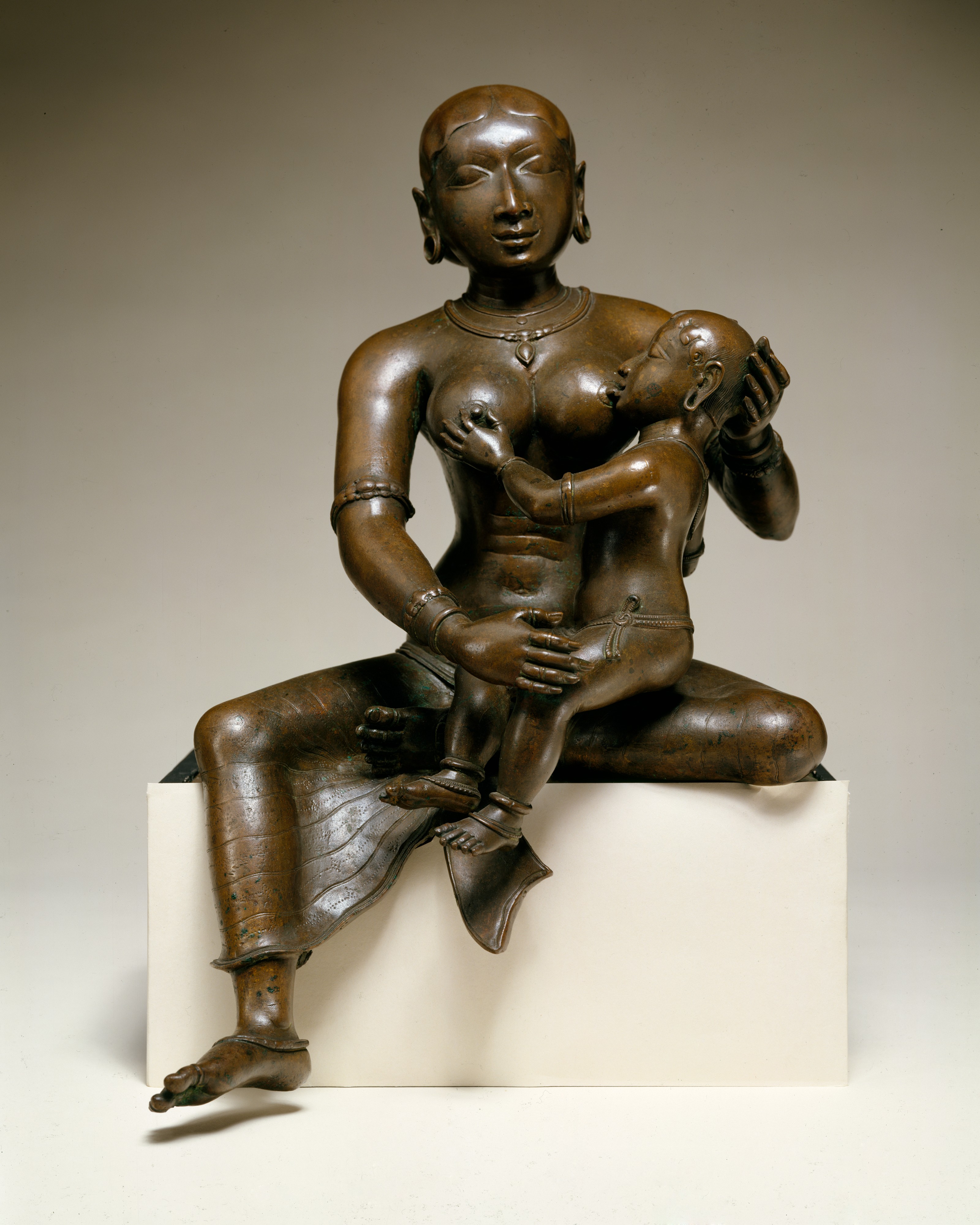
Heritage Asset Analysis: Yashoda with the Infant Krishna
Object Identification and Material Context
The subject of this analysis is a copper alloy sculpture depicting Yashoda with the Infant Krishna, originating from the Pudukkottai and Tanjavur districts of Tamil Nadu, India. This devotional bronze belongs to a distinguished sculptural tradition that flourished under the patronage of the Chola dynasty and its successor states, particularly the Pudukkottai royal court, which maintained active foundries producing votive images for temple and domestic worship. The alloy composition—typically a five-metal amalgam known as panchaloha, comprising copper, zinc, tin, silver, and gold in varying proportions—conveys both material durability and ritual sanctity. The lost-wax casting technique employed by South Indian sthapathis (craftsmen) achieved a level of anatomical precision and surface refinement that positioned these objects among the most technically accomplished metalwork traditions in world art history.
The sculpture captures a domestic moment of profound theological significance: Yashoda, the foster mother of Krishna, cradles the divine child in her arms. The composition balances maternal tenderness with the recognition of Krishna's cosmic identity—a duality that Tamil Vaishnava communities have celebrated in poetry, song, and visual art for over a millennium.
Symbolic Power and Iconographic Reading
The iconographic program of Yashoda with the Infant Krishna operates on multiple interpretive registers simultaneously. At the surface level, the image presents an intimate scene of maternal care—Yashoda's hands support the child, her gaze directed downward in an attitude of protective attention. This domestic realism served a critical devotional function: it rendered the abstract theology of divine incarnation accessible to lay worshippers through the universal language of parental love.
At a deeper level, the sculpture encodes the Vaishnava theological proposition that the supreme deity chose to experience human vulnerability. Krishna, the eighth avatar of Vishnu, is depicted here not in his cosmic form (vishvarupa) but as a dependent infant, entirely reliant on Yashoda's care. The theological tension between Krishna's omnipotence and his apparent helplessness constitutes the central devotional paradox of the Bhagavata Purana and its Tamil counterparts in the Divya Prabandham of the Alvars. The sculpture materializes this paradox, inviting the viewer to contemplate the nature of divinity that willingly submits to human tenderness.
Yashoda herself occupies a significant position in South Indian devotional hierarchies. Unlike the pan-Indian veneration of Krishna's primary consort Radha, Tamil traditions frequently elevate Yashoda as the paradigmatic devotee—one whose maternal love (vatsalya bhava) represents the most intimate form of devotional relationship. Her adornment in these bronzes typically includes elaborate jewelry: necklaces (haram), armlets (todu), waist bands (oddiyanam), and anklets, all rendered with the precision that characterizes Chola-period metalwork. The child Krishna often wears similar ornaments, signaling his royal and divine status even in infancy.
Historical Adornment and Craft Tradition
The adornment visible on such sculptures reflects the actual jewelry traditions of medieval Tamil Nadu, providing scholars with valuable evidence of historical dress and personal ornamentation. The Pudukkottai and Tanjavur districts were not only centers of bronze production but also hubs of goldsmithing and gem trade, and the sculptural representation of jewelry in these bronzes mirrors the sophisticated metalworking vocabulary of the region. Necklaces with multiple strands, ear ornaments of the makara-kundala type, and intricate hair ornaments all appear in the sculptural record, suggesting that the sthapathis worked from direct observation of contemporary adornment practices.
The casting process itself carried ritual significance. Foundry traditions in Tamil Nadu treat the creation of sacred bronzes as an act of devotion, with craftsmen observing fasting and prayer before commencing work. The resulting object was understood to contain a living presence—after consecration (prana-pratishtha), the sculpture became a vessel for divine energy, worthy of daily worship, anointing, and adornment with real textiles and jewelry. This functional dimension distinguishes the South Indian bronze from the Western conception of sculpture as autonomous aesthetic object; the Yashoda-Krishna bronze was, and in many cases remains, an active participant in devotional life.
Strategic Relevance for 2026 Luxury Positioning
For Katherine Fashion Lab, the Yashoda with the Infant Krishna bronze offers a heritage asset with substantial strategic value across multiple luxury market segments. The 2026 luxury landscape is characterized by heightened consumer demand for authenticated cultural provenance, artisanal integrity, and narratives that connect material objects to enduring human values. This sculpture performs exceptionally well against all three criteria.
First, its provenance within the Pudukkottai and Tanjavur foundry traditions provides verifiable historical depth and regional specificity—qualities increasingly valued by collectors and luxury consumers who distinguish between generic "ethnic" references and documented cultural heritage. Second, the object's material composition and casting technique embody artisanal excellence in a manner directly translatable to contemporary luxury messaging around craftsmanship, patience, and technical mastery. Third, and most significantly, the iconographic focus on maternal devotion offers a universal emotional narrative that transcends cultural boundaries while remaining rooted in a specific South Indian devotional context.
For brand strategy, this heritage asset supports several potential applications: high-jewelry collections inspired by the adornment vocabulary of Chola-period bronzes; narrative-led marketing campaigns centered on the theme of protective love and divine femininity; and cultural partnership initiatives with Indian museum institutions and craft preservation organizations. The sculpture's dual identity—as both a religious object and a masterpiece of metalwork—positions it effectively for crossover luxury positioning that honors devotional origins while engaging contemporary aesthetic and ethical sensibilities.
In an era when luxury brands increasingly compete on the authenticity and depth of their cultural narratives, the Yashoda with the Infant Krishna bronze represents not merely an historical artifact but a strategic resource: a tangible connection to a living tradition of devotion, craftsmanship, and maternal power that resonates across markets and centuries.