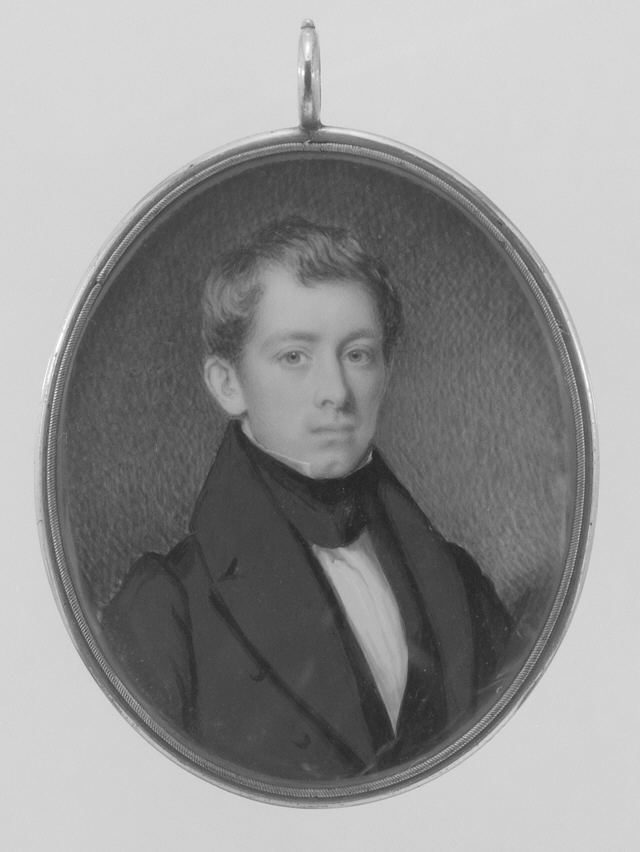
Heritage Asset Analysis: Portrait of a Gentleman (American, Watercolor on Ivory)
Introduction: A Miniature Object with Monumental Implications
Within the Katherine Fashion Lab archive, the Portrait of a Gentleman stands as a compact yet strategically significant heritage asset. Executed in watercolor on ivory, this American portrait miniature—likely dating from the late eighteenth to early nineteenth century—represents a convergence of intimate devotion, artisanal mastery, and encoded social meaning. For a luxury house preparing its 2026 positioning, this object offers far more than aesthetic charm. It provides a blueprint for translating pre-industrial symbolic systems into contemporary desirability, particularly within a market increasingly hungry for authenticity, provenance, and spiritual resonance.
This analysis examines the portrait across four strategic dimensions: its symbolic power, its role in historical adornment, its spiritual and memorial function, and its application to 2026 high-end luxury strategy. The objective is not antiquarian nostalgia but actionable insight for product development, narrative marketing, and brand equity.
The Symbolic Power of the Miniature Portrait
The portrait miniature was never merely a picture. In the American context—spanning the Federal period through the antebellum era—these objects functioned as portable proxies for presence. A gentleman’s likeness, painted with a single-hair brush onto a thin slice of ivory, compressed identity into an object small enough to be worn against the skin. That physical intimacy was the point.
Symbolically, the portrait operated on three levels. First, it signaled literacy in refinement: the sitter possessed the resources and social access to commission a trained miniaturist, often trained in the European tradition but adapted to American republican simplicity. Second, it encoded virtue and character. Unlike the grand oil portrait’s display of wealth, the miniature emphasized interior qualities—steadfastness, sensibility, moral seriousness—values central to the young republic’s self-image. Third, it served as a token of relational obligation. A gentleman’s portrait given to a spouse, betrothed, or political ally created a bond of memory and loyalty that no letter could replicate.
For Katherine Fashion Lab, the lesson is direct: symbolic power in luxury does not require scale. It requires compression, tactility, and encoded meaning. The most valuable objects are those that can be held, worn, and deciphered over time.
Historical Adornment: Ivory, Watercolor, and the Body’s Edge
The medium itself is a statement of adornment logic. Ivory—whether elephant, walrus, or later vegetable—was prized for its smooth, luminous surface and its ability to hold delicate pigment without absorption. Watercolor on ivory required a technique of stippling and hatching that rewarded patience over speed. The resulting image possessed a soft, breathing quality, as if the sitter’s skin were continuous with the material’s warmth.
These portraits were set into gold or gilt-metal frames, often with a glazed reverse containing woven hair, a name, or a date. They were worn as brooches, pendants, bracelets, or kept in fitted cases. The adornment was never ostentatious in the manner of later Victorian mourning jewelry. Instead, it was quietly declarative: I carry this person with me. I am bound by affection and duty.
This historical adornment model challenges contemporary luxury’s obsession with visibility. The miniature’s power lay in its semi-private display—seen only by those permitted close enough to look. In 2026, as high-end consumers increasingly reject performative logos in favor of coded, intimate luxury, the miniature offers a proven template: small-scale, material-rich, and meaningful only to the initiated.
Spiritual Meaning and the Memorial Function
Beyond romance and politics, the American portrait miniature carried a spiritual charge. In a Protestant culture wary of idolatry, the miniature walked a fine line. It was not an icon to be worshipped but a memento—a reminder of mortality, love, and moral continuity. Many were painted posthumously, using earlier likenesses or deathbed descriptions. The ivory itself, organic and once living, reinforced the connection between image and soul.
This spiritual dimension is critical for 2026 luxury strategy. The coming decade’s affluent consumer—particularly in the American and Asian markets—is increasingly interested in objects that hold meaning across time. They seek talismanic value: pieces that can be inherited, that carry narrative weight, that function as secular relics. The portrait miniature is the ancestor of the modern heirloom, and its spiritual grammar—memory, devotion, continuity—remains legible and potent.
Strategic Application for 2026 High-End Luxury
Katherine Fashion Lab can translate this heritage asset into three strategic pillars for 2026:
1. The Intimate Portrait Collection. Develop a line of micro-portrait jewelry using hand-painted enamel or watercolor on ethically sourced alternative ivory (e.g., tagua nut, pre-ban antique stock). Each piece commissions a contemporary miniaturist to render a loved one, a pet, or a personal symbol. The value proposition is not customization alone but the revival of a lost discipline—single-hair brushwork, stippled shading, and archival framing.
2. The Memory Vessel Narrative. Position these objects as memory vessels, drawing on the miniature’s historical role in mourning and devotion. Marketing should emphasize ritual: the moment of commissioning, the wearing against the skin, the passing to the next generation. This aligns with the quiet luxury and emotional durability trends forecast for 2026.
3. The American Heritage Provenance. Anchor the collection in American craft history, specifically the Federal and antebellum periods. Collaborate with museum conservation departments to authenticate techniques and materials. This provenance strategy differentiates Katherine Fashion Lab from European houses that dominate the miniature narrative (e.g., Hilliard, Cosway) and claims a distinct republican simplicity as brand DNA.
Conclusion: From Ivory to Legacy
The Portrait of a Gentleman is not a relic to be admired behind glass. It is a strategic asset that teaches compression, intimacy, and spiritual durability. For Katherine Fashion Lab, the path to 2026 luxury leadership runs through the rehabilitation of small, slow, meaningful adornment. The gentleman in watercolor on ivory reminds us that the most powerful symbols are those worn closest to the heart—and that heritage, properly curated, is not the past but the future in disguise.