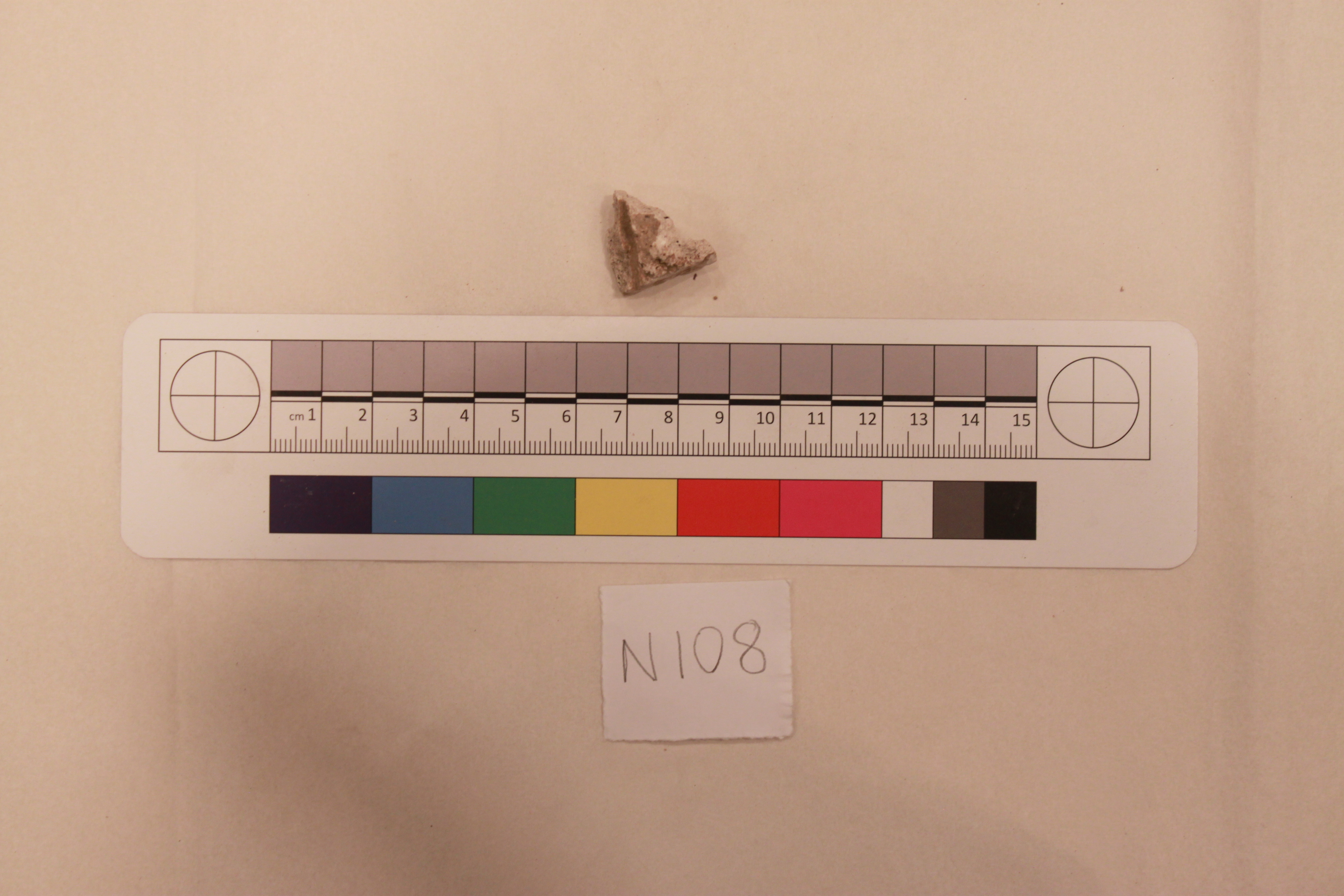
Heritage Asset Analysis: Carved Stucco Fragment from an Ancient Civilization
Executive Summary
This paper examines a carved stucco fragment originating from an ancient civilization, held within the Katherine Fashion Lab research archive as a standalone heritage asset. The fragment—executed in stucco with evidence of carving and probable polychrome finishing—represents a critical case study in how ornamental surfaces functioned as instruments of symbolic power, spiritual mediation, and elite identity formation. For Katherine Fashion Lab, the analytical objective is not antiquarian documentation alone, but the extraction of transferable design intelligence. The fragment's material logic, iconographic grammar, and ritual context offer a defensible foundation for a 2026 luxury strategy grounded in authenticity, provenance storytelling, and tactile craftsmanship.
Materiality and the Authority of Stucco
Stucco—typically formulated from lime, gypsum, sand, and organic binders—occupied a distinctive position within ancient decorative economies. Unlike gold, lapis, or cedar, stucco was not a rare material. Its value derived from transformation: raw paste converted through skilled handwork into architectural ornament of extraordinary refinement. This distinction matters commercially. Luxury consumers in 2026 increasingly privilege demonstrated human skill over intrinsic material scarcity. The stucco fragment therefore encodes a proposition aligned with contemporary premium positioning: value created through labor, knowledge, and surface mastery rather than raw commodity cost.
Carving in stucco demands speed and precision. The medium sets; the artisan's window for intervention is finite. This technical constraint produced a distinctive aesthetic—confident incision, layered relief, and deliberate modulation of depth to manipulate light. Painted finishing, where present, added chromatic hierarchy: ochre, cinnabar, malachite, and Egyptian blue were applied not decoratively but semantically. Color indicated rank, divinity, or cosmological order. The fragment thus operates simultaneously as object, image, and information system.
Symbolic Power and Historical Adornment
In ancient civilizations—Mesopotamian, Persian, Greco-Roman, and Mesoamerican contexts all provide comparanda—carved stucco served as the skin of power. Palatial reliefs, temple friezes, and elite funerary surfaces communicated legitimacy through repetition and canonical form. Motifs were rarely arbitrary. Regal processions, winged guardians, vegetal scrolls, and geometric interlace each carried codified meaning legible to initiated audiences. Adornment, in this framework, was governance: the visual enforcement of hierarchy.
For Katherine Fashion Lab, the strategic implication is that ornamentation should never be treated as surface decoration alone. The fragment demonstrates that pattern is argument. A motif repeated across a garment, accessory, or architectural retail environment can function as a proprietary signature—recognizable, defensible, and narratively loaded. The 2026 luxury market rewards such semiotic density, particularly among consumers who read product as cultural literacy rather than mere status display.
Spiritual Meaning and the Ritual Surface
Beyond political messaging, stucco ornament frequently mediated the sacred. Reliefs framing doorways, altars, and niches established thresholds between profane and divine space. Pigment application could be ritualized; surfaces were sometimes renewed, repainted, or re-carved to reset spiritual efficacy. This practice of periodic renewal offers a compelling conceptual model for luxury lifecycle strategy. Rather than treating products as static or disposable, a heritage-informed house can design for restoration, patina, and ceremonial re-engagement—extending value across generations and reinforcing sustainability credentials without compromising exclusivity.
The fragment's tactile quality also carries spiritual resonance. Carved stucco invites touch; its relief catches fingertip and raking light. In an era of digital saturation, tactile ritual is a luxury differentiator. Katherine Fashion Lab can translate this into material strategy: dimensional embroidery, sculpted leather, molded hardware, and hand-finished surfaces that reward physical encounter.
Strategic Application: 2026 Luxury Positioning
Three strategic pathways emerge from this heritage asset.
First, provenance-led narrative. The fragment anchors a story of origin, craft lineage, and archaeological resonance. In 2026, luxury consumers demand verifiable cultural depth; vague "artisanal" claims no longer suffice. A documented ancient referent provides intellectual authority and media traction.
Second, iconographic licensing of form. Specific motifs—guardian figures, interlace borders, threshold geometries—can be abstracted into proprietary patterns for ready-to-wear, leather goods, and jewelry. Each motif should be traceable to the source fragment, creating a coherent visual system rather than eclectic pastiche.
Third, chromatic reconstruction. Evidence of original polychromy allows a signature palette derived from mineral pigments: oxidized red, malachite green, bone white, and deep blue. This palette differentiates the house from the monochrome minimalism that has dominated luxury for a decade, signaling a shift toward warm, storied, materially rich aesthetics.
Risk and Governance Considerations
Heritage-driven strategy requires ethical discipline. The fragment must be contextualized without exoticizing its originating culture. Attribution should be transparent; uncertainty regarding date, site, or function must be acknowledged rather than concealed. Katherine Fashion Lab should pair design activation with scholarly consultation and, where appropriate, cultural heritage partnerships. This mitigates reputational risk and strengthens the authenticity claim that underpins premium pricing.
Conclusion
The carved stucco fragment is not a curiosity. It is a strategic asset encoding ancient technologies of power, adornment, and belief. Its material logic—transformation through skill—and its symbolic logic—ornament as authority—map directly onto the priorities of the 2026 luxury consumer: provenance, tactility, meaning, and endurance. For Katherine Fashion Lab, the fragment offers a defensible creative foundation and a narrative architecture capable of sustaining a differentiated, high-margin position in an increasingly competitive global market.