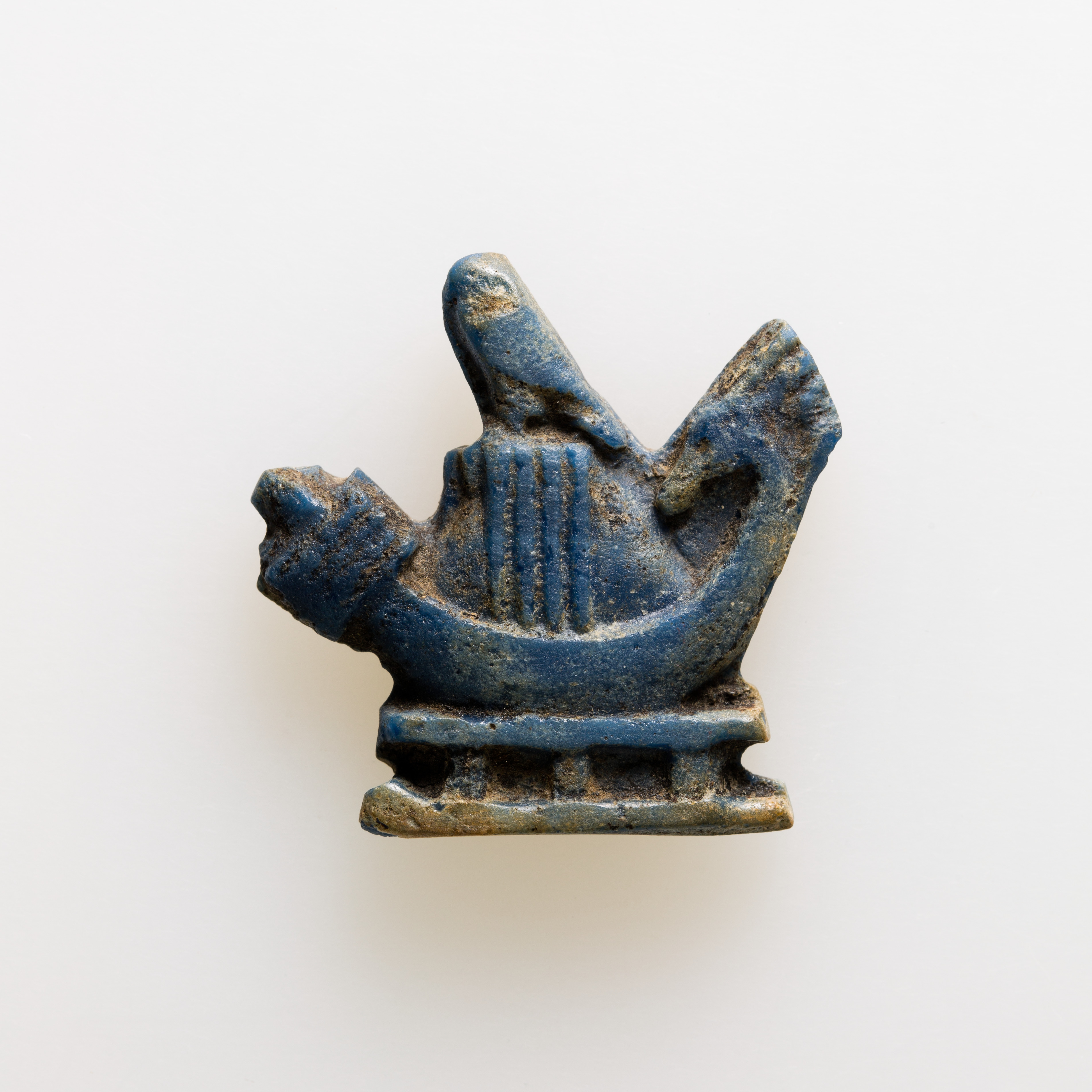
Henu Barque Amulet: Symbolic Power and Luxury Strategy for 2026
Introduction: A Vessel of Light in Glass
The Henu barque amulet, rendered in glass, represents one of the most potent convergence points between ancient Egyptian funerary symbolism and contemporary luxury semiotics. As Katherine Fashion Lab evaluates its 2026 strategic positioning, this artifact offers a compelling case study in how a small, portable object can encode sovereignty, rebirth, and cosmic navigation. The Henu barque—a stylized boat associated with the rising and setting sun—was not merely a decorative motif. It was a ritual technology: a vehicle for the soul's journey through the Duat (underworld) and a declaration of the deceased's alignment with Osiris and Re. When executed in glass, the amulet gains a paradoxical materiality—fragile yet luminous, transparent yet protective—making it an ideal anchor for a luxury narrative that prizes both vulnerability and inviolable power.
Symbolic Power: The Barque as Sovereign Vehicle
In ancient Egyptian cosmology, the Henu barque was the vessel of processional regeneration. Unlike the solar barques of Re, which traversed the sky, the Henu barque was often depicted with a falcon-headed or ram-headed prow, signaling divine authority. As an amulet, it was placed on the throat or chest of the mummified body, frequently alongside scarabs and djed pillars. The symbolic power operated on three levels. First, it asserted the wearer's identity as a justified spirit—one who had passed judgment and could now sail with the gods. Second, it invoked the power of controlled movement: the barque does not drift; it is steered. Third, the glass medium amplified this power through translucency. In Egyptian faience and glass, the blue-green spectrum mimicked the Nile's life-giving waters and the turquoise of the sky. A glass Henu barque, therefore, was a miniature cosmos—a portable promise that the soul would not be lost in the dark.
Historical Adornment: From Tomb to Body to Market
Glass amulets of the Henu barque appear primarily in Late Period and Ptolemaic contexts (c. 664–30 BCE), a time when Egyptian glassworking reached technical mastery. These were not mass-produced trinkets. They were commissioned by elites who understood that adornment was a form of theological insurance. The amulet was often perforated for stringing, allowing it to be worn in life as a protective pendant and in death as a permanent fixture on the mummy's wrappings. The historical adornment logic is critical for Katherine Fashion Lab: the Henu barque was simultaneously jewelry and scripture. It occupied the liminal space between ornament and oath. In modern luxury terms, this prefigures the "quiet amulet" trend—objects that carry meaning without shouting, designed for the wearer's private knowledge rather than public spectacle.
Spiritual Meaning: Navigation, Rebirth, and the Glass Threshold
The spiritual meaning of the Henu barque amulet is layered. The barque itself is a threshold symbol: it moves between water and sky, life and afterlife, chaos and order. The glass medium adds a further dimension. In Egyptian thought, glass (like obsidian and rock crystal) was associated with the sedjem—a concept of hearing and obeying divine commands. A glass amulet was believed to sharpen the soul's receptivity to cosmic instruction. For the 2026 luxury consumer, this translates into a powerful emotional proposition: wearable discernment. In an era of information overload and spiritual seeking, a Henu barque-inspired piece offers not just beauty but a ritual of orientation. It says: you are not adrift; you are captained. The glass transparency also mirrors contemporary values of authenticity—nothing is hidden, yet the object remains profoundly mysterious.
2026 High-End Luxury Strategy: From Artifact to Atelier
Katherine Fashion Lab's strategic standalone research on the Henu barque amulet should inform three 2026 luxury initiatives. First, material innovation. Commission glass ateliers to recreate the amulet in lead-free crystal with internal gold leaf inclusions, mimicking the ancient technique of gold-in-glass. This creates a signature "luminous core" that differentiates the piece from flat enamel or stone. Second, narrative retail. Position the amulet as a "passport object"—a limited-edition pendant sold with a hand-bound booklet explaining its funerary and solar symbolism. The booklet becomes a collectible, reinforcing the brand's role as cultural custodian. Third, tiered exclusivity. Offer three versions: a small glass amulet for entry-level luxury (€1,200–€1,800), a larger barque with 18k gold prow for mid-tier (€4,500–€6,000), and a one-of-one commission with ancient-glass fragments for ultra-high-net-worth clients (€25,000+). Each tier corresponds to a different level of spiritual "navigation"—from personal protection to dynastic legacy.
Competitive Positioning and Risk Mitigation
Competitors in the heritage-luxury space often default to scarabs, ankhs, and eye of Horus motifs—symbols that have become visually exhausted. The Henu barque amulet remains under-leveraged. Katherine Fashion Lab can claim first-mover advantage by treating the barque as a movement symbol rather than a static icon. Risk exists: the amulet's funerary associations may alienate consumers seeking only positive symbolism. Mitigate this by emphasizing the barque's solar aspect—the dawn barque, not the night barque. Marketing copy should stress "voyage" and "return" rather than "death" and "tomb." Additionally, collaborate with Egyptology departments for authentication and co-branded lectures, converting academic credibility into commercial trust.
Conclusion: The Glass Barque as Brand Compass
The Henu barque amulet in glass is not a relic to be admired from behind museum glass. It is a strategic asset. Its symbolic power—sovereignty, navigation, rebirth—maps directly onto the 2026 luxury consumer's desire for meaning, protection, and personal mythology. Its historical adornment logic bridges jewelry and ritual, while its spiritual meaning offers a counter-narrative to disposable fashion. For Katherine Fashion Lab, the path forward is clear: reanimate the barque as a wearable vessel. In doing so, the brand does not merely sell an amulet. It sells a compass for the modern soul—one that, like its ancient counterpart, promises safe passage through uncertain waters.