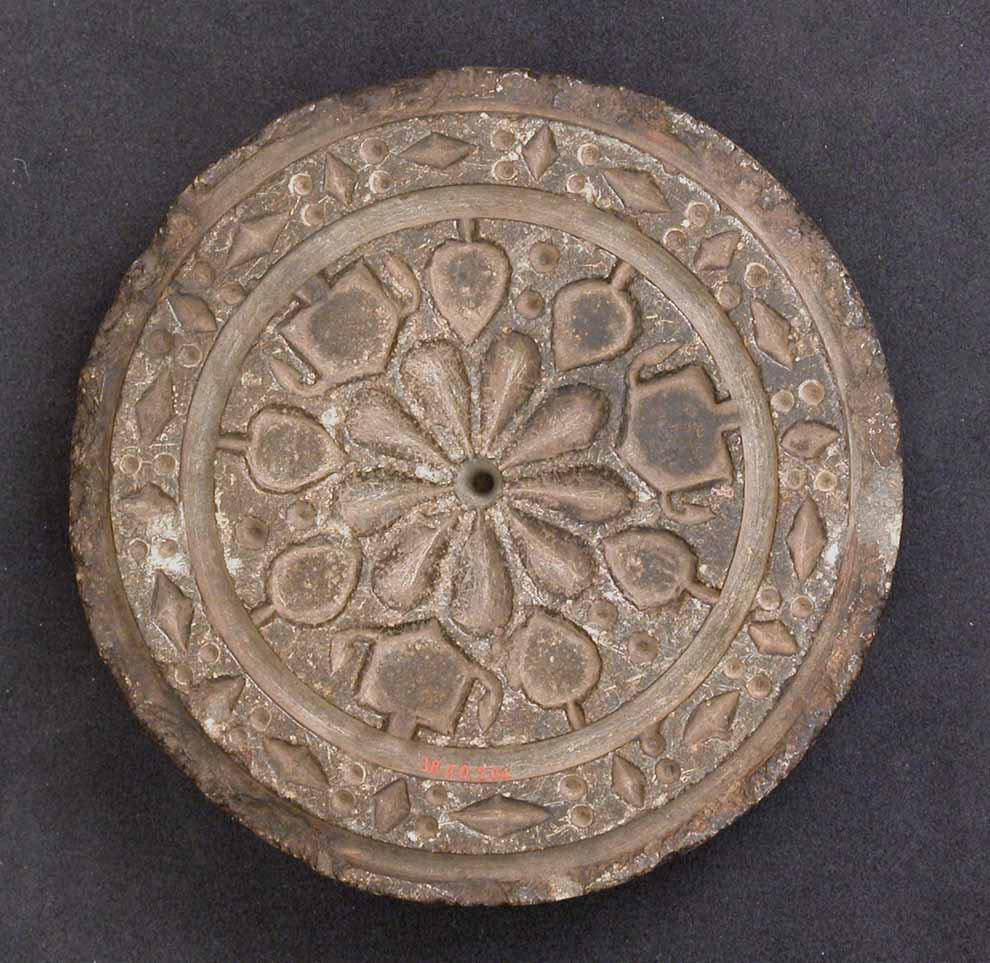
Heritage Analysis: The Carved Stone Die of Ancient Civilization
Introduction: An Object of Chance, A Vessel of Fate
Within the material record of ancient civilizations, few objects appear as deceptively simple as the carved stone die. Typically cubical, incised with pips or symbolic marks, and small enough to rest in the palm, the die occupies a liminal position between plaything and ritual instrument. Yet its strategic value for Katherine Fashion Lab lies precisely in this ambiguity. The die is not merely a gaming artifact; it is a compressed cosmology—a stone that materializes the ancient conviction that human destiny is governed by forces beyond human control. This analysis examines the die's symbolic power, its role in historical adornment, its spiritual meaning across early civilizations, and its strategic translation into a 2026 high-end luxury narrative.
Symbolic Power: The Materialization of Chance and Order
The carved die encodes a fundamental tension between randomness and structure. Its geometry is rigid: six faces, opposing sums, equal probability. Its function is volatile: the outcome of a throw is unknowable. In this duality, ancient cultures recognized a profound truth—order and chaos are co-dependent. The die became a portable emblem of fate, a tool through which mortals could petition the divine for guidance or adjudication.
In Mesopotamia, dice-like implements made from bone, ivory, and stone appear in burial contexts and temple deposits as early as the third millennium BCE. Their carved faces often bore not numerals but astrological or animal symbols, suggesting that each throw invoked a specific deity or cosmic force. The die was therefore not a neutral randomizer; it was a communicative device, a stone oracle. For luxury strategy, this symbolic density is invaluable. A die motif signals that a brand understands risk, fortune, and the courage to submit to uncertainty—qualities that resonate with the modern collector who purchases not merely an object but a philosophy of living.
Historical Adornment: From Gaming Piece to Personal Talisman
The die's journey from gaming piece to adornment is well documented in the archaeological record. In ancient Egypt, small carved dice were occasionally perforated and strung as amulets, worn at the wrist or neck. The transition from tabletop to body is significant: it marks the die's elevation from a shared social instrument to a private talisman. The wearer did not merely play with fate; they carried it.
Roman soldiers, famously fond of gambling, carved dice from stone, glass, and bone, often wearing them as pendants before battle. The die became a soldier's charm—a compact prayer for luck, survival, and victory. In the Indus Valley and later in early Chinese contexts, carved cubes with symbolic markings served both divinatory and ornamental functions, their surfaces polished to a tactile smoothness that invited constant handling.
This history of adornment provides Katherine Fashion Lab with a legitimate heritage claim: the die is not a novelty motif but a historically validated amulet. Its carved stone medium—durable, weighty, cool to the touch—reinforces permanence. In a luxury market saturated with ephemeral digital imagery, a carved stone die pendant or cufflink offers material authenticity and ancestral gravity.
Spiritual Meaning: The Die as Divine Arbiter
The spiritual dimension of the die is perhaps its most potent heritage asset. In numerous ancient traditions, casting lots was a sacred act. The Hebrew Bible describes the Urim and Thummim, divinatory objects used by priests to discern God's will. Greek and Roman religion incorporated sortition into temple rituals, believing that the gods directed the fall of the dice. In Norse mythology, the gods themselves played dice, and the outcome of Ragnarök was foreshadowed in their games.
This spiritual framing transforms the die from a symbol of gambling into a symbol of surrender—the recognition that some outcomes are not ours to control. For a luxury brand in 2026, this narrative offers a counterpoint to the prevailing ethos of self-optimization and hyper-agency. The die says: you have prepared, you have carved your intentions into stone, and now you must release the outcome. It is a message of mature confidence, not passivity.
Moreover, the act of carving is itself spiritually charged. To incise pips into stone is to impose human meaning on raw material—a microcosm of civilization's broader project. Each carved face is a prayer made permanent, a contract with fate signed in mineral.
2026 Luxury Strategy: The Die as Standalone Icon
As Katherine Fashion Lab develops its 2026 strategy, the carved stone die should be positioned as a standalone icon—not a seasonal motif but a recurring signature. The strategic logic rests on four pillars:
1. Material Integrity. Stone carving aligns with the luxury consumer's growing preference for traceable, tactile, and enduring materials. A die carved from marble, jade, or obsidian carries geological time in its very substance.
2. Narrative Depth. The die's history spans Mesopotamia, Egypt, Rome, and the Indus Valley, offering a global heritage that avoids narrow cultural appropriation. It belongs to no single civilization; it belongs to the human attempt to negotiate with fate.
3. Wearable Philosophy. As a pendant, ring, or cufflink, the die becomes a private talisman for the modern decision-maker. It is a conversation piece that signals literacy in both history and risk.
4. Limited Edition Mechanics. The die's numerical nature lends itself to numbered editions. A collection of six designs, each corresponding to a face, creates built-in scarcity and collectibility. The customer who owns all six possesses a complete cosmology.
Conclusion: Carving a Place in the Luxury Canon
The carved stone die is more than an ancient curiosity. It is a compact archive of human anxiety and aspiration—a stone that has been thrown in temples, worn into battle, and consulted at the thresholds of uncertainty. For Katherine Fashion Lab, it offers a rare opportunity to bridge archaeological authenticity with contemporary desire. In a 2026 luxury landscape defined by meaning, materiality, and myth, the die is not a gamble. It is a strategy.