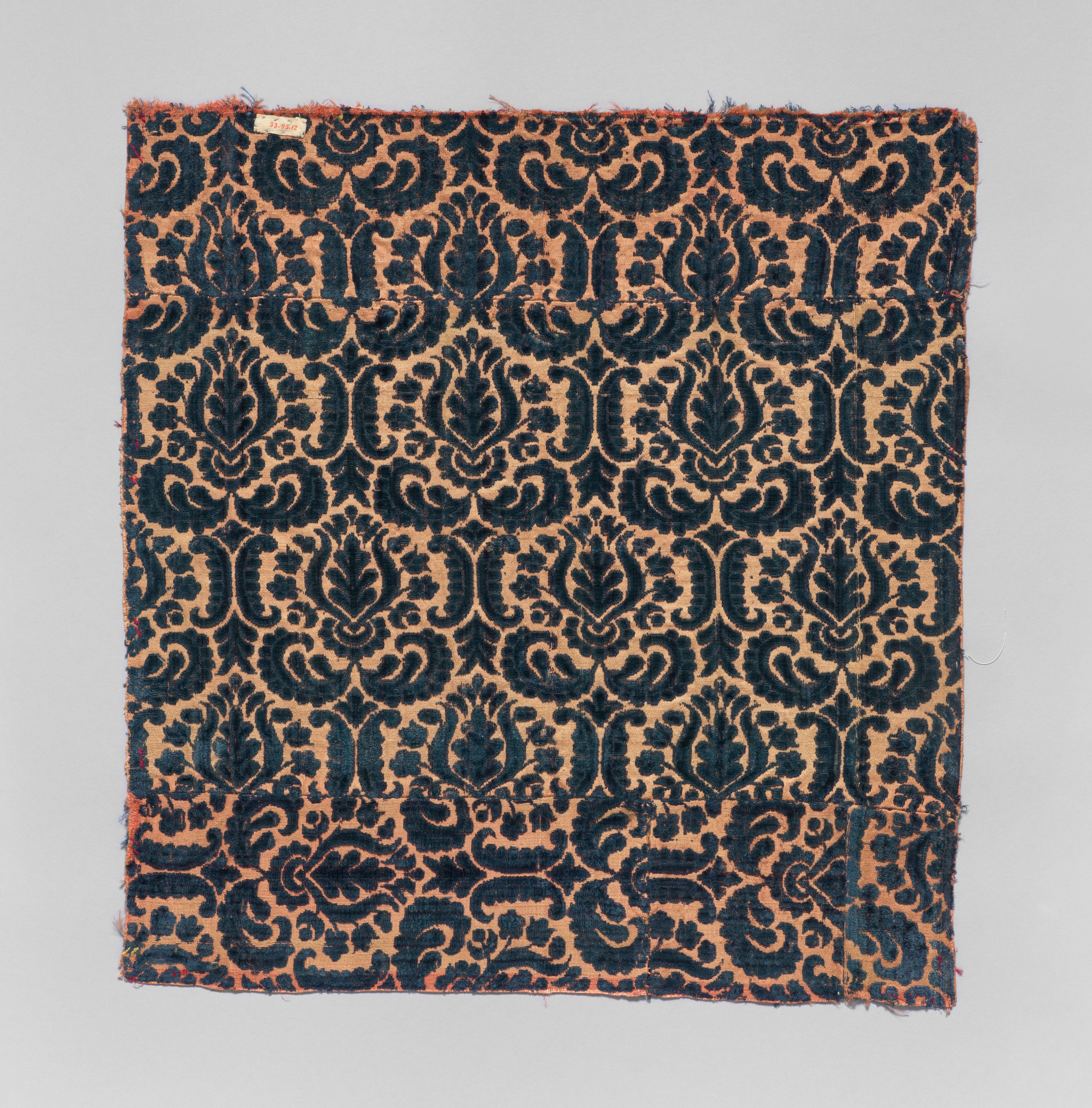
Piece as Protagonist: A Standalone Study in Silk and Global Heritage
In the lexicon of contemporary couture, the word piece carries a weight that transcends mere garmentry. It denotes singularity, intention, and the quiet authority of an object conceived not for the wardrobe but for the archive. At Katherine Fashion Lab, our inquiry into the piece begins with a deliberate narrowing of scope: a single silk creation, examined in isolation, drawn from the deep well of global heritage. This is not a study of a collection, nor of a season, but of one object whose material and lineage demand sustained attention. The standalone study is, by design, an act of intellectual discipline—stripping away the distractions of trend and market to confront the piece on its own terms.
The Ontology of the Piece
What distinguishes a piece from a product? The distinction is philosophical before it is commercial. A product answers a question posed by the market; a piece poses a question of its own. In couture, the piece functions as a self-contained argument—about technique, about material, about the cultural memory embedded in its making. When we isolate a single silk garment for analysis, we are not diminishing its context but intensifying our perception of it. The piece becomes a lens through which the broader currents of global heritage may be read.
Silk is uniquely suited to this mode of inquiry. As a fiber, it possesses what material scientists call high tensile integrity coupled with low structural memory—it holds its shape while yielding to the hand that shapes it. This duality mirrors the piece itself: a form that is at once fixed and responsive, finished yet perpetually open to reinterpretation. A silk piece from a heritage tradition is never merely cloth; it is a record of agriculture, trade, ritual, and skill transmitted across generations.
Global Heritage as Material Archive
The phrase global heritage risks abstraction, so let us anchor it. Silk’s journey begins in the Neolithic valleys of the Yellow River and travels, over millennia, along the corridors of Central Asia, into the courts of Persia, the workshops of Byzantium, the ateliers of Lyon, and the weaving villages of Varanasi and Kanchipuram. Each stop in that journey deposited a layer of meaning onto the fiber. A piece of silk today is therefore a palimpsest: Chinese sericulture, Indian dye chemistry, Persian pattern logic, European loom engineering—all legible in a single square meter of cloth.
To study a silk piece as global heritage is to acknowledge that no single culture owns it. The standalone study resists the temptation to assign the piece to one tradition. Instead, it reads the object as a node in a network—a point where multiple histories converge and become materially present. This is the curatorial ethic Katherine Fashion Lab applies to every piece we examine: heritage is not a claim of origin but a condition of interdependence.
Material Behavior and Couture Decision
Silk’s technical profile dictates couture outcomes. Its low density and high lustre allow for drape that appears weightless while retaining structural memory. Its protein-based composition accepts dye with a depth synthetic fibers cannot replicate, which is why heritage silk pieces often display chromatic saturation that reads as pigment rather than surface. Its thermoregulatory properties make it viable across climates—a fact that historically enabled silk to travel as both luxury and utility.
For the couturier, these properties are not constraints but vocabularies. A single piece may exploit silk’s bias behavior to create fluid movement, or its warp integrity to hold architectural volume. The standalone study allows us to observe these decisions without the noise of styling or merchandising. We see the cut, the seam, the finish—and we see the maker’s negotiation with the fiber’s will.
Reading the Piece in Isolation
Isolation is not removal from context; it is concentration upon it. When a silk piece is studied alone, three registers become audible:
First, the technical register. How was the silk reeled, thrown, dyed, and woven? What does the hand of the cloth reveal about the loom and the climate of its making?
Second, the cultural register. What motifs, proportions, or construction methods carry inherited meaning? A hemline may encode modesty norms; a motif may invoke cosmology; a seam may preserve a trade route’s technique.
Third, the temporal register. A piece exists in time. It ages, patinates, and acquires biography. The standalone study treats this aging not as decay but as authorship—the piece co-writes itself through wear and survival.
Toward a Curatorial Method
Katherine Fashion Lab proposes the standalone piece study as a repeatable curatorial method. The protocol is simple: select one piece, identify its material lineage, map its heritage vectors, and analyze its couture decisions without reference to trend cycles. The output is not a review but a material biography. For silk pieces, this method consistently reveals that the object exceeds its category. It is simultaneously textile, document, and argument.
The piece, in this reading, is never finished. It remains an open proposition—an invitation to future makers and scholars to continue the conversation that its fibers began. Global heritage is not a static inheritance but a living negotiation, and silk is among its most eloquent mediums. To study one piece is to study the whole, provided one has the patience to look closely enough. At Katherine Fashion Lab, that patience is the method.