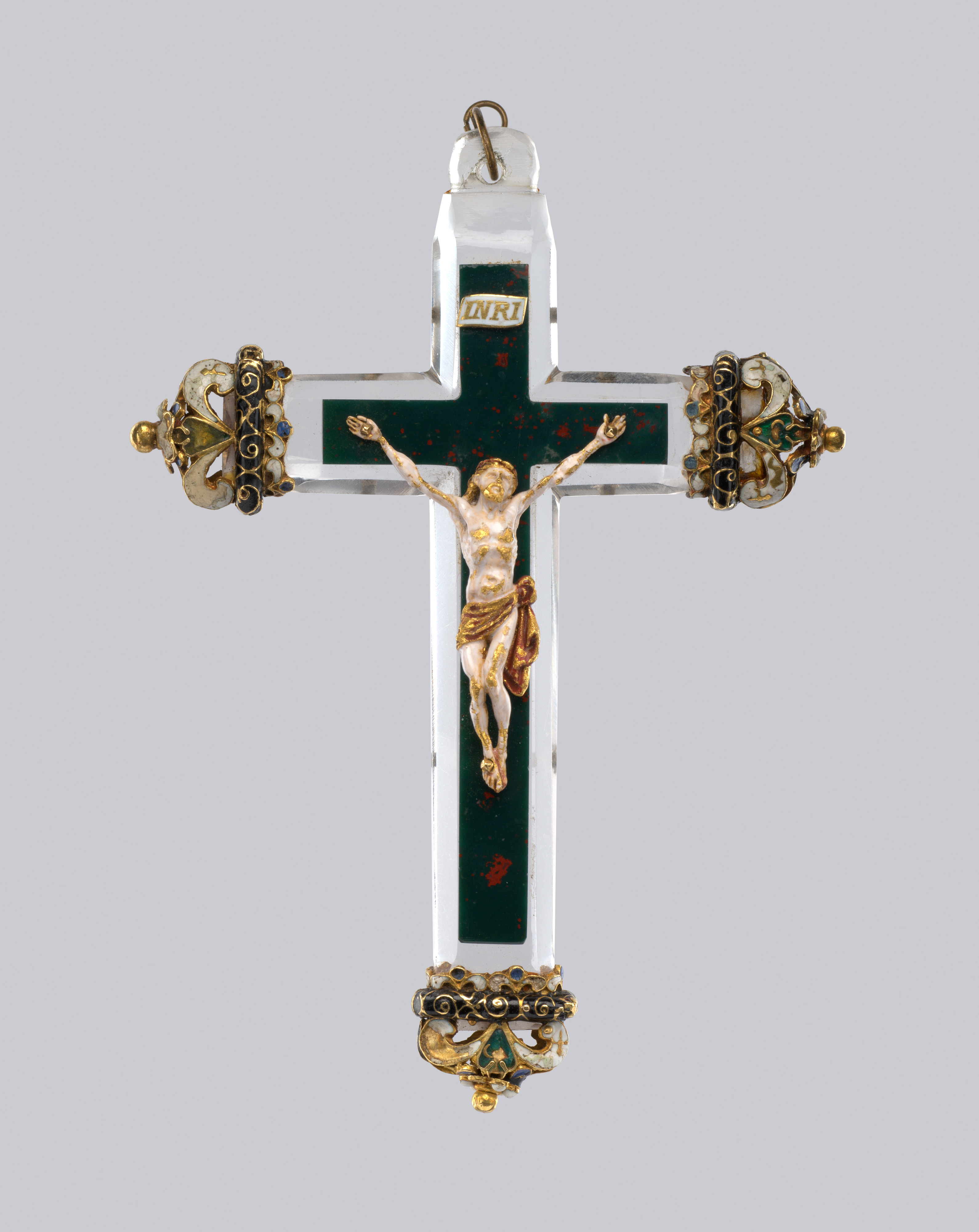
Heritage Asset Analysis: The Pendant Crucifix in Ancient Civilizational Context
Executive Summary
This standalone research paper examines the pendant crucifix as a heritage asset within Katherine Fashion Lab's strategic portfolio, tracing its material and symbolic lineage to Ancient Civilization. The artifact under analysis—executed in gold, crystal, heliotrope, and enamel—represents a convergence of metallurgical mastery, gemological symbolism, and devotional function. For 2026 high-end luxury strategy, this object offers a rare opportunity to bridge archaeological authenticity with contemporary desire, positioning the crucifix not merely as religious insignia but as a multivalent talisman of protection, status, and metaphysical authority.
Historical Adornment: Materiality as Social Language
In Ancient Civilization, pendant crucifixes were not mass-produced devotional items but bespoke commissions reserved for elite patrons, clergy, and imperial households. The medium itself constituted a statement of rank. Gold, sourced through long-distance trade routes, signified incorruptibility and divine light; its malleability allowed artisans to execute filigree and repoussé techniques that transformed the cross into a wearable reliquary. Crystal—likely rock crystal or early glass—was prized for its transparency, interpreted as purity of spirit and the capacity to channel light without distortion. Heliotrope, or bloodstone, carried distinct significance: its green matrix flecked with red iron oxide was read as the blood of Christ, making the stone itself a narrative device. Enamel, applied through cloisonné or champlevé methods, introduced color as theological coding—deep blues for heaven, reds for martyrdom, whites for resurrection.
The pendant form implies intimacy. Unlike processional crosses, a pendant crucifix rested against the sternum, close to the heart. This placement was deliberate: the object functioned as a portable altar, allowing the wearer to maintain spiritual discipline amid travel, warfare, or diplomatic mission. In burial contexts, such pendants have been recovered from the chest cavities of high-status individuals, confirming their role as personal eschatological insurance—an adornment that accompanied the soul into the afterlife.
Symbolic Power: From Instrument of Execution to Emblem of Triumph
The crucifix's symbolic power derives from its paradoxical nature. The cross was an instrument of Roman execution—a symbol of shame and subjugation—yet early Christian theology inverted it into a sign of victory over death. In Ancient Civilization, this inversion was not instantaneous but evolved through centuries of iconographic negotiation. Pendant crucifixes from the period often feature gemstone inlays at the five wounds, transforming the body of Christ into a jewelled body. This material theology asserted that suffering itself could be adorned, that pain could be rendered precious.
For Katherine Fashion Lab, this symbolic density is a strategic asset. The pendant crucifix operates on three simultaneous registers: apotropaic (warding off evil), soteriological (promising salvation), and sociological (signalling membership in a spiritual elite). Unlike a plain cross, the crucifix includes the corpus—the body—which anchors abstraction in flesh. This corporeal specificity generates emotional resonance that abstract geometry cannot. In luxury terms, the crucifix is a narrative object: it tells a story of sacrifice, redemption, and cosmic order every time it is worn.
Spiritual Meaning: The Heliotrope and the Crystal as Metaphysical Instruments
The inclusion of heliotrope and crystal elevates the pendant from ornament to instrument. Heliotrope, whose name derives from the Greek helios (sun) and trepein (to turn), was believed to turn the sun's rays red—a phenomenon linked to the eclipse at the Crucifixion. Wearing heliotrope was thus an act of temporal participation: the wearer carried the moment of darkness and blood against their skin. Crystal, by contrast, represented eternal clarity. In medieval lapidaries, crystal was associated with the Virgin's purity and the transparency of divine judgment. Together, heliotrope and crystal created a dialectic between suffering and purity, blood and light.
Enamel served as the binding agent, both literally and symbolically. Its fusion to gold required repeated firing, a process of controlled destruction and reconstitution that mirrored the Resurrection narrative. A pendant crucifix in this medium was therefore not a static object but a frozen ritual—a compression of liturgical time into wearable form. For contemporary luxury consumers, this depth of meaning offers an antidote to the surface-level branding that dominates the market.
2026 High-End Luxury Strategy: Heritage as Differentiation
As Katherine Fashion Lab positions itself for 2026, the pendant crucifix should be treated as a strategic heritage capsule rather than a seasonal SKU. Three imperatives emerge:
1. Material Authenticity with Ethical Provenance. The 2026 luxury consumer demands traceability. Gold must be Fairmined or recycled; heliotrope and crystal must be documented as conflict-free. Enamel should be executed by master artisans using historical techniques—cloisonné or champlevé—to differentiate from industrial enamel. The narrative of Ancient Civilization sourcing becomes a provenance premium.
2. Symbolic Layering for Secular and Sacred Markets. The crucifix must be marketed without alienating non-Christian buyers. Positioning it as a talisman of protection and resilience allows entry into fashion, wellness, and self-care categories. The heliotrope's bloodstone properties—courage, grounding, vitality—can be foregrounded in copywriting, while the crucifix form remains a sign of universal sacrifice and renewal.
3. Limited Edition, Archival Permanence. A pendant crucifix in gold, crystal, heliotrope, and enamel should be produced in editions of no more than fifty. Each piece should include a certificate of heritage detailing the historical references, the lapidary symbolism, and the artisan's mark. Packaging should evoke a reliquary—velvet-lined, with a small text on the object's spiritual lineage. Price point should reflect collectible art, not accessible luxury.
Conclusion
The pendant crucifix from Ancient Civilization is not a relic to be admired behind glass. It is a living strategic asset—a fusion of gold's permanence, crystal's clarity, heliotrope's sacrificial red, and enamel's fired resilience. For Katherine Fashion Lab, the 2026 opportunity lies in translating this archaeological density into contemporary desire: an object that is at once adornment, amulet, and archive. In a luxury landscape saturated with irony and disposability, the pendant crucifix offers something radical—conviction, made wearable.