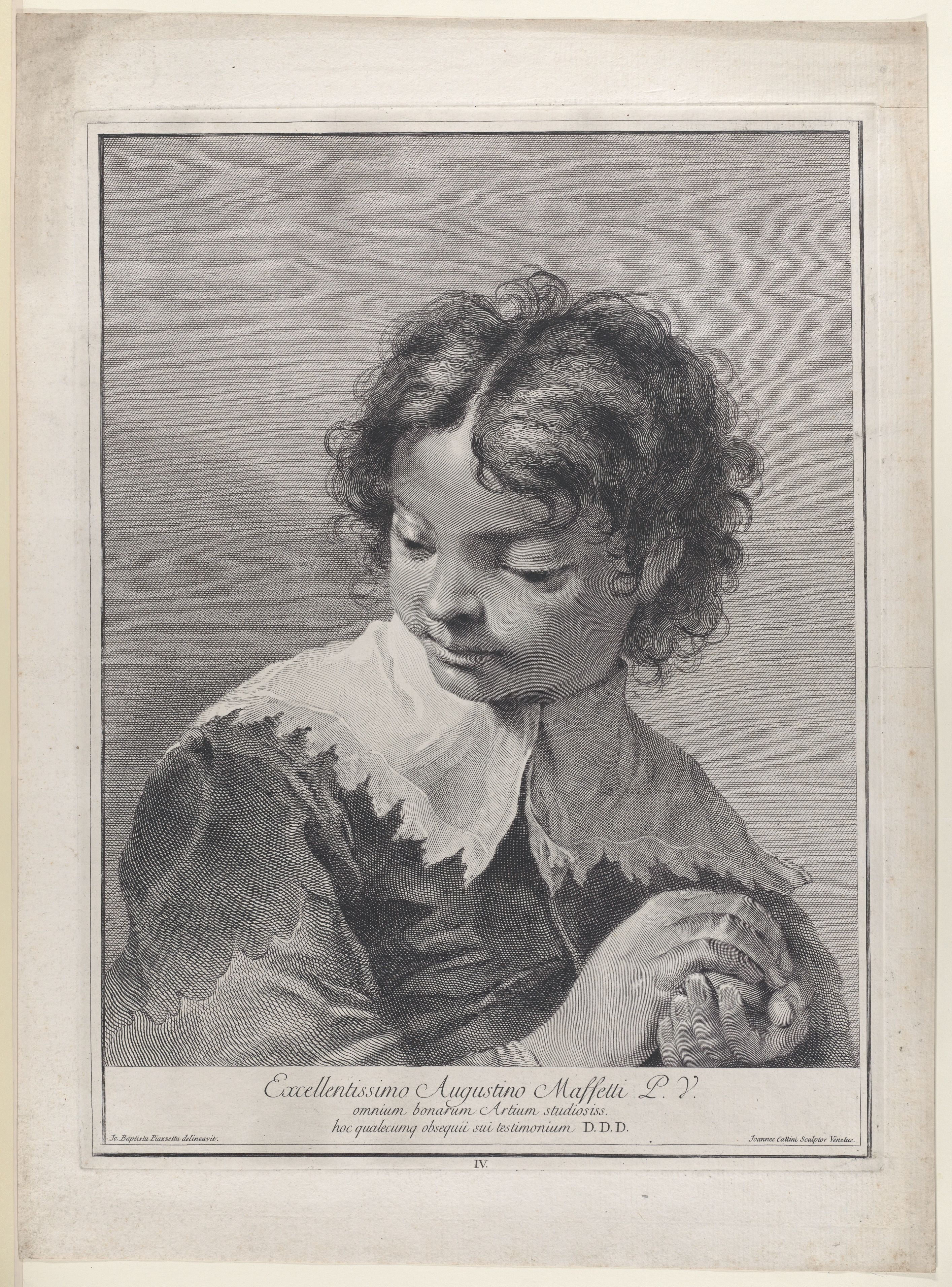
Plate 4: Boy with a Lace Collar Holding a Piece of Fruit — A Study in Etched Couture and the Iconography of Innocence
Introduction: The Etching as a Couture Document
Within the pages of Icones ad vivum expressae — a title that promises “images expressed from life” — Plate 4 stands as a quiet but formidable testament to the intersection of sartorial precision and graphic artistry. The subject is a boy, his gaze direct yet unassuming, his hands cradling a piece of fruit. Executed in etching, the plate belongs to the Global Heritage corpus, yet it operates as a standalone study: no surrounding narrative, no decorative border, no textual anchor. What remains is the pure interaction of line, light, and textile — an early modern meditation on how clothing constructs identity, even (or especially) in childhood.
For the couture analyst, this plate is not merely a portrait. It is a forensic record of collar construction, fabric drape, and the semiotics of adornment. The etching technique — acid biting into copper, ink transferred to paper — imposes its own discipline: every fold, every thread of lace, every shadow must be earned through hatching and cross-hatching. There is no color to distract, no painterly softness to forgive imprecision. What we see is couture stripped to its structural essence.
The Lace Collar: A Masterclass in Textile Etching
The boy’s lace collar dominates the upper third of the composition. It is not the wide, stiff ruff of Elizabethan formality, nor the falling band of later decades. Instead, it is a transitional piece — likely a modest falling collar with scalloped edges, rendered with a delicacy that borders on the miraculous given the etching needle’s unforgiving nature. The lace pattern is suggested rather than slavishly described: loops, picots, and geometric repeats emerge from a lattice of fine lines. The etcher has understood that lace is not solid but porous, a play of opacity and void.
Couture significance: This collar signals status without ostentation. Lace in the seventeenth century was a luxury good, its production labor-intensive and its maintenance demanding. To place lace on a child is to make a statement about the family’s economic and cultural capital — but also about the child’s protected status. The collar frames the face like a halo, softening the jawline and drawing the eye upward to the eyes. It is a garment that says: this body is not yet a worker, not yet a soldier, not yet a citizen. It is an object of care.
The etching’s hatching reveals the collar’s weight. Heavier lace would cast deeper shadows; this lace floats, suggesting a fine thread — perhaps linen or silk — and a loose, airy weave. The artist has used parallel lines of varying proximity to mimic the transparency of the fabric against the boy’s neck and shoulders. In couture terms, this is a study in negative space as luxury: what is not there (dense fabric, heavy embroidery) matters as much as what is.
The Fruit: Symbol, Still Life, and Sartorial Counterpoint
The boy holds a piece of fruit — likely an apple, pear, or peach, its exact species ambiguous in monochrome. His hands cup it gently, fingers curved not in possession but in presentation. The fruit is not being eaten; it is being shown. This gesture transforms the plate from portraiture into allegory. In early modern iconography, fruit signifies abundance, harvest, and — when held by a child — the promise of future fruition. It also carries Edenic undertones: the apple as knowledge, the child as prelapsarian innocence.
From a couture perspective, the fruit functions as a chromatic and textural counterpoint to the lace collar. Where the collar is intricate, open, and ethereal, the fruit is solid, smooth, and self-contained. The etcher has rendered its surface with stippling and short, curved strokes, creating a tactile contrast: the eye moves from the airy collar to the dense fruit and back again, registering the boy’s body as a site of tension between fragility and substance. His clothing — a simple tunic or doublet, likely wool or linen — recedes into shadow, its folds indicated by broad, confident hatching. The fruit and collar are the two poles of the composition; the boy’s face, calm and slightly rounded, mediates between them.
Materiality and Technique: Why Etching Matters for Couture Analysis
Etching differs from engraving in its line quality: softer, more fluid, capable of suggesting the wavering edge of a hand-cut lace or the irregular drape of a homespun sleeve. In Plate 4, the artist exploits this fluidity. The lace collar’s edges are not razor-sharp; they blur slightly, as if the collar has been worn and softened by use. This is not a costume piece displayed on a mannequin. It is clothing that has lived on a body.
Key technical observations:
• Hatching direction follows the fall of the collar, reinforcing gravity and fabric weight.
• Cross-hatching in the fruit’s shadow side creates volume without outline, a technique that mirrors the couturier’s use of seam placement to shape a garment.
• Plate tone (residual ink left on the copper) softens the background, pushing the boy forward and eliminating distraction — a compositional choice analogous to the fashion photographer’s use of a neutral backdrop.
Standalone Study: The Absence of Context as Couture Statement
That Plate 4 is presented as a standalone study — detached from a series, unlabeled beyond its number — amplifies its power. We do not know the boy’s name, his age, his family. We know only his collar, his fruit, his hands. This anonymity transforms him into a universal figure of transition: the child as future adult, the body as future wearer of more complex garments. The lace collar is a promise; the fruit is a seed. The etching holds both in suspension.
For the contemporary couture designer, Plate 4 offers a lesson in restraint. It demonstrates that a single accessory — a collar — can carry the entire weight of social meaning. It shows that texture (lace vs. fruit vs. wool) can create narrative without color. And it reminds us that the most enduring fashion images are not those that shout, but those that whisper with precision.
Conclusion: The Etched Body as Couture Archive
Plate 4 from Icones ad vivum expressae is not a fashion plate in the modern sense. It does not illustrate a trend or prescribe a silhouette. Instead, it archives a moment of sartorial innocence: a boy, a lace collar, a piece of fruit. Through the etching needle’s disciplined line, we read the labor of lacemakers, the economics of luxury, the iconography of childhood, and the timeless human impulse to dress the body in meaning. In the Global Heritage collection, this plate stands as a quiet masterpiece — a reminder that couture begins not with the runway, but with the first collar placed around a child’s neck.